When to Switch From Puppy Food to Adult Dog Food
Learn exactly when to switch from puppy to adult dog food by breed size, why large breeds need special food, plus a 7-10 day transition table.
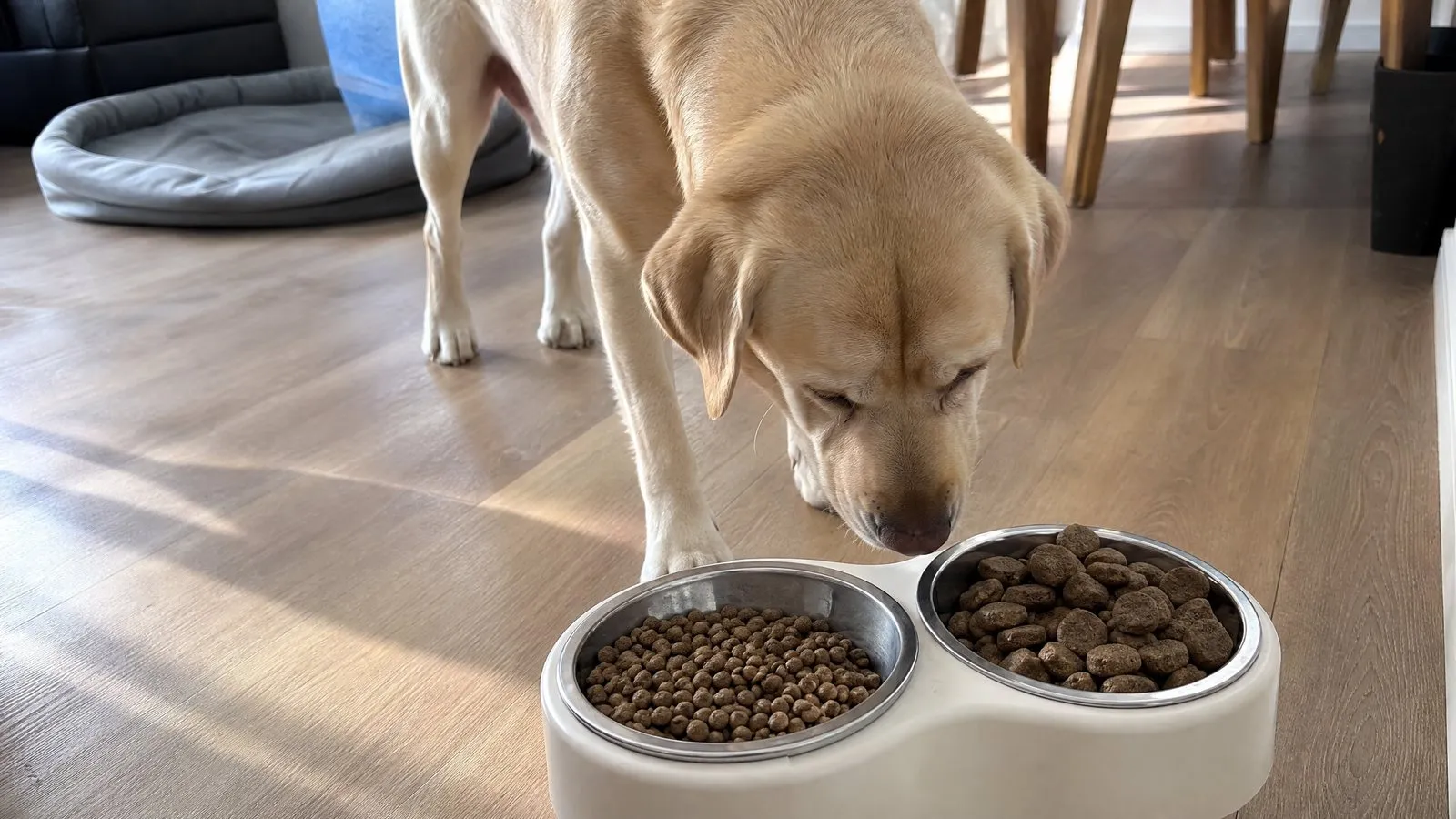
Switch most dogs to adult food when they reach their expected adult size: around 10–12 months for small and medium breeds, and 12–24 months for large and giant breeds. The single biggest mistake is switching large-breed dogs too early, which can push growth too fast and strain developing joints. When you do switch, do it gradually over 7 to 10 days to avoid stomach upset.
Here’s how to get the timing and the transition right for your dog.
Timing depends on expected adult size, not age alone
Puppies grow at very different speeds depending on how big they’ll get. A Chihuahua is basically done growing before a Great Dane has hit its teenage stretch. That’s why there’s no single “switch at six months” rule.
The key is to feed puppy food until your dog is near its mature size, then move to adult food. Puppy formulas are higher in calories, protein, fat, and certain minerals to fuel growth. Once growth slows, those extra calories tend to cause weight gain rather than healthy development.
If you’re not sure what size your dog will end up, ask your vet or breeder, or look at the breed’s typical adult weight. For mixed breeds, paw size, current growth rate, and a vet’s estimate are your best guides.
Switch timing by size
| Expected adult size | Adult weight (rough) | Typical switch age | Notes |
|---|---|---|---|
| Small / toy | Under 20 lb (9 kg) | 9–12 months | Fast growers; many reach adult size by 10 months |
| Medium | 20–50 lb (9–23 kg) | 10–14 months | The broadest, most forgiving group |
| Large | 50–90 lb (23–41 kg) | 12–18 months | Use large-breed puppy food until the switch |
| Giant | Over 90 lb (41 kg) | 18–24 months | Slowest to mature; don’t rush the switch |
These are ranges, not deadlines. A spayed or neutered dog, a dog carrying a little extra weight, or a dog your vet considers close to mature may switch at the earlier end. A lean, still-growing dog may stay on puppy food a bit longer.
When in doubt, your vet can assess body condition and growth and tell you when your specific dog is ready. For portion sizes along the way, our guides on how much to feed a puppy and the puppy feeding schedule walk through calories and meal counts by age.
Why large and giant breeds need large-breed puppy food
Large and giant breeds aren’t just bigger versions of small dogs. Their bones and joints grow over a longer period, and they’re more vulnerable to developmental orthopedic problems if they grow too quickly or take in too much calcium.
Large-breed puppy foods are formulated to address exactly this. Compared with standard puppy food, they typically have:
- Controlled calcium and phosphorus levels so bones develop at a steadier, safer rate.
- Slightly lower calorie density to prevent rapid weight gain that stresses growing joints.
- A controlled calcium-to-phosphorus ratio within ranges recommended for large-breed growth.
This matters most for breeds expected to top about 50–70 lb as adults, such as Labradors, Golden Retrievers, German Shepherds, Dobermans, Great Danes, and Mastiffs. For these dogs, feeding a regular (non-large-breed) puppy food, or switching to adult food too early, can work against healthy skeletal development.
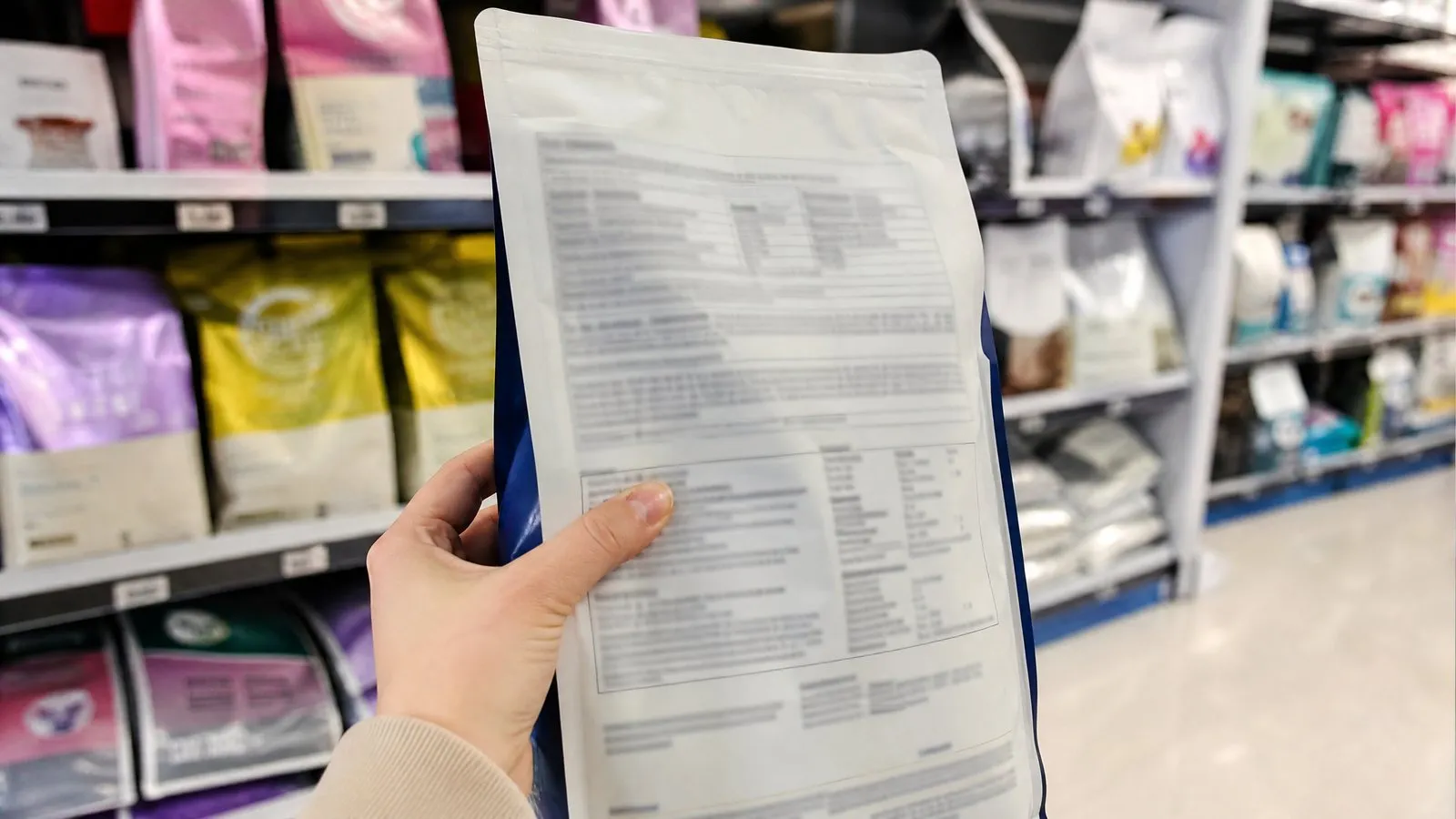
How do you know a food is actually formulated for large-breed growth? Check the AAFCO nutritional adequacy statement on the label. In the US and Canada, look for wording that the food is complete and balanced for growth “including growth of large size dogs (70 lb or more as an adult).” In the UK, Australia, and Europe, look for FEDIAF-aligned formulations and a large-breed puppy designation. Our guide on how to read a dog food label explains what these statements mean and where to find them.
Do not add calcium supplements to a large-breed puppy’s diet unless your vet specifically tells you to. A complete large-breed puppy food already has the right balance, and extra calcium can do real harm during growth.
How to transition over 7 to 10 days
A sudden food change often causes diarrhea, vomiting, or gas, because your dog’s gut needs time to adjust. The fix is simple: mix increasing amounts of the new adult food with the old puppy food over about a week to ten days.
Use the same total daily portion you were feeding, just shift the ratio gradually. Adult food is usually less calorie-dense than puppy food, so check the new food’s feeding guide and your dog’s body condition once the switch is complete, and adjust the amount as needed.
A simple mixing table
| Days | Puppy food | Adult food |
|---|---|---|
| Days 1–2 | 75% | 25% |
| Days 3–4 | 50% | 50% |
| Days 5–6 | 25% | 75% |
| Days 7–10 | 0% | 100% |
Tips that make it go smoothly:
- Go slower if your dog has a sensitive stomach. Stretch each stage to three or four days, taking the full transition out to two weeks.
- Keep everything else the same during the switch, including treats, water access, and exercise. Change one thing at a time so you can spot the cause if something goes wrong.
- Mix the two foods together in the bowl rather than feeding puppy food at one meal and adult at another. A gradual blend is gentler on the gut.
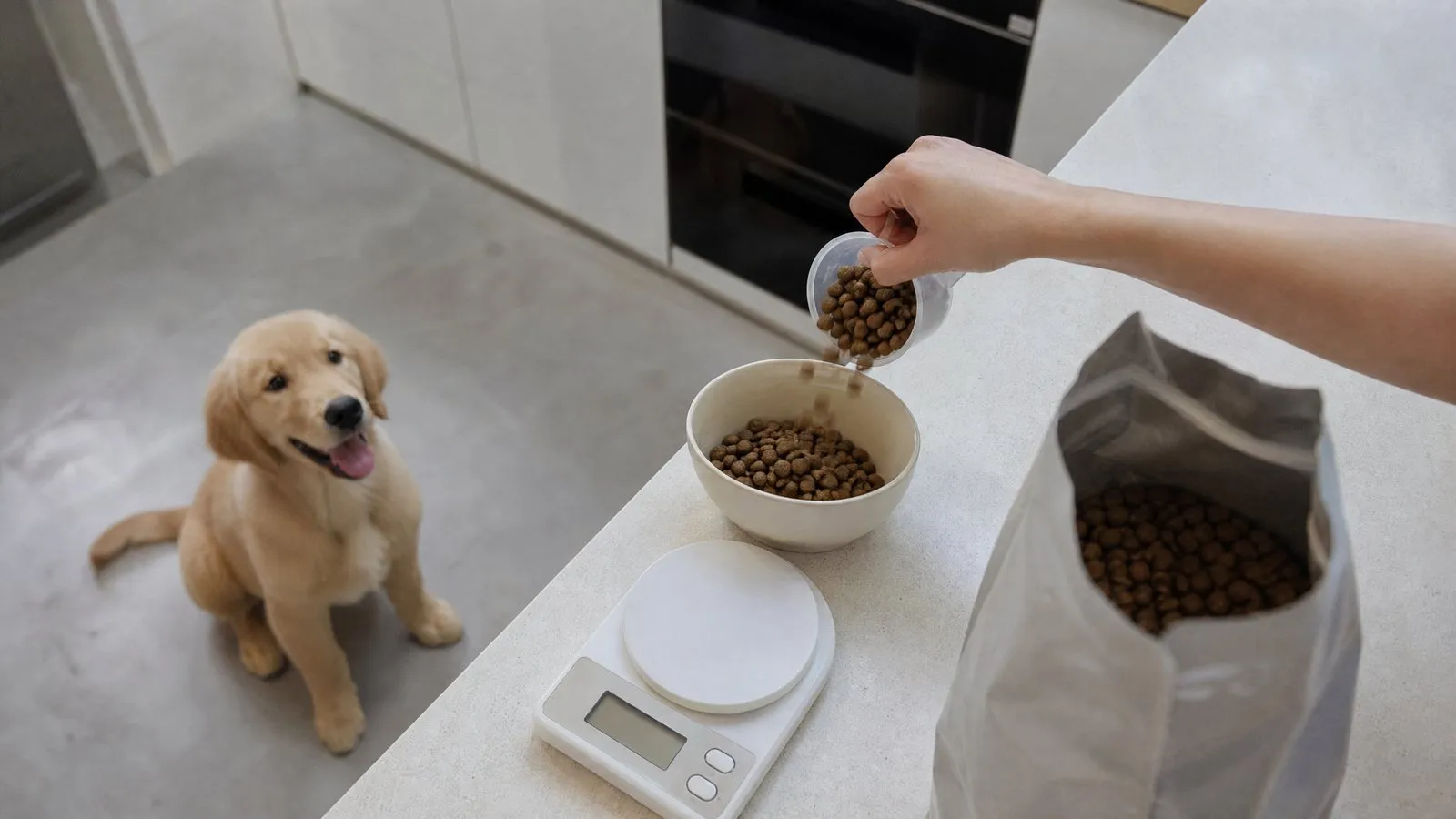
- Weigh or measure portions rather than eyeballing them, so the ratios are accurate.
If you’re switching brands and sizes at the same time, our puppy food calculator can help you sanity-check daily amounts.
Signs you switched too fast
Mild, brief digestive changes are common and usually settle within a day or two. Watch for these signs that the transition is moving too quickly:
- Loose stools or diarrhea
- Vomiting
- Excess gas or a gurgly, uncomfortable belly
- Reduced appetite or turning away from the bowl
- Low energy
If you see these, step back to the previous ratio that your dog tolerated well, hold there for two or three days, then resume more slowly. Most dogs do fine with a gentler pace.
When to call your vet
Contact your vet if:
- Diarrhea or vomiting lasts more than 24–48 hours, or is severe or frequent
- You see blood in the stool or vomit
- Your puppy is lethargic, won’t drink, or seems painful
- A young or small puppy shows signs of dehydration (dry gums, sunken eyes, skin that’s slow to spring back)
Small puppies can become dehydrated quickly, so err on the side of calling sooner for toy breeds. Our guide to warning signs your puppy needs a vet today covers the red flags worth acting on fast.
A few common questions as you make the switch
Can I switch wet, dry, or fresh formats at the same time? You can, but change one variable at a time when possible. If you’re moving from puppy to adult and from kibble to fresh food, do the recipe change first, let the gut settle, then adjust format.
What if my dog is a mixed breed and I don’t know the adult size? Estimate from current weight and growth rate, and ask your vet. If your dog is clearly medium-to-large and still filling out, lean toward the later switch window and consider a large-breed puppy food if a vet agrees it’s appropriate.
Should the number of meals change too? The switch to adult food is also a good moment to settle into adult mealtimes. Most adult dogs do well on two meals a day. Puppies typically eat more often when young and taper down as they grow.
What about “all life stages” foods? Some foods are labeled complete for all life stages. These can work, but for large-breed puppies make sure the label specifically covers growth of large-size dogs. Otherwise, a dedicated large-breed puppy food is the safer choice during growth.
Quick checklist before you switch
- Confirm your dog is near expected adult size for its breed category.
- For large and giant breeds, don’t switch early, and keep using large-breed puppy food until then.
- Choose an adult food with an AAFCO (or FEDIAF) statement for adult maintenance.
- Transition over 7–10 days using the mixing table.
- Recalculate the daily portion for the new food and check body condition after a couple of weeks.
- Slow down or call your vet if digestion doesn’t settle.
FAQ
Is it bad if I switched my puppy to adult food a little early?
For small and medium breeds, a few weeks early is unlikely to cause harm as long as your dog is near mature size and maintaining good body condition. For large and giant breeds, switching early is more of a concern because they need controlled nutrition during a longer growth phase. Ask your vet; they may suggest returning to large-breed puppy food until your dog is older.
How do I know my dog has reached its adult size?
Growth slows noticeably and weight stabilizes near the breed’s typical adult range. Your vet can confirm using body condition scoring and growth history. Small breeds usually finish growing by about 10–12 months, while giant breeds may keep developing until 18–24 months.
Do I need to change how much I feed when I switch foods?
Usually yes. Adult foods are typically less calorie-dense than puppy foods, so follow the new food’s feeding guide for your dog’s weight, then adjust based on body condition over the next few weeks. A dog that’s gaining too much weight needs less; a lean, active dog may need a bit more.
My puppy got diarrhea during the switch. What should I do?
Go back to the last food ratio your dog handled well, hold there for two to three days, then continue the transition more slowly. If diarrhea lasts more than 24–48 hours, is severe, or comes with vomiting, blood, or lethargy, contact your vet, and act sooner for small or very young puppies.
Does large-breed puppy food really matter, or is it marketing?
It genuinely matters for breeds expected to reach about 50–70 lb or more. These formulas control calorie density and calcium levels to support a steadier growth rate, which helps protect developing bones and joints. Check the label for an AAFCO statement that specifically includes growth of large-size dogs.
A note on health information: Health and nutrition guides are written against published guidance from the AAHA, WSAVA and AVMA. They are general information, not a substitute for advice from your own veterinarian. If your dog seems unwell, call your vet.