Puppy Feeding Schedule: How Many Meals a Day at Each Age
A simple puppy feeding schedule by age: how many meals a day, a sample timetable, how meals link to potty training, and a treat budget.
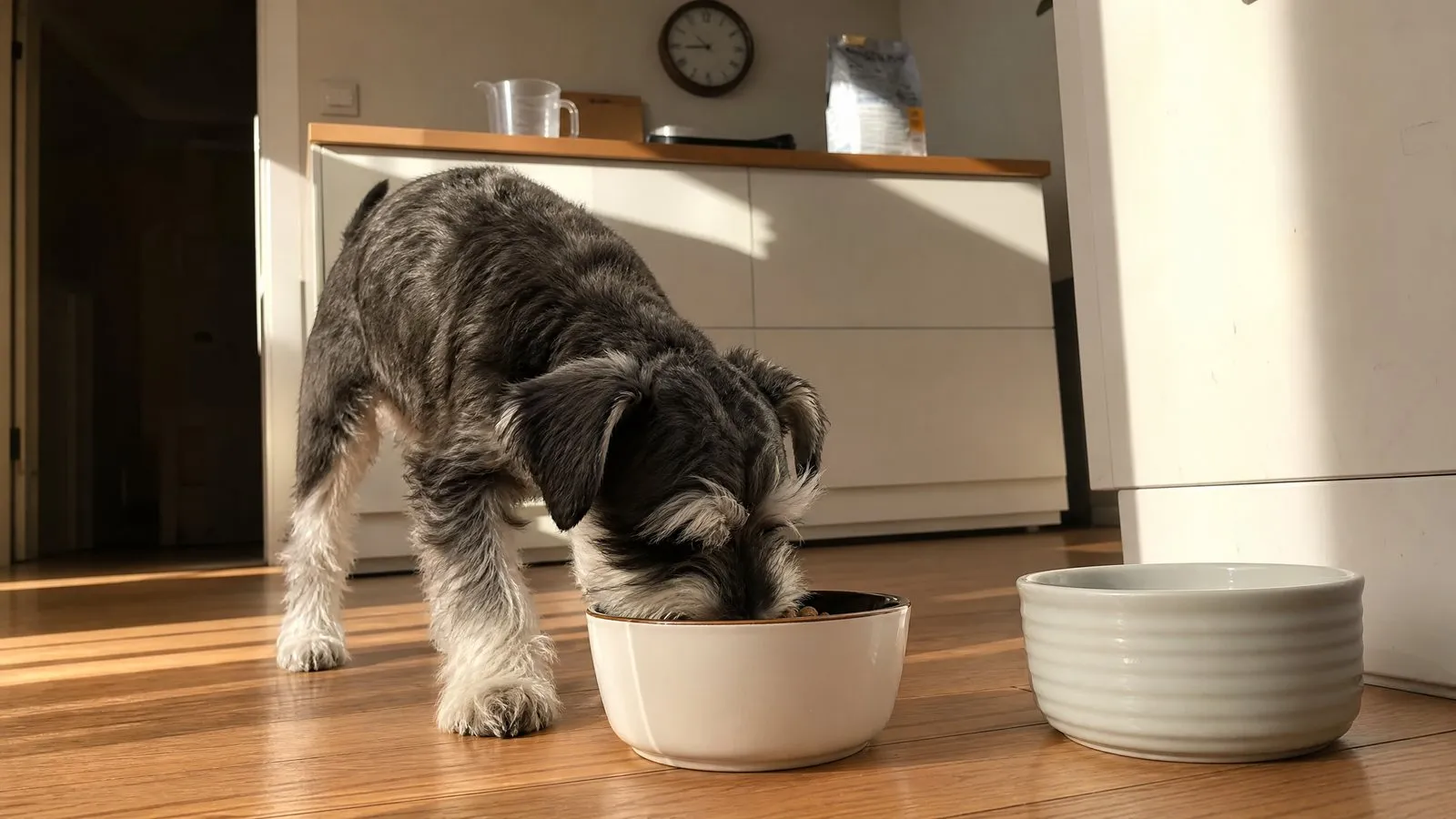
Most puppies eat four meals a day from weaning until about 12 weeks, three meals from 3 to 6 months, and two meals a day from 6 months onward. Dividing the day’s food into regular meals keeps blood sugar steady in small puppies, makes potty training far more predictable, and prevents the digestive upset that comes with one huge meal.
Below is a clear breakdown by age, a sample daily schedule you can copy today, and how to handle treats without overfeeding.
Meals per day by age
The younger the puppy, the smaller the stomach and the faster the metabolism. Tiny and toy breeds are especially prone to low blood sugar, so they need frequent meals and should not go long stretches without food.
| Age | Meals per day | Notes |
|---|---|---|
| 8–12 weeks | 4 | Small, frequent meals; watch toy breeds closely for low energy |
| 3–4 months | 3 | Drop the fourth meal as appetite and stomach capacity grow |
| 4–6 months | 3 | Keep three meals if your puppy does well on them |
| 6–12 months | 2 | Move to a morning and evening meal |
| 12+ months | 2 | Most adult dogs stay on twice-daily feeding for life |
A few honest caveats:
- Large and giant breeds often stay on puppy food longer (up to 18–24 months) and benefit from steady, measured meals to avoid growing too fast. The meal count is similar, but total calories and the age to switch foods differ.
- Toy breeds (think Chihuahua, Yorkshire Terrier) may need a small extra feed or snack to prevent hypoglycemia, which can show up as wobbliness, weakness, or collapse. If you see those signs, offer food and contact your vet promptly.
- Your exact amounts matter as much as timing. For portions, see How Much to Feed a Puppy: Calories and Cups by Age and Weight or run the numbers with our Puppy Food Calculator.
How to transition between meal counts
Don’t drop a meal overnight. When you move from four meals to three (around 12 weeks), spread the same total daily food across fewer meals over a few days. Your puppy may start leaving food at one meal or seem less interested at a certain time of day; that’s your cue they’re ready for fewer, slightly larger meals.
If you also change food brands or formulas during this time, go slowly: mix increasing amounts of the new food into the old over 7–10 days to avoid loose stools.
A sample daily feeding schedule
Here’s a realistic day for a puppy around 8–12 weeks on four meals. Adjust the clock to your own routine, but keep the meals evenly spaced and the last meal a few hours before bedtime so there’s time for a final potty trip.
| Time | Activity |
|---|---|
| 7:00 am | Wake, straight outside to potty |
| 7:15 am | Breakfast (meal 1) |
| 7:45 am | Potty again, short play |
| 11:30 am | Lunch (meal 2), potty after |
| 3:30 pm | Meal 3, potty after |
| 6:30 pm | Dinner (meal 4), potty after |
| 7:00 pm | Water available, last big drink around now |
| 9:30 pm | Final potty trip before bed |
For a 3–4 month old on three meals, drop the mid-afternoon feed and space the remaining three across breakfast, early afternoon, and early evening.
For a 6-month-old on two meals, a simple pattern is breakfast around 7:00 am and dinner around 5:00–6:00 pm, each followed by a potty break.
Consistent meal times also support good sleep. If your puppy settles poorly at night, our guides on how much a puppy should sleep and why puppies cry at night may help.
How feeding ties into potty training
This is the part new owners underestimate: what goes in on a schedule comes out on a schedule. Puppies typically need to poop within 5 to 30 minutes of eating, thanks to a natural reflex that gets stronger digestion moving. Predictable meals give you predictable bathroom breaks, which is the whole foundation of house training.
Practical rules that make a big difference:
- Take your puppy out right after every meal, and again 10–20 minutes later for the follow-up.
- Feed at the same times each day so you can anticipate when they’ll need to go.
- Pick up the water bowl about 2 hours before bedtime (not during the day) to reduce overnight accidents, while still keeping your puppy well hydrated through the day.
- Don’t feed the last meal too late. A dinner at 6:00–7:00 pm, followed by a potty trip before bed, gives the digestive system time to empty.
If accidents are frequent or you want a full day-by-day plan, read Potty Training a Puppy: A Schedule That Works and How to Fix Accidents. Scheduled meals and crate training work together well, because a puppy who naps in a crate between meals is less likely to wander off and have an accident.
Free-feeding vs. scheduled meals
Free-feeding means leaving a full bowl out all day so your puppy grazes. Scheduled feeding means putting food down at set times and picking up what isn’t eaten after 15–20 minutes.
For puppies, scheduled meals win in almost every case. Here’s why:
- Potty training is predictable. You can’t time bathroom breaks around meals if your puppy eats a little every hour.
- You spot appetite changes fast. A skipped meal is one of the earliest signs a puppy is unwell. With a full bowl out all day, you might miss it for a day or two.
- You control portions and weight. Keeping puppies lean supports healthy joint development, which matters most in larger breeds. Organizations like the AAHA emphasize avoiding excess weight gain during growth.
- It helps with multi-pet households. Scheduled meals let you make sure each animal gets its own share.
Free-feeding also isn’t suitable for wet food, which spoils at room temperature within a couple of hours.
How scheduled feeding works in practice
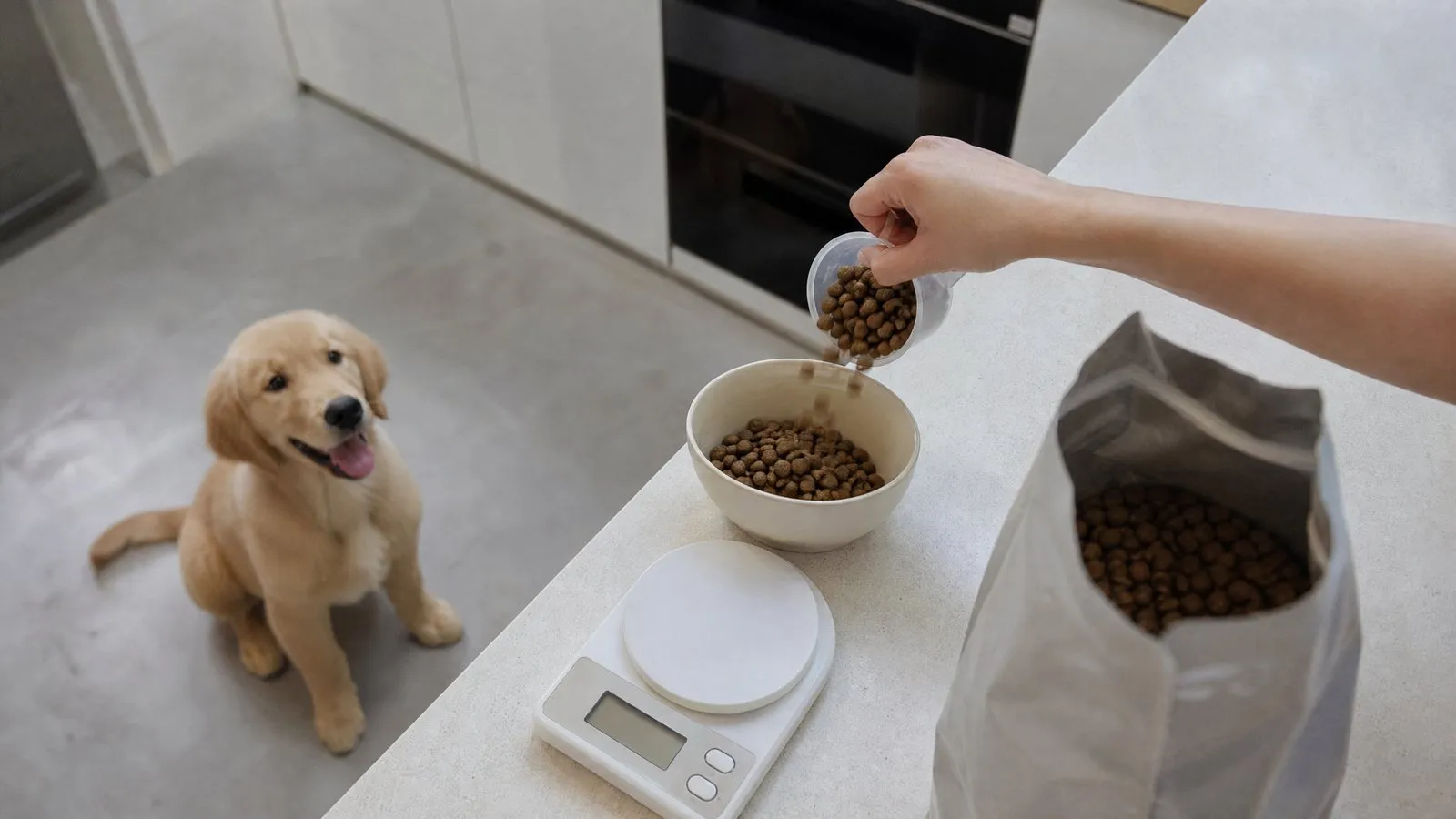
- Measure the meal and put the bowl down.
- Give your puppy 15–20 minutes to eat.
- Pick up whatever’s left, with no fuss, until the next meal.
- Keep fresh water available throughout the day (water is not restricted, only food).
Most puppies learn within a few days that mealtime is now, not later, and they eat promptly. A puppy who regularly refuses meals, seems lethargic, or has vomiting or diarrhea should be checked by a vet rather than simply waited out. See Warning Signs Your Puppy Needs a Vet Today if you’re unsure.
The treats budget: about 10% of calories
Treats are useful for training, but they add up fast. The widely used guideline from veterinary nutrition experts is that treats should make up no more than about 10% of your puppy’s daily calories. The other 90% should come from a complete, balanced puppy food so your puppy gets the right nutrients for growth.
How to make the 10% rule work without doing math all day:
- Use your puppy’s own kibble for training. Set aside a portion of a meal and hand it out piece by piece during the day. This keeps calories in check automatically.
- Break treats into tiny pieces. A puppy doesn’t care about size; a pea-sized reward works just as well as a whole biscuit.
- Count everything that isn’t their main food: training treats, chews, and bits of human food all go in the 10%.
- Reduce meal portions slightly on days with heavy training so total calories stay steady.
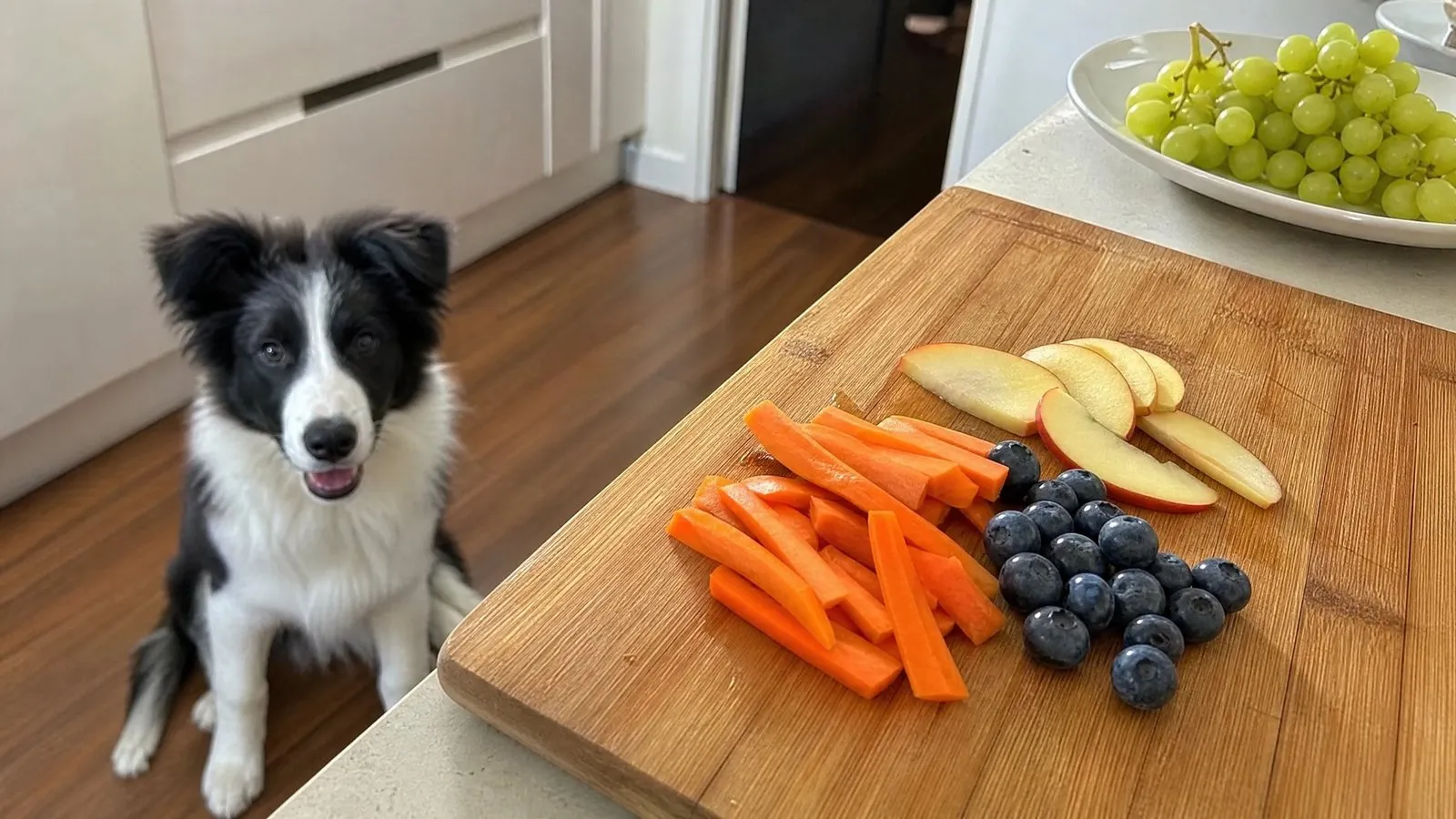
Be careful with human foods. Some are fine in small amounts and others are genuinely dangerous, including grapes, raisins, onions, garlic, chocolate, and anything with xylitol. Keep our Human Foods Dogs Can and Can’t Eat reference handy. For teething puppies who want to chew constantly, choose appropriate items from Safe Chews for Teething Puppies rather than relying on high-calorie treats.
A few extra tips that prevent problems
- Don’t exercise hard right after a big meal, especially in large and deep-chested breeds, where it’s linked to bloat. Keep post-meal time calm for an hour or so.
- Warm or moisten food for very young puppies if they’re reluctant; a little warm water softens kibble and brings out the smell.
- Weigh your puppy regularly and adjust portions as they grow. Growing puppies need more food over time, then less once growth slows.
- Know when to change foods. Most puppies switch to adult food around the time they reach maturity, which varies by size. See When to Switch From Puppy Food to Adult Dog Food.
If you’re still setting up, our New Puppy Checklist covers bowls, food storage, and the gear that makes feeding and potty routines easier from day one.
FAQ
What if my puppy won’t finish meals on a schedule?
Leave the food down for 15–20 minutes, then pick it up calmly. Most puppies adjust within a few days once they learn food isn’t available all day. If your puppy repeatedly refuses meals, seems tired or unwell, or has vomiting or diarrhea, contact your vet, since appetite loss can be an early sign of illness.
Can I give water freely or should I schedule that too?
Keep fresh water available throughout the day; only food is scheduled. The one common exception is lifting the water bowl about two hours before bedtime to reduce overnight accidents during house training. Never restrict water in hot weather or for toy breeds prone to low blood sugar.
How do I know if I’m feeding the right amount?
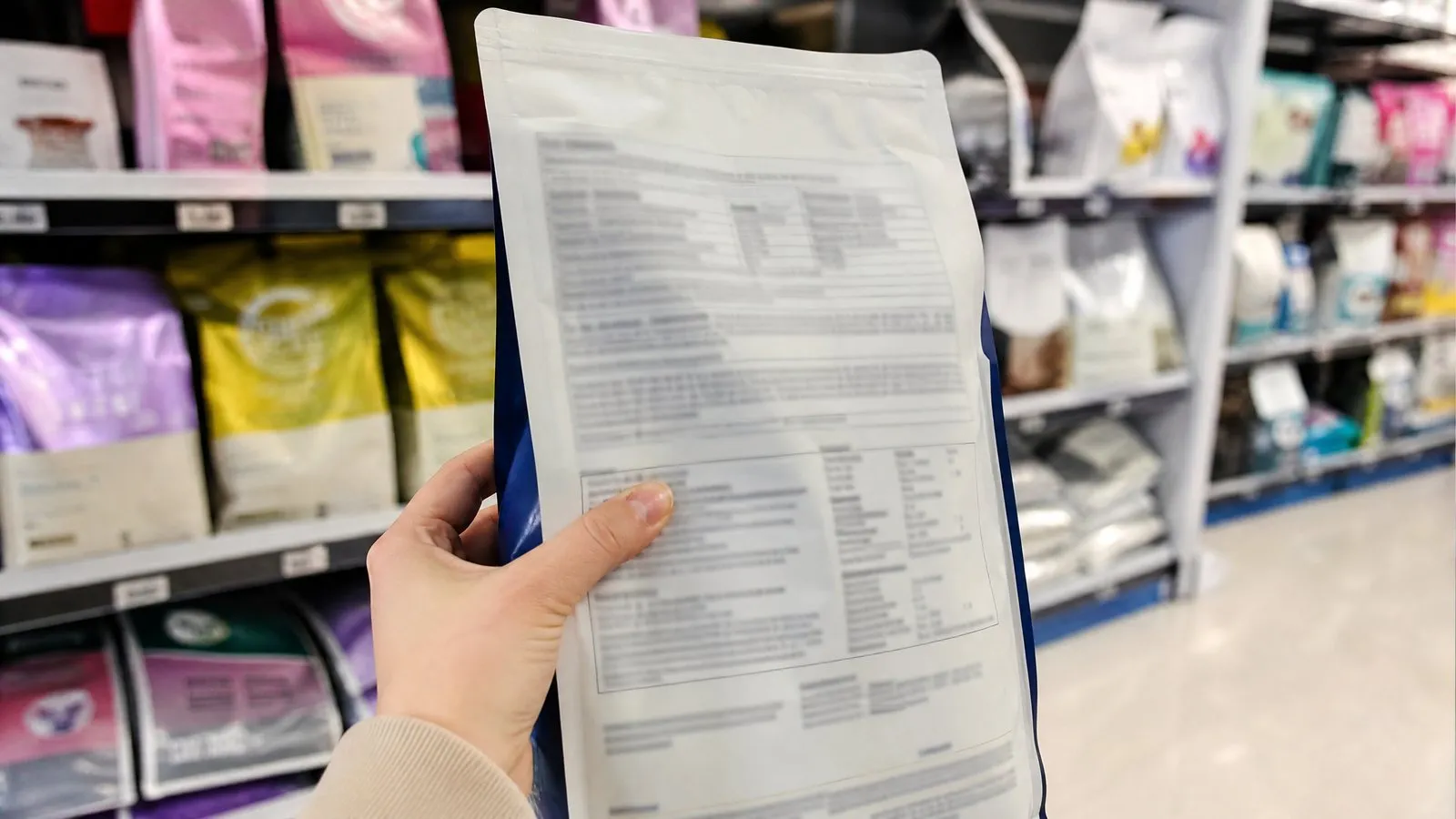
Start with the feeding guide on your food’s label for your puppy’s age and expected adult weight, then adjust based on body condition: you should be able to feel the ribs easily without pressing hard, and see a visible waist from above. Our Puppy Food Calculator gives a starting estimate.
When do puppies go down to two meals a day?
Most puppies move to two meals a day around 6 months of age. Make the change gradually by spreading the same total daily food across fewer, slightly larger meals over several days, watching that stools and energy stay normal.
Are table scraps okay as treats?
Only safe foods in small amounts, and they still count toward the 10% treat budget. Avoid fatty, salty, or seasoned foods, and steer well clear of toxic items like grapes, raisins, onions, garlic, chocolate, and anything containing xylitol.
A note on health information: Health and nutrition guides are written against published guidance from the AAHA, WSAVA and AVMA. They are general information, not a substitute for advice from your own veterinarian. If your dog seems unwell, call your vet.