Harness vs. Collar: Which Is Better for Your Puppy?
Harness vs collar for your puppy: when a harness helps, front-clip vs back-clip, how to fit it with the two-finger rule, and gear to skip.
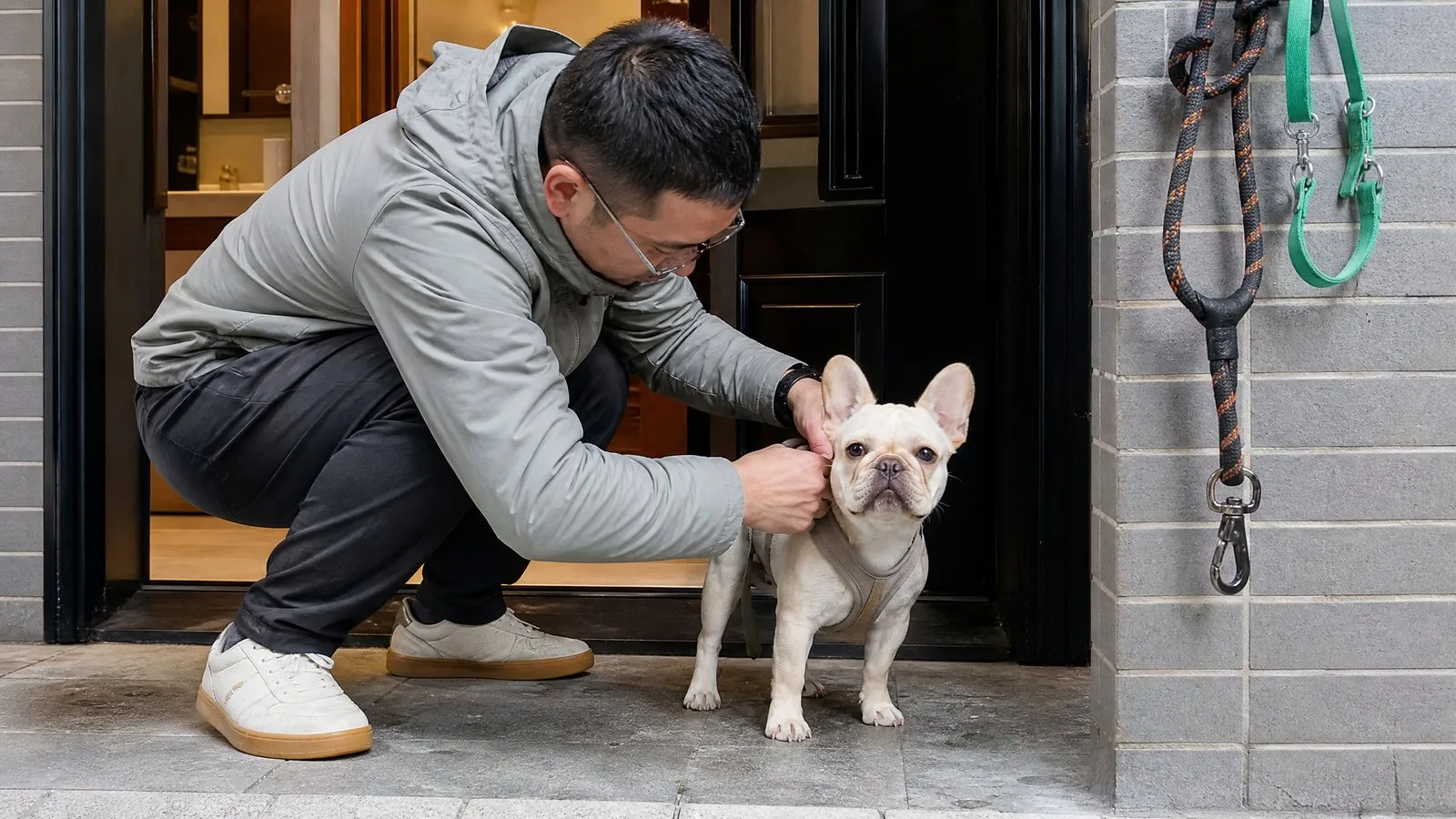
For most puppies, the simplest setup is a flat collar with ID tags for everyday wear, plus a well-fitted harness for walks and leash training. The harness takes pressure off your puppy’s neck, gives you more control, and reduces the risk of a scared puppy slipping free. The collar carries your identification and works for quick trips to the yard.
You don’t have to pick one forever. Many owners use both, and that’s exactly what we’d suggest for a new puppy.
The short answer
- Everyday wear at home: a flat collar with an ID tag.
- Walks, training, and anything on a leash: a harness, especially while your puppy is still learning.
- Pullers, small breeds, and flat-faced breeds: a harness is strongly preferred.
If you only read this far, buy a lightweight adjustable harness and a flat collar, fit both with the two-finger rule below, and attach ID tags today.
Why a harness is the safer default for walks
A collar puts all the force on your puppy’s neck. When a puppy lunges, pulls, or spooks, that force lands on the throat, windpipe, and the sensitive structures around it. A harness spreads pressure across the chest and shoulders instead.
A harness also helps in three situations that are common with young dogs:
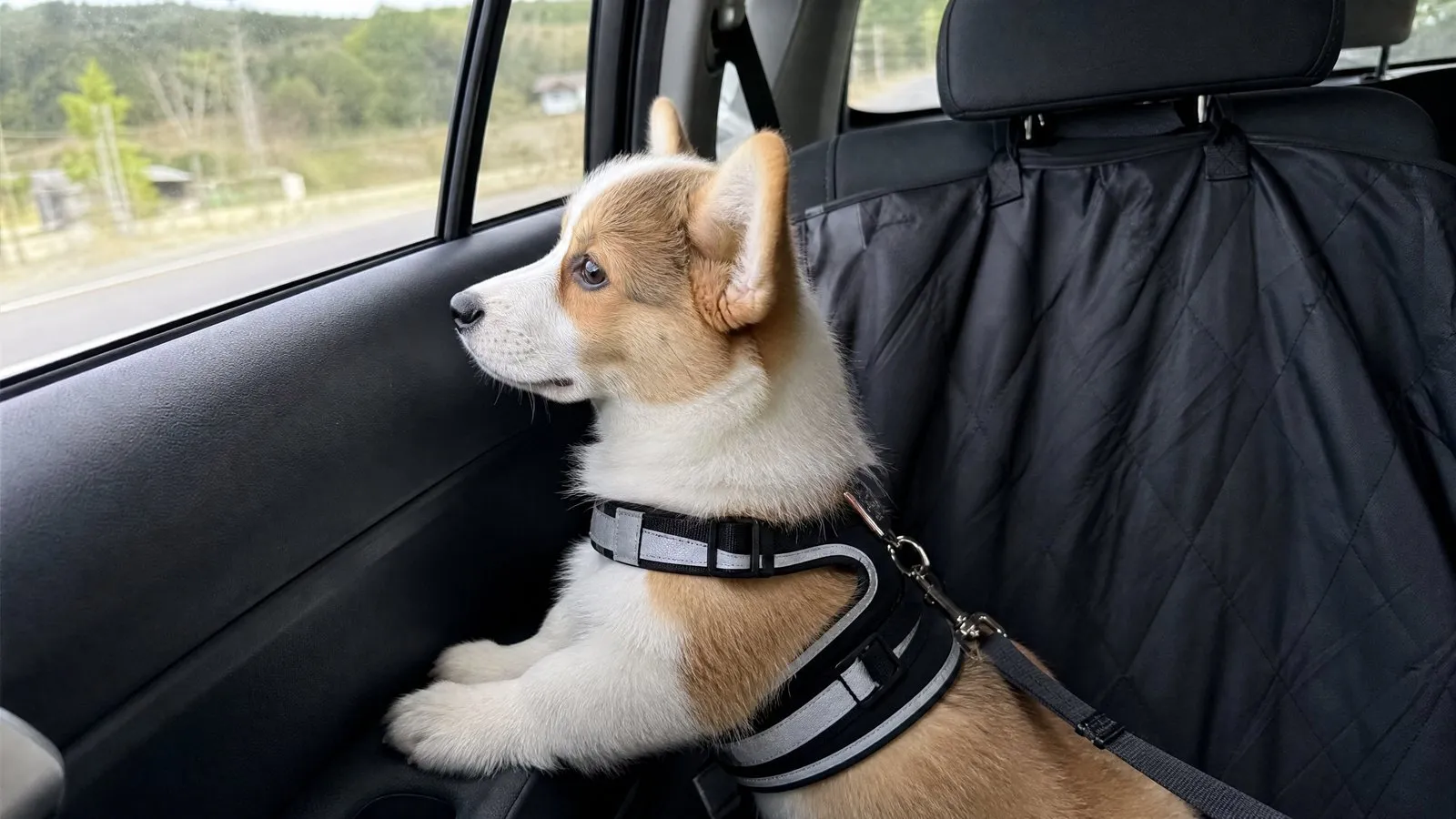
- A puppy who backs out of a collar. Frightened puppies often throw themselves backward. A collar can slip right over the head, and suddenly your puppy is loose near traffic. A properly fitted harness is much harder to escape.
- A puppy who pulls. Pulling against a collar can hurt and actually teaches some dogs to pull harder. A harness, especially a front-clip one, gives you better leverage without choking.
- A puppy still learning leash manners. More control means fewer scary moments while you both practice. Pair the harness with our leash training guide and you’ll make faster progress.
When a harness isn’t just nice to have
For some dogs, a harness is the clear choice rather than a preference.
- Small and toy breeds (think Chihuahuas, Yorkies, Pomeranians, miniature Dachshunds) have delicate necks and narrow windpipes. Collar pressure is riskier for them.
- Flat-faced (brachycephalic) breeds like French Bulldogs, Pugs, Bulldogs, and Boston Terriers already work harder to breathe. Pressure on the throat makes that worse, so a harness is widely recommended.
- Breeds prone to collapsing trachea, again including many toy breeds, do better with the pressure moved off the neck.
If your puppy has any breathing noise, frequent coughing, or seems to struggle on walks, use a harness and mention it at your first vet visit.
When a collar is fine on its own
A flat collar is perfectly reasonable for:
- Everyday wear so ID tags are always on.
- Quick, calm trips to a securely fenced yard.
- An older, well-trained dog who walks on a loose leash and doesn’t bolt.
For a brand-new puppy who is still unpredictable, we’d still clip the leash to a harness. Keep the collar on underneath for the tags.
Front-clip vs. back-clip harnesses
Harnesses attach the leash in one of two places, and sometimes both. The difference matters more than the color or brand.
| Feature | Back-clip | Front-clip |
|---|---|---|
| Leash ring location | Between the shoulder blades, on top | On the chest |
| Best for | Calm walkers, small breeds, puppies new to a harness | Pullers and dogs in training |
| How it handles pulling | Lets the dog pull straight ahead; little steering | Turns the dog gently back toward you when they pull |
| Comfort to put on | Very easy, less fussing near the face | Easy once your puppy is used to it |
| Watch out for | Can encourage pulling in strong dogs | Leash can tangle under the legs if fitted too loose |
A simple rule of thumb: start a young puppy on a back-clip for comfort and easy introductions. If pulling becomes a problem as they grow, switch to a front-clip or a harness that offers both rings.
Front-clip harnesses are a training aid, not a magic fix. They make it easier to redirect a puller while you teach loose-leash walking, but you still have to do the teaching.
How to fit a harness or collar: the two-finger rule
A good fit is snug but not tight. The test is the same for both collars and harnesses: you should be able to slide two fingers flat between the strap and your puppy’s body, but no more.
Too loose and your puppy can wriggle free or trip on a dangling chest strap. Too tight and it rubs, restricts movement, or hurts.
Fitting a collar
- Slip the collar on and buckle it.
- Slide two fingers underneath, flat against the neck. They should fit with gentle resistance.
- Try to pull the collar over the ears. If it slides off easily, tighten a notch.
- Recheck every week or two. Puppies grow fast.
Fitting a harness
- Adjust all the straps loosely, then put it on following the maker’s diagram. Note which loop goes over the head and which goes around the chest.
- Tighten each strap so you can slide two fingers under it.
- Check the armpit area. Straps that sit too close to the “armpit” rub raw spots. There should be a small gap, usually a couple of finger-widths, behind the front legs.
- Do the lift test: gently try to pull the harness up over the shoulders and head. A well-fitted harness won’t come off.
- Watch the first few walks for chafing, and re-measure as your puppy grows.
Because puppies outgrow gear quickly, buy adjustable harnesses and expect to size up at least once or twice before adulthood. If you’re still assembling your kit, our new puppy checklist covers what’s worth buying now versus later, and our first-year cost breakdown sets realistic expectations.
Introduce the harness slowly
Don’t just strap it on and head out the door. A few short, positive sessions prevent a puppy who freezes or thrashes.
- Day 1–2: Let your puppy sniff the harness. Feed treats next to it. Drape it on, treat, remove.
- Day 3–4: Fasten it for a minute or two indoors while they eat or play, then take it off. Build up the time.
- Day 5 onward: Clip the leash on indoors and let them walk around the house before you try outside.
If your puppy walks hunched, “pancakes” to the floor, or refuses to move, the harness may be uncomfortable or they just need more time. Go back a step and keep sessions short and upbeat.
Why ID tags still matter, whatever you clip to
Here’s the part people forget: a harness usually comes off indoors, but your dog’s identification should be on all the time.
- Keep a flat collar with an ID tag on your puppy even at home. The tag should show your name and a current phone number. Many owners add a second number or the word “microchipped.”
- Microchip your puppy and register it with your current details. A chip is permanent backup if the collar comes off. Most dogs are chipped at the breeder, rescue, or an early vet visit.
- In the UK, a collar with an ID tag is a legal requirement for dogs in public, and microchipping is also legally required. In the US, Canada, and Australia, local licensing and rules vary, so check your area.
A harness is for control and comfort. A tagged collar and a registered microchip are how your puppy gets home if they get loose.
Gear to avoid for beginners
Some equipment is easy to misuse and can hurt a young puppy or damage your training. As a first-time owner, skip these:
- Choke chains and slip collars. They work by tightening on the neck. For a growing puppy, the injury risk and fallout aren’t worth it.
- Prong (pinch) collars. Powerful, easy to misuse, and unnecessary for basic puppy training. Several countries and regions restrict them.
- Retractable (flexi) leads for training. They teach a puppy that pulling extends the leash, the thin cord can cause burns and injuries, and you have little control in a sudden situation. Use a standard 4 to 6 foot leash while your puppy learns.
- Harnesses that sit high in the armpits or have thin, cutting straps. They chafe and can restrict the shoulders.
- Anything you have to force over a nervous puppy’s head repeatedly. Choose a step-in or adjustable design and build positive associations first.
Head halters (which loop over the muzzle) can help with strong adult pullers, but they take careful introduction and aren’t a beginner’s first tool for a young puppy.
Putting it together
For a typical new puppy:
- Buy an adjustable, lightweight harness (back-clip to start, or one with both rings).
- Buy a flat buckle collar and attach an ID tag today.
- Use a 4 to 6 foot standard leash, not a retractable.
- Fit everything with the two-finger rule and recheck as your puppy grows.
- Introduce the harness over several short, treat-filled sessions.
- Clip the leash to the harness for walks; keep the tagged collar on for identification.
That setup keeps your puppy comfortable, controlled, and identifiable while you work through leash training and early socialization together.
FAQ
Should my puppy wear the harness all day?
No. Take the harness off indoors and when your puppy is unsupervised, as straps can snag or cause chafing. The flat collar with ID tags is what stays on. Put the harness on for walks and training.
At what age can I start using a harness?
As soon as your puppy comes home. Choose a small, adjustable, lightweight harness and introduce it gradually with treats. You’ll likely size up as your puppy grows, so don’t invest in an expensive large size too early.
Will a front-clip harness stop my puppy from pulling?
It makes pulling easier to manage by turning your puppy back toward you, but it isn’t a cure. You still need to reward loose-leash walking consistently. Think of it as a helpful aid alongside training, not a replacement for it.
Is a collar bad for my dog’s neck?
A flat collar worn for ID and gentle, loose-leash walks is fine for most dogs. The concern is repeated pressure from pulling or jerking, which a harness avoids. For small breeds, flat-faced breeds, and known throat issues, use a harness for walks.
My puppy freezes or refuses to walk in the harness. What should I do?
Go back to short indoor sessions, pair the harness with treats and play, and keep it on for only a minute at first. Check the fit for pinching, especially near the armpits. If your puppy still panics or you notice any coughing or breathing trouble, ask your vet.