Puppy Socialization Checklist: What to Expose Your Puppy To (and When)
Your puppy's socialization window closes fast. Here's what to expose them to, when, how to do it safely before vaccines are complete, and when to slow down.

Start socializing your puppy the day you bring them home, not after their vaccines are finished. The most important learning window runs from roughly 3 to 14 weeks of age, and it closes faster than most new owners expect. During this period, new experiences feel normal and safe to your puppy. After it, the same things are more likely to trigger fear.
The good news: you can do most of this safely at home and in low-risk places before the vaccine series is complete. This guide gives you a clear checklist, a week-by-week mindset, and the stress signals that tell you to slow down.
Why the 3-to-14-week window matters
Puppies go through a “sensitive period” for socialization in early life. The American Veterinary Medical Association and the American Veterinary Society of Animal Behavior both emphasize that this early window is when puppies most readily accept new people, animals, sounds, and environments. Experiences during this time shape how confident or fearful a dog becomes as an adult.
A few key points:
- The window is roughly 3 to 14 weeks, with some flexibility up to about 16 weeks.
- Most puppies come home around 8 weeks, so you often have only 6 to 8 weeks of prime time left.
- Behavior problems, including fear and aggression, are a leading reason dogs are surrendered. Good early socialization is one of the strongest things you can do to prevent them.
This is why professional behavior groups recommend starting socialization before the vaccine series ends. The behavioral risk of waiting usually outweighs the controlled infection risk, as long as you take sensible precautions.
If you’re still setting up, our New Puppy Checklist and first 24 hours plan will help you get the basics in place so you can focus on socializing.
Socializing safely before vaccines are complete
Your puppy’s immune system isn’t fully protected until the vaccine series finishes, typically around 16 weeks. That doesn’t mean lockdown. It means choosing lower-risk settings and skipping the high-risk ones.
Lower risk, go ahead:
- Your own home and yard (if your yard isn’t shared with unvaccinated dogs).
- Friends’ and family’s homes where resident dogs are vaccinated and healthy.
- Carrying your puppy in your arms or a sling through a quiet street or a cafe terrace.
- Puppy classes that require proof of vaccination and clean, disinfected floors.
- Meeting healthy, vaccinated adult dogs you know well.
- Car rides, so new places don’t always mean the vet.
Higher risk, wait until fully vaccinated:
- Dog parks and busy public parks.
- Pet store floors and other high-traffic ground.
- Areas where you don’t know the vaccine status of other dogs.
- Standing water, communal water bowls, and places with lots of dog waste.
When in doubt, let your puppy experience the world off the ground. Carrying a small puppy through a farmers market lets them see, hear, and smell everything with almost no infection risk.
For the vaccine timeline itself, see our puppy vaccination schedule, and talk to your vet about local disease risk in your area.
How to socialize the right way
Exposure alone isn’t the goal. The goal is good experiences. A puppy who is overwhelmed, cornered, or frightened can learn to fear the very thing you’re introducing.
Follow these rules every time:
- Keep it short and positive. A few minutes of a new thing, then a break. Several short sessions beat one long one.
- Let your puppy choose. Give them the option to approach or retreat. Never drag or force them toward something.
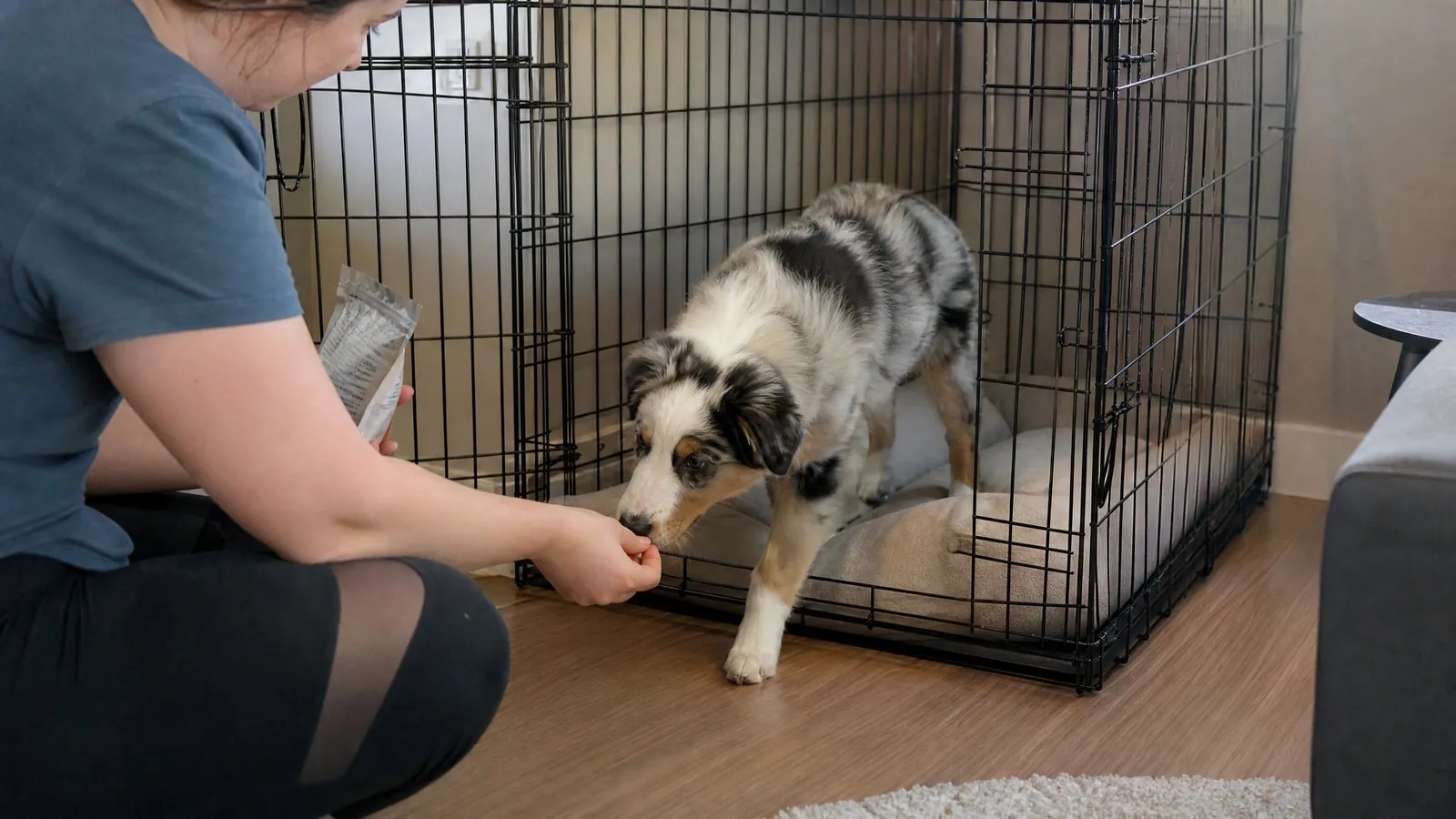
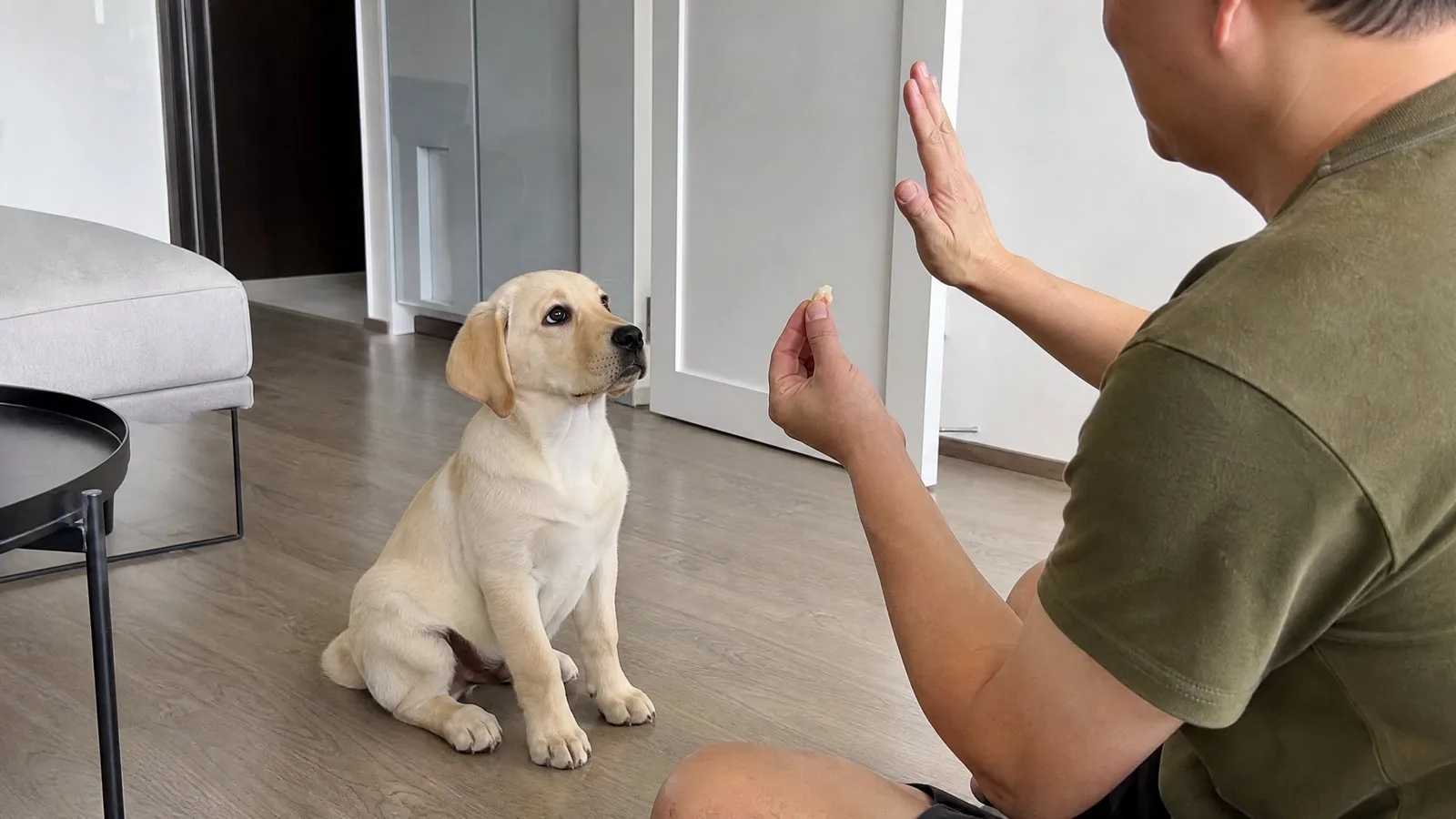
- Pair new things with food. Carry high-value treats and feed them while the new thing is happening.
- Watch the body language, not the clock. End on a good note, before your puppy gets overwhelmed.
- Control the intensity. Start quiet, distant, or slow, then build up as your puppy relaxes.
A simple formula: new thing appears → treat → new thing goes away → treat stops. Your puppy learns that novel things predict good stuff.
The puppy socialization checklist
Aim to introduce a wide range of experiences across five categories: people, sounds, surfaces, handling, and places. You don’t need to tick every box, but variety matters more than repetition of the same few things.
Use the table below as your working list. Keep each introduction brief and positive, and repeat favorites a few times across different days.
| Category | Expose your puppy to | How to do it well |
|---|---|---|
| People | Men, women, children, older adults, people in hats, hoods, high-vis, uniforms, sunglasses, people with beards, wheelchairs, walking sticks | Let people toss treats rather than loom over or reach down. One or two new people per session. |
| Dogs & animals | Calm vaccinated adult dogs, other puppies in class, cats if relevant, livestock or wildlife at a distance | Choose steady, healthy animals. Avoid chaotic dog-to-dog free-for-alls. |
| Sounds | Doorbell, vacuum, hairdryer, washing machine, traffic, thunder, fireworks, sirens, kitchen clatter, babies crying | Start at low volume or a distance. Recordings at a quiet level work well, paired with treats. |
| Surfaces | Grass, tile, carpet, hardwood, metal grates, gravel, sand, wet grass, stairs, wobbly or uneven ground | Let them walk across at their own pace. Treats on the surface encourage exploring. |
| Handling | Paws and nails, ears, mouth and teeth, tail, collar grabs, being held, being brushed, being toweled off | A few seconds at a time, paired with treats. Build toward vet and grooming handling. |
| Objects & movement | Umbrellas opening, bikes, skateboards, strollers, balloons, brooms, bags blowing in wind | Introduce from a distance first. Let your puppy investigate on their terms. |
| Places | Car, vet waiting room (just to visit), outdoor cafe, pet-friendly store, elevator, quiet street, friend’s home | Keep first visits short. A “happy visit” to the vet with treats prevents fear later. |
| Alone time | Being calmly left alone for short periods, resting in a crate or pen | Short, frequent absences build independence and help prevent separation problems. |
Build these in gently, too
- Car travel. Short, positive trips reduce motion sickness and anxiety. See car travel with a puppy.
- Bathing and grooming. Introduce water, the tub, and the dryer slowly. Our guide on how to bathe a puppy walks through it.
- Being alone. Overlooked but vital. Short absences now help prevent trouble later; read separation anxiety in dogs.
- Handling for the vet. A puppy who tolerates paw, ear, and mouth checks makes every future appointment easier.
How to read your puppy’s stress signals
Pushing a nervous puppy backfires. Learn to spot early stress so you can ease off before fear sets in.
Early, subtle signs (slow down or add distance):
- Lip licking or tongue flicks
- Yawning when not tired
- Turning the head or body away
- Sniffing the ground suddenly
- A “half-moon” of white showing in the eye
- Freezing or going still
Clearer signs (stop and create space):
- Tail tucked low or between the legs
- Ears pinned back
- Crouching, trying to hide, or backing away
- Refusing treats they’d normally take
- Trembling
- Panting without heat or exercise
Shut-down or over-threshold (end the session now):
- Trying hard to flee
- Growling, snapping, or barking in fear
- Completely ignoring you and the food
A puppy who won’t take food is usually too stressed to learn. That’s your cue to increase distance, lower the volume, or stop for the day.
How to go slower
When you see stress, don’t flood your puppy with more. Instead:
- Increase distance from whatever is worrying them.
- Lower the intensity (quieter, slower, smaller).
- Give them a break and let them reset before trying again.
- Shorten the session. Two minutes is plenty.
- Try again another day at an easier level and build up gradually.
There’s no prize for powering through. A puppy who leaves a situation feeling safe has still had a successful session.
A realistic weekly rhythm
You don’t need a packed schedule. Consistency beats intensity. A workable target is one or two new experiences per day, kept short and positive, around your puppy’s sleep and meals.
Remember that puppies need a lot of rest. Overtired puppies get cranky and overwhelmed easily, so build socialization around naps rather than cutting into them. Our guide on how much a puppy should sleep explains the numbers.
A sample day might look like this:
- Morning: A new surface in the yard, plus breakfast fed by hand during the vacuum running quietly in another room.
- Midday: A carried trip down a quiet street to watch traffic, then a long nap.
- Evening: Two minutes of gentle paw and ear handling with treats, then calm time.
Over a week, rotate through the categories so your puppy meets new people, hears new sounds, walks on new surfaces, and visits a new place or two.
What if your puppy is already past 14 weeks?
Don’t panic. The window narrows, but socialization and confidence-building continue well beyond it, just at a slower pace and with more patience. Keep introductions positive and gradual, and go at your dog’s speed. If your older puppy or adopted dog shows strong fear or aggression, work with a qualified trainer or veterinary behaviorist early rather than hoping it fades.
If you’re still deciding where your puppy will come from, our guide on adopting vs. buying a puppy covers questions to ask about a litter’s early socialization, which matters a great deal.
When to call a professional
Contact your veterinarian or a credentialed trainer or behaviorist if:
- Your puppy shows intense, persistent fear that doesn’t ease with gentle, gradual exposure.
- Your puppy growls, snaps, or panics around people, dogs, or handling.
- You see fear that’s getting worse rather than better over a couple of weeks.
- You’re unsure whether a setting is safe before your puppy’s vaccines are complete.
Look for trainers who use reward-based, force-free methods. Early help is far easier than undoing an entrenched fear later.
FAQ
Is it safe to socialize my puppy before all their shots?
Yes, with precautions. Professional bodies including the AVMA support early socialization because the behavioral risks of waiting usually outweigh the controlled infection risk. Choose low-risk settings, carry your puppy in busy or high-traffic areas, and avoid dog parks and other places where unvaccinated dogs may have been. Ask your vet about disease risk where you live.
How many new things should I introduce each day?
One or two new experiences a day is plenty for most puppies, kept short and paired with treats. Variety across the week matters more than volume on any single day. Always build sessions around naps, since an overtired puppy gets overwhelmed quickly.
What’s the difference between socialization and training?
Socialization is about building positive associations with the world: people, sounds, surfaces, and places. Training teaches specific behaviors like sit or loose-leash walking. They work together. Once your puppy is settling in, our guides on the first commands to teach and leash training are good next steps.
My puppy seems scared of everything. What should I do?
Slow right down. Increase distance from whatever worries them, lower the intensity, and keep sessions to a minute or two, always with food. Never force your puppy toward something frightening. If the fear is intense or getting worse over a couple of weeks, talk to your vet or a reward-based trainer or veterinary behaviorist.
Can I socialize an adopted dog that’s older than 16 weeks?
Yes. The prime window has narrowed, but dogs keep learning throughout life. Progress is slower and needs more patience, so keep every introduction positive, go at your dog’s pace, and get professional help early if you see strong fear or aggression.