Car Travel With a Puppy: Safety, Motion Sickness, and Long Trips
Keep your puppy safe in the car with crash-tested restraints, gradual training, motion sickness tips, a packing list, and heat safety for long trips.
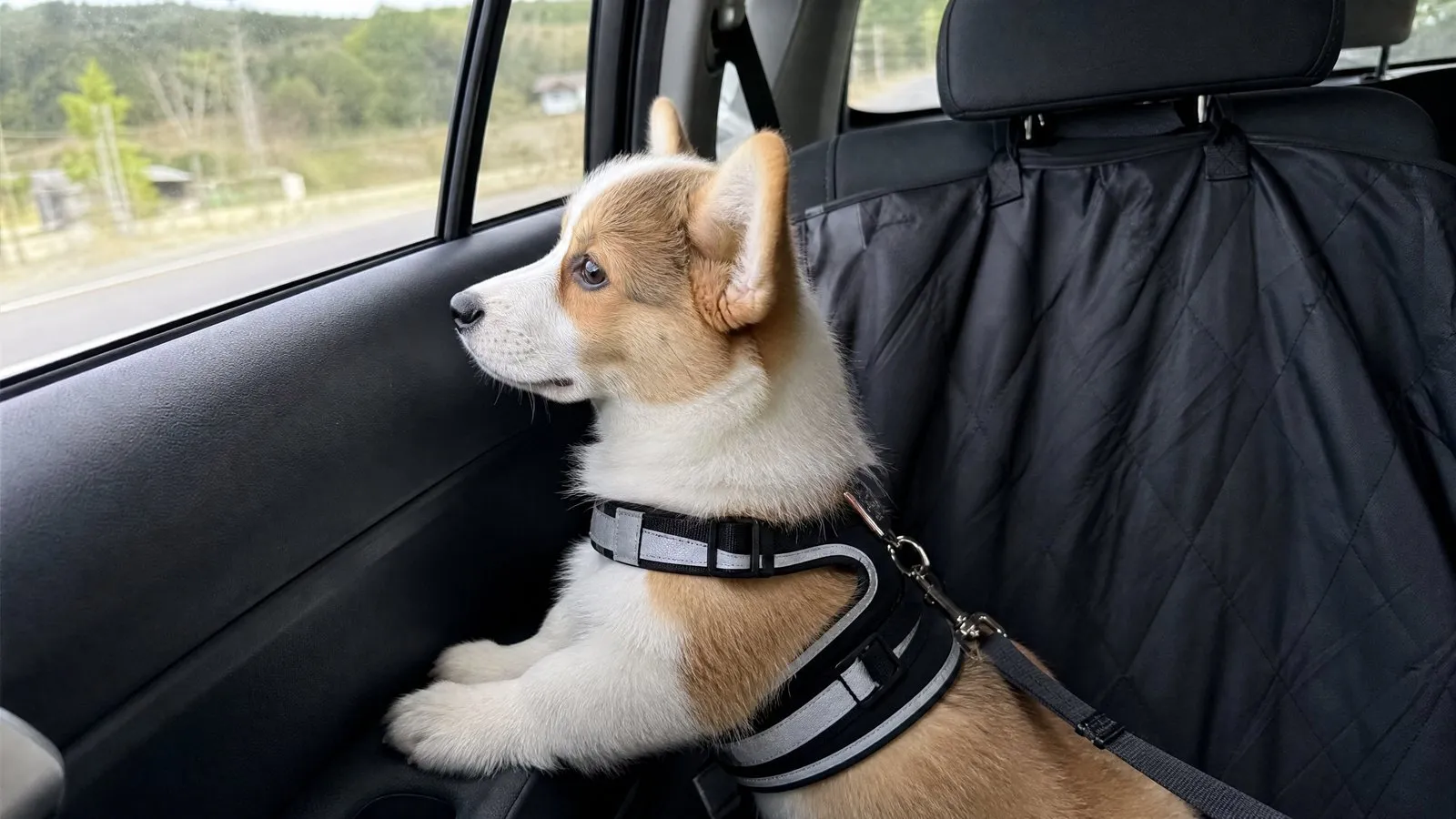
Secure your puppy in the back seat, either in a crash-tested crate or on a crash-tested harness clipped to a seat belt. Never let a puppy ride loose, on your lap, or in a front seat with an active airbag. Build up to longer drives over days with short, calm practice trips, and if your puppy drools or vomits, talk to your vet about motion sickness medication.
That is the short version. Here is how to do each part well, so your puppy learns that the car is a safe, boring place to nap rather than something to dread.
Why restraint matters
An unsecured puppy is a danger to everyone in the car. In a sudden stop or crash, a loose dog becomes a projectile, can distract the driver, and may bolt through an open door at the scene. A secured puppy is safer, and so are you.
The two restraint types worth using are a secured crate or a harness that clips to a seat belt. Both are widely recommended by veterinary and animal welfare organizations, including the ASPCA. Look for products that have been independently crash-tested, not just labeled “safety” harnesses. Many harnesses sold for cars have never been tested in a collision.
Crate or harness: which to choose
| Feature | Secured crate | Crash-tested harness |
|---|---|---|
| Best for | Puppies already crate trained; larger vehicles | Smaller cars; dogs who settle on a seat |
| Containment | Full; also contains mess and vomit | Keeps dog on the seat, some movement |
| Space needed | More; takes a cargo area or back seat | Minimal |
| After a crash | Protects and contains the dog | Keeps dog restrained, prevents escape |
| Bonus | Familiar den if crate trained at home | Doubles as a walking harness at stops |
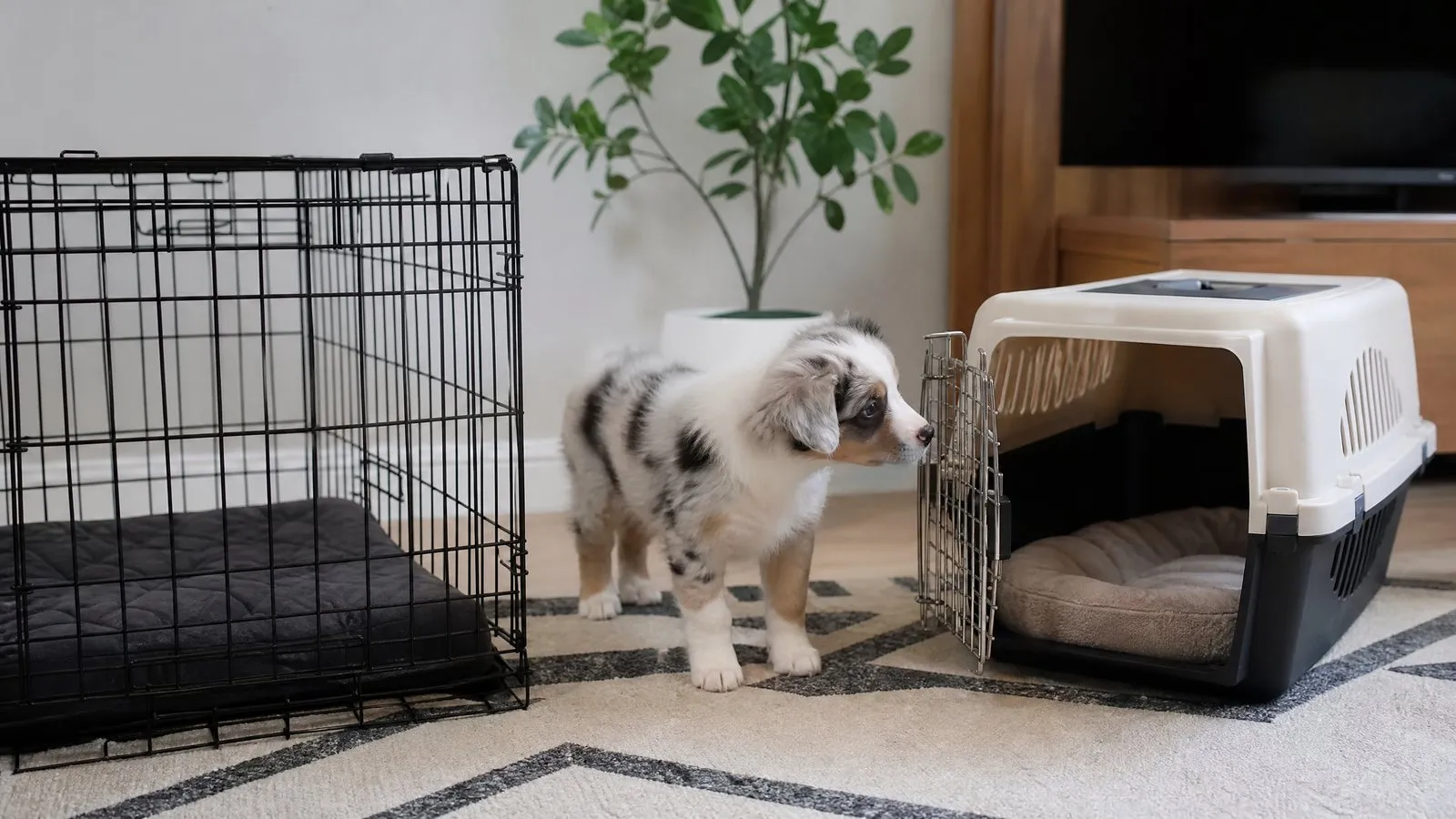
If your puppy already rests happily in a crate at home, a crate in the car often transfers well. If you are new to crates, our crate training guide walks through the basics, and how to choose a dog crate covers sizing.
How to fit each one safely
Crate:
- Place it where it cannot slide. The footwell behind a front seat, the back seat, or a cargo area all work depending on crate size.
- Secure the crate itself so it does not move in a stop. Use the seat belt through the crate frame, or anchor straps.
- Choose a crate your puppy can stand, turn around, and lie down in, but not so large they get thrown around inside.
Harness:
- Fit it snugly: you should fit two fingers flat under the straps, no more.
- Clip the harness to the seat belt or a dedicated tether, kept short so the puppy cannot reach the window or step into the footwell.
- Use a harness with a wide chest plate and sturdy stitching, designed to spread force across the chest, not the neck. Never clip a car tether to a flat collar.
For the difference between harnesses and collars in general, see harness vs. collar.
The front seat rule
Keep your puppy in the back seat, every time. Front passenger airbags deploy with enough force to seriously injure or kill a dog, especially a small puppy. The same crash force that protects an adult human can crush a small body in the front seat.
If you drive a vehicle with only front seats, such as some vans or two-seat cars, secure the puppy in a crash-tested crate, move the seat as far back as possible, and switch off the passenger airbag if your vehicle allows it. Check your owner’s manual for how.
Getting your puppy used to the car
Most car-anxious and car-sick dogs were simply rushed. A puppy whose first car experiences were a long, lonely, nauseating ride learns that the car means feeling awful. Go slowly and you can usually prevent that.
Spread this over 5 to 10 days. Move to the next step only when your puppy is relaxed at the current one.
- Parked car, doors open. Let your puppy explore the stationary car with the engine off. Toss a few treats onto the seat or into the crate. Two or three short sessions.
- In the seat, engine off. Settle your puppy in the crate or harness. Give a chew or a stuffed toy. Sit with them for 2 to 5 minutes, then let them out calmly.
- Engine on, not moving. Repeat step 2 with the engine running so they get used to the sound and vibration. Keep it to a few minutes.
- First tiny drive. Drive to the end of the street and back, or around the block. Keep it under 5 minutes. End somewhere pleasant, not the vet.
- Build up gradually. Add a few minutes each trip. Mix in fun destinations like a park or a friend’s house, so the car does not only predict vet visits.
Keep your own energy calm. A bright, high “it’s okay!” voice tends to confirm to a puppy that something is worth worrying about. Low-key and matter-of-fact works better.
A puppy who gets good car trips early is also easier to socialize, since you can take them to new places once your vet confirms they are far enough along in their vaccinations.
Motion sickness: why it happens and what helps
Puppies get car sick more often than adult dogs. The inner ear structures that control balance are still developing, so the motion affects them more. Many dogs grow out of it by around 12 months. Until then, you can reduce it.
Signs of motion sickness include:
- Drooling, lip licking, repeated swallowing
- Whining or restlessness
- Yawning
- Vomiting
- Going very still and withdrawn
Practical fixes to try first
- Travel on an empty-ish stomach. Avoid a big meal in the 2 to 3 hours before a drive. A small snack is fine; a full belly is more likely to come back up. See our feeding schedule guide to time meals around trips.
- Face forward, low motion. A crate in a stable spot or a forward-facing harness position reduces the visual chaos of watching the world rush sideways past the window.
- Cool, fresh air. Crack a window slightly and keep the car cool. Stuffy heat makes nausea worse.
- Keep drives short while training. Nausea reinforces fear. Short, successful trips build a better association.
- A familiar blanket or toy. A little comfort and a familiar scent can settle an anxious puppy.
When to talk to your vet
If your puppy keeps vomiting despite these steps, or is clearly distressed every trip, talk to your vet. There are effective options, including a prescription anti-nausea medication specifically approved for dogs, as well as anti-anxiety approaches for dogs whose problem is fear rather than true motion sickness. Your vet can tell which is which and recommend the right one and dose.
Do not give human motion sickness or anti-nausea medicines on your own. Doses and safety differ, and some human products are dangerous for dogs. Always check with your vet first.
If vomiting is severe, contains blood, or comes with lethargy or diarrhea, that is more than car sickness. See our guide to warning signs your puppy needs a vet.
Heat safety: the rule that matters most
Never leave a puppy alone in a parked car, even for a few minutes, even with the windows cracked. On a warm day a car heats up fast, and a puppy can develop heatstroke within minutes. This applies in mild weather too: a 70°F (21°C) day can push a car interior well past 100°F (38°C) quickly.
- If you need to stop somewhere your puppy cannot come inside, have another adult stay with them with the engine and air conditioning running, or skip the stop.
- On road trips, run the AC and make sure cool air actually reaches a crate in the cargo area, which can be hotter than the front.
- Bring water and offer it at every stop.
- Watch for heavy panting, bright red gums, drooling, wobbliness, or collapse. These are signs of overheating and a medical emergency. Move the puppy to shade and cool air, offer water, and contact a vet immediately.
In the UK and Australia, leaving a dog in a hot car can also be a reportable welfare offense. The safety point is the same everywhere: don’t do it.
Packing list for trips
For a short trip, bring the basics. For anything over a couple of hours, bring the full list.
Short trips (under 1 hour):
- Crash-tested crate or harness, properly fitted
- A few treats
- Water and a collapsible bowl
- Waste bags
- A familiar blanket or toy
Longer trips (half a day or more), add:
- Travel water and a spill-resistant bowl
- Measured meals in a sealed container (see how much to feed a puppy)
- A long-lasting chew for the drive (safe options in our teething chews guide)
- Puppy pads and paper towels for accidents or sickness
- A spare towel and a change of bedding
- Leash and a well-fitted walking harness
- ID tag on the collar, and confirm your microchip details are current
- A copy of vaccination records if you are crossing into boarding, daycare, or some borders
- Any medication, including vet-prescribed anti-nausea medicine
- A basic first aid kit
How often to stop on a long drive
Puppies need frequent breaks for the bathroom, water, and a short leg stretch. A rough guide:
| Puppy age | Suggested stop frequency |
|---|---|
| 8–12 weeks | Every 1–2 hours |
| 3–6 months | Every 2–3 hours |
| 6–12 months | Every 3–4 hours |
At each stop, clip on the leash before opening the door, take the puppy to a safe grassy spot away from traffic, offer water, and allow a few minutes to sniff and settle. Keep young, not-yet-fully-vaccinated puppies away from areas heavily used by other dogs. A tired puppy travels better, and long drives often line up with nap time anyway, as our guide to puppy sleep needs explains.
Expect accidents on long trips, especially before a puppy is reliably house trained. Line the crate or seat, and don’t scold. Our potty training guide covers the wider routine.
A simple plan for your first real trip
- The night before, pack the car and set up the crate or harness so it is ready.
- Feed a small meal at least 2 to 3 hours before leaving, or time the drive between meals.
- Give a bathroom break right before you load up.
- Secure the puppy in the back seat, give a chew, and keep the car cool.
- Stop on the schedule above. Water, bathroom, short stretch.
- Never leave the puppy alone in the car.
- End at a calm, positive destination when you can.
If you’re still setting up for life with a new dog, our new puppy checklist and first 24 hours plan cover the rest of the early days.
FAQ
Can my puppy ride on my lap in the passenger seat?
No. A puppy on your lap is unrestrained, distracts you from driving, and sits directly in front of an airbag that can cause fatal injuries if it deploys. Always secure your puppy in the back seat in a crate or crash-tested harness.
How do I stop my puppy from being sick in the car?
Travel on a near-empty stomach, keep the car cool with a little fresh air, use a stable crate or forward-facing position, and keep early trips short and positive. If vomiting continues, ask your vet about a prescription anti-nausea medication rather than giving any human medicine.
At what age can a puppy travel in the car?
A puppy can travel from the day you bring them home, as long as they are safely restrained. Keep trips short at first and build up gradually. Hold off on stops at dog-heavy areas until your vet confirms vaccinations are far enough along.
Is a crate or a harness safer in the car?
Both are good options when the product is crash-tested and fitted correctly. A secured crate also contains mess and suits crate-trained puppies; a harness takes less space and doubles as a walking harness. Choose what your puppy is calmest in.
How long can a puppy go in the car without a break?
As a rough guide, every 1 to 2 hours for puppies under 12 weeks, stretching to every 3 to 4 hours by 6 to 12 months. Stop for water, a bathroom break, and a short stretch, and never leave the puppy alone in the car.