New Puppy Checklist: What to Buy and Set Up Before Day One
A new puppy checklist with grouped buys, US price ranges, and a 48-hour home setup plan so you're ready before pickup day.
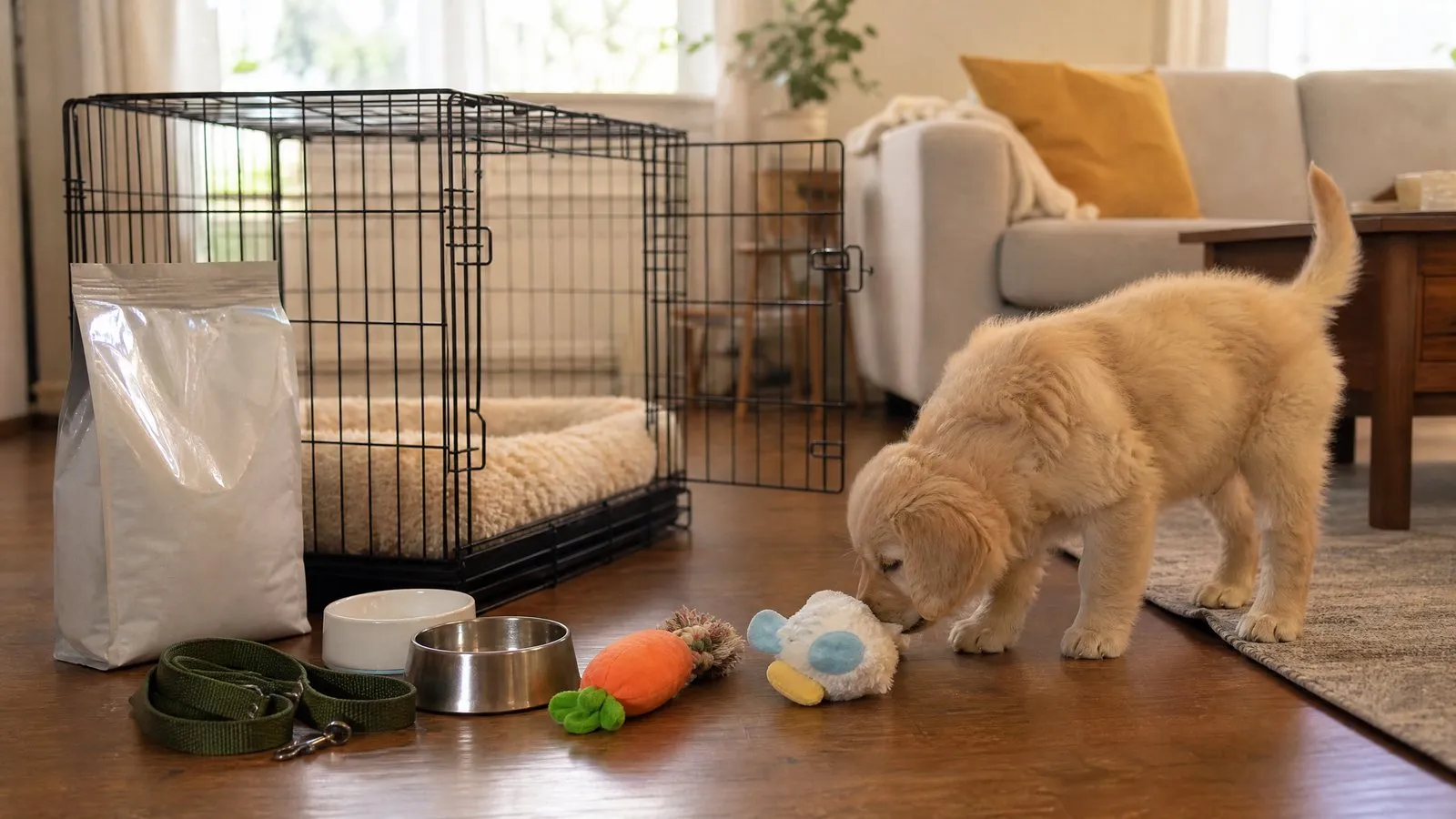
You need surprisingly little to bring a puppy home safely: a crate, two bowls, puppy food, a collar and leash, an ID tag, a few chew toys, and cleaning supplies. Everything else can wait. Below is a grouped shopping list with rough US prices, a 48-hour setup plan, and a printable-style checklist you can work through today.
If you’re still deciding where your puppy will come from, read Adopting vs. Buying a Puppy first. If you’ve already set a pickup date, keep going.
Buy these before day one (essentials)
These are the items you genuinely need in the house before your puppy arrives. Prices are approximate US ranges for mid-quality gear that will last.
Sleeping and containment
- Crate — $30–$70. Get one sized for your puppy’s expected adult size, with a divider panel so you can shrink the usable space while they’re small. A right-sized crate speeds up potty training because puppies avoid soiling where they sleep. See How to Choose the Right Dog Crate.
- Crate bedding — $15–$40. A flat, washable mat is safer than a plush bed for a chewer. Have a cheap backup; accidents happen.
- Playpen or baby gates — $25–$70. You need a safe, small area where the puppy can’t wander off and get into trouble. One or two baby gates often do the job.
Food and water
- Food and water bowls — $10–$25. Stainless steel is easy to clean and nearly indestructible. Get two.
- Puppy food — $20–$60 per bag. Buy the exact food your breeder or shelter has been feeding, even if you plan to switch later. Changing food and homes at once causes diarrhea. Transition gradually over 7–10 days afterward. For amounts, see How Much to Feed a Puppy or run the numbers in our Puppy Food Calculator.
- A few days of the same treats — $5–$15. Small, soft, pea-sized training treats work best.
Collar, ID, and leash
- Flat collar — $8–$20. Adjustable, with room to grow. You should fit two fingers under it.
- ID tag — $5–$15. Engrave your phone number. Do this before day one, not after. Many owners also microchip at the first vet visit.
- Leash — $8–$20. A plain 4–6 foot leash. Skip retractable leashes for a young puppy; they teach pulling.
- Harness (optional but useful) — $12–$30. Gentler on the neck for walks. See Harness vs. Collar to decide.
Chews and toys
- 2–3 chew toys — $15–$40. Puppies need to chew, especially while teething. Choose a mix of textures and sizes you can’t fully fit in their mouth. See Safe Chews for Teething Puppies.
Cleaning and hygiene
- Enzymatic cleaner — $10–$20. This breaks down urine odor so the puppy doesn’t return to the same spot. Regular cleaners don’t.
- Poop bags — $5–$15. A roll or two to start.
- Paper towels and old towels — you likely own these already.
Essentials total: roughly $200–$450 depending on how much you spend per item. For the full-year picture, see What a Dog Really Costs in the First Year.
Nice to have (buy within the first week or two)
None of these are urgent. Add them once you’ve seen how your puppy actually behaves.
- Puppy shampoo — $8–$18. You won’t need it immediately; see How to Bathe a Puppy.
- Grooming brush and nail clippers — $10–$30. Match the brush to the coat type.
- Treat pouch — $10–$20. Handy once training ramps up.
- Snuffle mat or food puzzle — $15–$30. Burns mental energy and slows fast eaters.
- A second crate mat or cover — $15–$30.
- Car restraint (crash-tested crate or harness) — $30–$80. Needed before any car trip beyond the ride home. See Car Travel With a Puppy.
- Long line (10–30 ft) — $10–$20. Useful later for recall practice in open spaces.
- Pet first-aid kit — $15–$35.
Skip these for now
- Expensive plush beds. They get chewed and soiled. Wait until the puppy is reliably house-trained and past teething.
- Clothing and bandanas. Fun, not functional.
- A closet full of toys. Puppies ignore most of them. Buy a few, add more based on what they like.
- Retractable leashes. They encourage pulling and are hard to control.
- Prong, choke, or shock collars. Not appropriate for a young puppy, and modern training guidance favors reward-based methods.
- Puppy “starter kits” that bundle a dozen items. Often padded with cheap toys you won’t use. Buy the few things you need individually.
- Scented or heavily perfumed cleaners for accidents. You want enzymatic, not fragrant.
The printable checklist
| Item | Category | Rough US price | Have it? |
|---|---|---|---|
| Crate with divider | Essential | $30–$70 | ☐ |
| Washable crate mat | Essential | $15–$40 | ☐ |
| Playpen or baby gates | Essential | $25–$70 | ☐ |
| Stainless steel bowls (x2) | Essential | $10–$25 | ☐ |
| Same puppy food as source | Essential | $20–$60 | ☐ |
| Small training treats | Essential | $5–$15 | ☐ |
| Adjustable flat collar | Essential | $8–$20 | ☐ |
| Engraved ID tag | Essential | $5–$15 | ☐ |
| 4–6 ft leash | Essential | $8–$20 | ☐ |
| 2–3 chew toys | Essential | $15–$40 | ☐ |
| Enzymatic cleaner | Essential | $10–$20 | ☐ |
| Poop bags | Essential | $5–$15 | ☐ |
| Harness | Nice to have | $12–$30 | ☐ |
| Puppy shampoo | Nice to have | $8–$18 | ☐ |
| Brush + nail clippers | Nice to have | $10–$30 | ☐ |
| Food puzzle / snuffle mat | Nice to have | $15–$30 | ☐ |
| Car crate or crash-tested harness | Nice to have | $30–$80 | ☐ |
| Long line | Nice to have | $10–$20 | ☐ |
| Pet first-aid kit | Nice to have | $15–$35 | ☐ |
Home setup: the 48 hours before pickup
Shopping is the easy part. Use the two days before pickup to make your home safe and to decide, as a household, how things will run.
Two days before
- Puppy-proof one room and the puppy’s pen area. Get down to puppy height and look for cords, shoes, small objects, toxic plants, and gaps behind furniture. Our room-by-room guide walks through it: How to Puppy-Proof Your Home.
- Choose the crate’s location. A quiet corner of a room where people are, not an isolated laundry room. Puppies settle better near their people, and you’ll hear them at night.
- Pick the potty spot outside and the route to reach it. Short and direct matters when a puppy needs out urgently.
- Agree on house rules with everyone. Is the couch allowed? Who does the first morning potty trip? What word means “yes”? Consistency from day one prevents confusion.
- Book the first vet appointment for within the first few days. See Your Puppy’s First Vet Visit.
The day before
- Set up the crate and pen so the puppy walks into a finished space, not a construction zone.
- Fill water, put the bed in the crate, and place one chew toy inside.
- Wash your hands of strong scents on soft items; a familiar-smelling blanket from the breeder or shelter, if offered, helps the puppy settle.
- Stock the fridge and plan your own meals. The first day is busy; you won’t want to cook.
- Clear your calendar for at least the first 2–3 days. Someone should be home almost continuously while the puppy adjusts.
Pickup day
- Bring a towel, poop bags, water, and the leash and collar.
- Ask for the puppy’s current feeding schedule and food brand in writing, plus any vaccination and deworming records.
- Keep the ride home calm. If possible, bring a second person so one can sit near the crate.
Then follow an hour-by-hour plan for the arrival itself: The First 24 Hours With Your New Puppy.
What to line up for week one
You don’t need to master training before pickup, but skim these so you know the plan:
- Crate training — a 7-day step-by-step plan
- Potty training — a schedule that works
- Night crying — what actually helps
- Sleep needs — puppies sleep a lot; here’s how much and when
- Biting and nipping — how to redirect it calmly
A quick safety note: contact your veterinarian promptly if your new puppy has repeated vomiting or diarrhea, won’t eat for more than about 12 hours, seems lethargic, or struggles to breathe. Very young puppies can go downhill fast, so when in doubt, call. See Warning Signs Your Puppy Needs a Vet Today.
FAQ
How much should I budget for the first shopping trip?
Plan for roughly $200–$450 for the essentials in the table above, buying mid-quality gear. You can trim this by borrowing a crate or reusing towels and gates you already own. Nice-to-have items add another $100–$250 over the first couple of weeks.
Do I really need a crate?
It’s the single most useful purchase for most new owners. A right-sized crate gives the puppy a safe den, speeds up house-training, and keeps them out of trouble when you can’t watch them. If you’d rather not use one long-term, a secure playpen can serve a similar containment role, but a crate still helps at night and for travel.
Should I buy the same food the breeder or shelter uses?
Yes, at least to start. Moving to a new home is stressful enough on a puppy’s stomach; changing the food at the same time often causes diarrhea. Buy the exact brand and formula they’re on, then transition gradually over 7–10 days if you want to switch. For details, see When to Switch From Puppy Food to Adult Dog Food.
What’s the one thing most first-time owners forget?
An engraved ID tag with your phone number, ready on the collar before day one. Puppies can slip out a door on the very first day, and a tag is the fastest way to get them back. Microchipping at the first vet visit is a good second layer.
Can I set everything up the morning of pickup?
You can, but it’s stressful. Setting up the crate, pen, and puppy-proofing a day ahead means you arrive home and simply settle the puppy in, rather than assembling gear while they cry. Give yourself the buffer.