How to Stop Puppy Biting and Nipping (Without Yelling)
Stop puppy biting without yelling: redirect to toys, use short time-outs, manage overtired zoomies, and know the timeline and when to call a trainer.
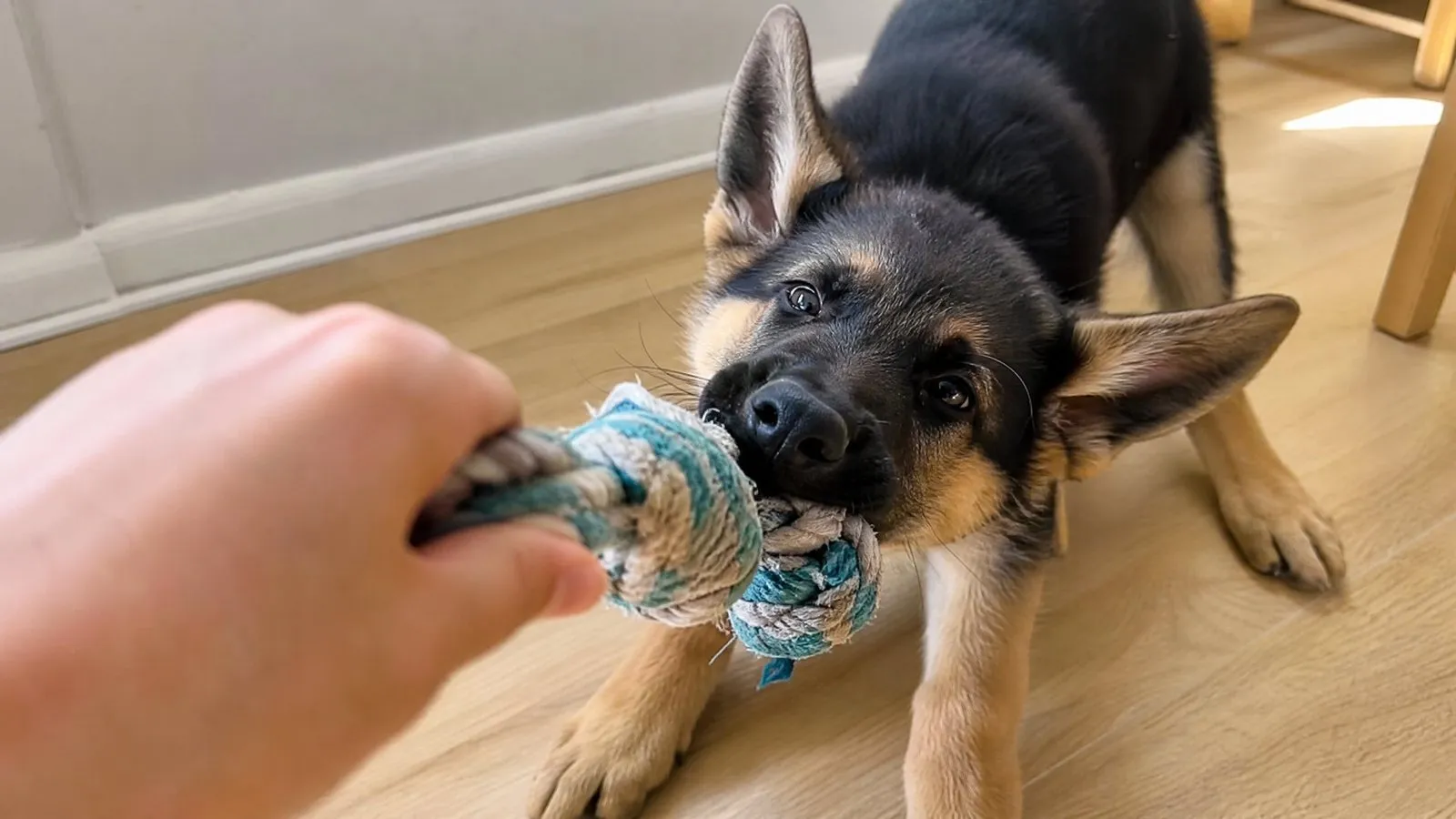
Puppy biting is normal, and it stops fastest when you redirect every bite to a toy, keep hands and feet out of the game, and use short, calm time-outs when the mouthing gets wild. You don’t need to yell, pin your puppy down, or hold its muzzle. With consistent handling, most puppies bite far less by 4 to 5 months, as their adult teeth come in and their self-control grows.
Here’s exactly how to do it today.
Why puppies bite in the first place
Mouthing is how puppies explore the world and play with their littermates. In a litter, biting too hard earns a yelp and the game stops, so puppies gradually learn to soften their mouths. When they come home to you, that learning is unfinished, and your hands become the next thing to chew.
Three things drive most of the biting you’ll see:
- Play and exploration. Your puppy has no hands, so it investigates with its mouth. Moving fingers, swinging sleeves, and bare feet are irresistible.
- Teething. Between roughly 3 and 6 months, puppies lose baby teeth and grow adult ones. Sore gums make them want to chew constantly. Our puppy teething timeline walks through the stages.
- Overtiredness. This is the big one new owners miss. An overtired puppy gets frantic and bitey, much like an overtired toddler.
None of this is aggression. It’s a normal developmental stage, and your job is to teach a better outlet rather than to punish a natural behavior.
The core method: redirect to a toy
The single most effective technique is simple: make sure there’s always something your puppy is allowed to bite within arm’s reach, and calmly swap it in whenever teeth meet skin.
Step by step
- Keep toys everywhere. Stash a few chew toys and tug toys in each room where your puppy spends time. You want one reachable in under two seconds.
- See the bite coming. Puppies often get mouthy when excited or when you reach to pet them. Have a toy ready before your hand goes near.
- When teeth touch skin, go still and offer the toy. Stop moving your hand (movement invites chasing), then present the toy right in front of the puppy’s nose and wiggle it to make it interesting.
- Praise the switch. The moment your puppy takes the toy, say “yes” or “good” in a warm voice. You’re rewarding the choice to chew the right thing.
- Play with the toy together. A short tug or toss gives the puppy the interaction it wanted, which is often the real goal behind the bite.
The goal isn’t to never feel teeth. It’s to make the toy the obvious, more rewarding target every single time.
Teach a soft mouth
You can also shape gentleness directly. During play, if your puppy bites hard enough to hurt, let out a calm, higher-pitched “ow” and briefly stop the game by withdrawing your hand for a second or two, then resume. This mimics how littermates react. Keep it low-drama, a sharp yelp from you can wind some puppies up more, so if yours gets more excited, skip the sound and go straight to the quiet pause.
Short time-outs for when it escalates
Redirection handles most biting. When your puppy is too revved up to take the toy and keeps lunging at skin, a brief time-out resets everything.
How to do it well:
- Make it short. 30 to 60 seconds is plenty. This isn’t punishment; it’s ending the fun that the biting produced.
- Remove the reward, not the puppy’s security. Either stand up and step over a gate or out of the room for a moment, or calmly place the puppy in a safe pen for a short break. Keep your voice neutral.
- Don’t use the crate as a punishment. You want the crate to stay a positive, restful place. If you’re still building that association, see our crate training plan.
- Come back calmly and offer an appropriate chew. If biting restarts immediately, that’s usually a sign your puppy is overtired, not naughty.
The lesson your puppy learns is clear and gentle: teeth on skin make the good stuff stop; toys and soft mouths keep it going.
Managing overtired “zoomies” and the witching hour
Much of the worst biting isn’t really about play, it’s about exhaustion. Puppies need a huge amount of sleep, often 18 to 20 hours a day for young ones. When they miss that, they don’t slow down, they speed up: frantic running, grabbing clothing, and sharp, relentless nipping. Many families see this reliably in the early evening, the so-called witching hour.
What to do
- Enforce naps on a schedule. A young puppy can usually only stay awake happily for about 45 to 90 minutes before needing to sleep again. Watch the clock, not just the puppy.
- Treat biting as a sleep cue. If your puppy was fine and suddenly turns into a piranha, assume overtired first. Guide it to a quiet crate or pen with a chew and let it settle.
- Build in downtime. Puppies rarely switch off on their own when the house is busy. A covered pen or crate in a calm room helps. Our guide to how much a puppy should sleep has age-by-age schedules.
- Channel energy before the crash. A short sniffy walk, a food puzzle, or a few minutes of training can take the edge off, but don’t try to exercise an overtired puppy into calm. That usually backfires.
If you solve nothing else, solving sleep will cut biting dramatically.
What not to do
Some old-fashioned advice makes biting worse and can damage your relationship or create fear. Skip all of the following:
- Don’t hit, smack, or flick the nose or muzzle. It teaches your puppy that hands are scary and unpredictable, and it can lead to defensive biting later. The American Veterinary Medical Association and the American Animal Hospital Association both advise against pain- and fear-based methods.
- Don’t hold the muzzle shut or pin the puppy down. These “dominance” moves aren’t supported by current behavior science and often escalate struggling and biting.
- Don’t yell or make a big emotional scene. To many puppies, loud reactions and flapping hands look like the game got better.
- Don’t play rough with your hands. Wrestling and letting the puppy chew fingers “while it’s little” teaches exactly the habit you’re trying to prevent.
- Don’t punish after the fact. Puppies don’t connect a telling-off with something that happened even a minute ago.
Calm, consistent, and boring consequences for biting, paired with lots of reward for good choices, work far faster than intimidation.
A simple daily setup that prevents biting
Prevention does most of the work. Build these into your routine:
- Rotate chews for sore gums. Offer a few safe, appropriate textures and swap them so they stay interesting. See safe chews for teething puppies for what to give and avoid.
- Puppy-proof the space. Fewer tempting hands, ankles, and dangling items means fewer bites. Our room-by-room puppy-proofing guide helps.
- Meet the real needs. A puppy that’s well slept, well fed, recently toileted, and lightly exercised is far less bitey. Mental work counts: five minutes practicing the first commands tires a puppy nicely.
- Protect the humans at puppy’s eye level. Young children and loose clothing are magnets. Supervise closely and keep a toy in a child’s hand so interactions start with the right target.
Quick reference: match the response to the situation
| Situation | What it usually means | Your best response |
|---|---|---|
| Gentle mouthing during play | Normal exploration | Redirect to a toy, keep the game going |
| Hard bite that hurts | Hasn’t learned bite strength | Calm “ow,” pause 1–2 seconds, resume with a toy |
| Repeated lunging at hands | Overexcited | 30–60 second time-out, then offer a chew |
| Frantic, can’t-stop nipping | Overtired | Guide to crate or pen for a nap |
| Constant chewing, drooly gums | Teething | Offer a cool, safe chew to soothe gums |
| Growling with stiff body, freezing, or snapping when guarding food or being handled | Possible fear or resource guarding | Stop, don’t punish, and consult a professional |
Timeline: when will it get better?
Every puppy differs by breed, temperament, and how consistent the household is, but a rough pattern holds for most:
- 8 to 10 weeks: Peak mouthiness. Expect frequent biting. Focus on management, redirection, and sleep.
- 10 to 16 weeks: Still very bitey, now with teething on top. This is often the hardest stretch. Keep going; you’re not doing it wrong.
- 4 to 5 months: Adult teeth are coming in and self-control improves. With consistent handling you’ll notice meaningfully fewer and softer bites.
- 6 months and beyond: Most well-managed puppies rarely bite people in play, though chewing on objects continues and needs good chew outlets.
The single biggest variable is consistency. If everyone in the home redirects the same way and protects the puppy’s sleep, improvement comes faster. Mixed messages, where one person wrestles and another punishes, stretch the timeline out.
When to call a trainer or your vet
Most puppy biting resolves with the steps above. Reach out for professional help if you notice any of these:
- Biting that breaks skin regularly or seems to be getting harder and more frequent as your puppy approaches 5 to 6 months.
- Growling, snapping, freezing, or stiffening, especially around food, toys, or when being handled or picked up. This can signal fear or resource guarding and is worth addressing early.
- Bites aimed at specific people (often children) in a way that feels targeted rather than playful.
- No improvement at all despite several weeks of consistent redirection, time-outs, and solid sleep.
- You feel out of your depth or the household is stressed. Early help is cheaper and easier than waiting.
Look for a trainer who uses reward-based, force-free methods, many hold certifications and will say plainly that they avoid pain and fear. Your veterinarian is also a good first call. They can rule out pain or a medical issue that might be driving mouthiness, and can refer you to a qualified behavior professional if needed. If your puppy’s biting is paired with sudden behavior changes or signs of illness, check our list of warning signs your puppy needs a vet.
FAQ
Is it normal for my 8-week-old puppy to bite constantly?
Yes. Biting peaks in the youngest puppies and is completely normal. At this age your main tools are prevention and management: keep toys handy, redirect every bite, and above all protect naps, since overtiredness causes much of the worst nipping.
Should I yelp like a littermate when my puppy bites?
You can try a calm, soft “ow” followed by a brief pause in play. It works for some puppies. But if your puppy gets more excited and bites harder when you make noise, drop the sound and simply go still, remove your hand, and redirect to a toy instead.
How long does puppy biting last?
For most puppies, play biting improves noticeably around 4 to 5 months as adult teeth settle in and self-control develops, and it becomes uncommon by about 6 months with consistent handling. Chewing on objects continues longer, so keep safe chews available.
My puppy bites more in the evening. Why?
That’s the classic overtired “witching hour.” After a long, stimulating day a puppy that hasn’t slept enough gets frantic and nippy rather than sleepy. Build in enforced naps during the day and guide your puppy to a quiet crate or pen when the evening frenzy starts.
Can I play tug of war, or does it make biting worse?
Tug is fine and genuinely useful, as long as teeth stay on the toy. Stop the game calmly if your puppy’s mouth lands on your hand, then restart once it re-targets the toy. Tug gives your puppy an appropriate, satisfying outlet for the urge to grab and bite.