Safe Chews for Teething Puppies: What to Give and What to Avoid
Safe teething chews for puppies: a clear comparison of rubber toys, bully sticks, antlers, rawhide and more, plus the fingernail test and size rules.
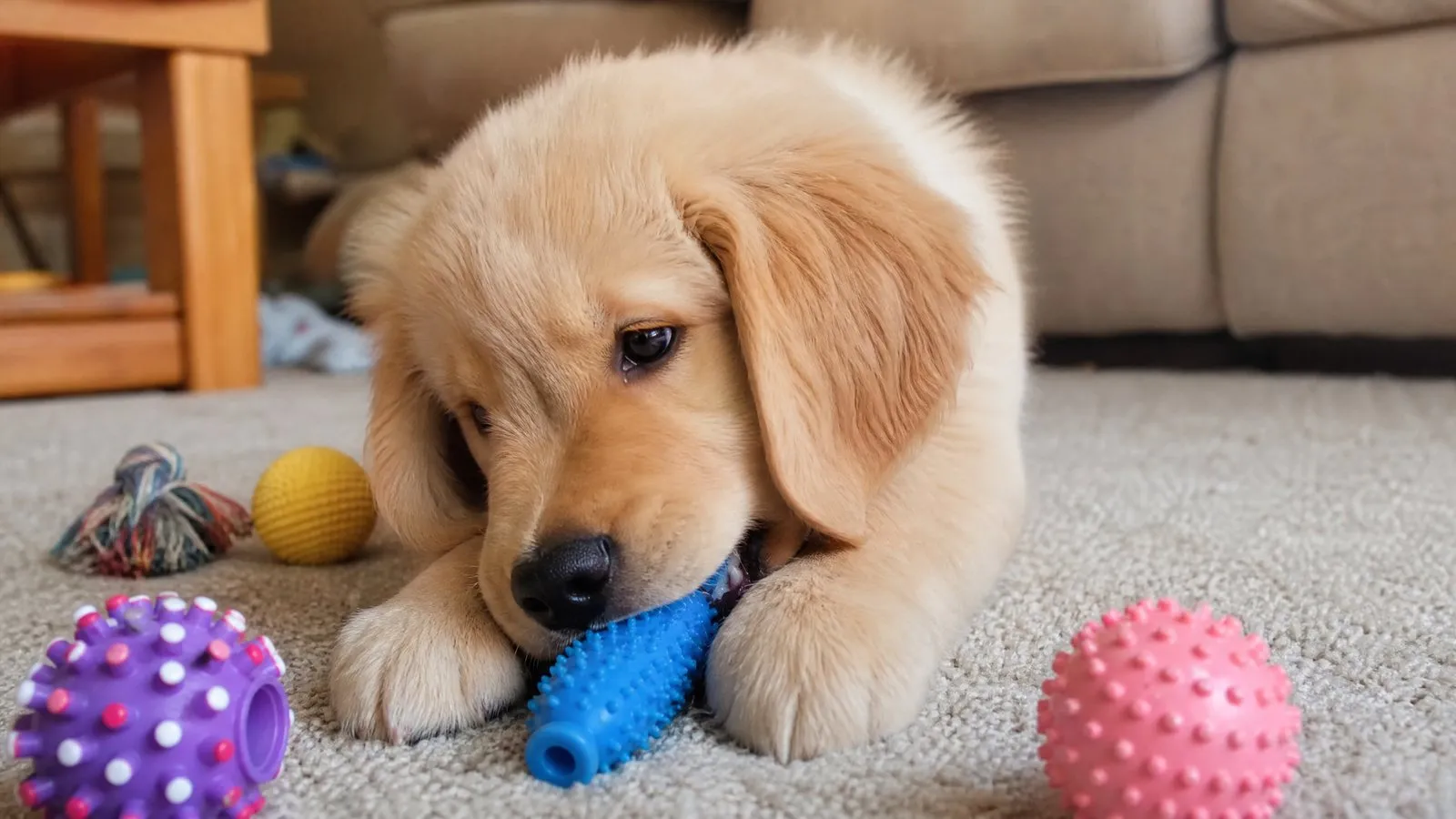
The safest chews for a teething puppy are soft, flexible rubber toys, a frozen wet washcloth, and appropriately sized rubber chews you can press a thumbnail into. Avoid anything hard enough to crack a tooth: antlers, cooked bones, hooves, and very hard nylon. Rawhide and dense chews like bully sticks carry choking and blockage risks, so they need close supervision and strict size rules.
Here’s the quick rule to carry through the whole article: if a chew is too hard to dent with your fingernail, it’s too hard for your puppy’s teeth. Everything below builds on that.
Why teething puppies chew so much
Puppies lose their baby teeth and grow 42 adult teeth, usually between about 3 and 7 months of age. During that stretch their gums are sore and chewing brings relief, so the urge to gnaw spikes. Giving them safe outlets protects your furniture, your hands, and most importantly their developing adult teeth.
If you want the full timeline of what’s happening in your puppy’s mouth, see our Puppy Teething Timeline. For stopping chewing that lands on you, pair this guide with How to Stop Puppy Biting and Nipping.
The fingernail test for hardness
This is the single most useful check you can do, and it takes two seconds.
Press your thumbnail firmly into the chew. If it gives slightly or you can leave a small mark, it’s soft enough. If it’s rock-hard and your nail makes no impression, it can fracture a tooth, especially the large upper premolars.
Veterinary dentists use a similar “kneecap rule”: if you wouldn’t want to be hit on the kneecap with it, don’t let your dog chew it. Both tests point the same way. Hard things crack teeth, and a slab fracture on a back tooth often means an extraction under anesthesia.
Chew types compared
Here’s how the common options stack up for a teething puppy. “Hardness” is judged by the fingernail test.
| Chew type | Hardness | Main risk | Supervision | Good for teething? |
|---|---|---|---|---|
| Solid rubber teething toys | Soft to firm | Small pieces if chewed through | Light, check for wear | Yes, a top pick |
| Frozen wet washcloth | Soft | Threads if swallowed | Moderate | Yes, cheap and soothing |
| Rubber chews stuffed and frozen | Soft to firm | Pieces if damaged | Light | Yes, keeps them busy |
| Dental chews (edible) | Soft to medium | Calories, gulping large chunks | Moderate | In moderation |
| Bully sticks | Medium to hard | Choking on the final nub, calories | Close, remove the nub | Sometimes, with care |
| Rawhide | Variable, often hard | Choking and intestinal blockage | Close, every minute | Not recommended for pups |
| Antlers | Very hard | Tooth fractures | N/A | No |
| Cooked bones | Very hard, brittle | Splinters, fractures, blockage | N/A | No, never |
| Raw weight-bearing bones | Very hard | Fractures, bacteria | N/A | No for teething |
| Hard nylon bones | Very hard | Tooth fractures, shard ingestion | N/A | No for most pups |
Rubber teething toys (the safe default)
A well-made rubber toy flexes under your nail and bounces back. It massages sore gums without threatening teeth. Look for a toy sized so your puppy can’t fit the whole thing in its mouth, with no small parts to bite off.
You can make these far more interesting by stuffing a hollow rubber toy with a little wet puppy food or plain mashed banana and freezing it for a few hours. The cold soothes gums and the frozen filling stretches a chew session to 20 minutes or more. Replace any toy once it’s chewed ragged or shows chunks missing.
Frozen washcloth (free and effective)
Wet a clean washcloth, wring it out, twist it, and freeze it. Let your puppy chew the cold cloth under supervision. It’s gentle on gums and costs nothing.
The catch: some puppies shred fabric and swallow threads, which can cause a dangerous gut blockage. Watch closely, and take it away the moment pieces start coming loose. Skip this one entirely if your puppy is a determined fabric-eater.
Edible dental chews
These are soft enough to bend and are designed to break down when chewed. They can help with plaque and give a teething pup something to gnaw. Two cautions: they add calories, so count them as part of the day’s food, and some puppies try to swallow large pieces whole. Choose a size made for your puppy’s weight and break it in half for small dogs.
If you’re juggling treats and meals, our How Much to Feed a Puppy guide explains how to keep extras from tipping your pup over their daily calories.
Bully sticks
Bully sticks are digestible, which gives them an edge over rawhide, and many puppies love them. The real hazards are the calories and the choking risk when the chew gets down to a short, swallowable nub. Buy a length longer than your puppy’s muzzle, hold one end or use a safety holder, and take the stub away before it’s small enough to gulp. Give them as an occasional treat, not an all-day item.
Rawhide
Rawhide is best avoided for teething puppies. Dogs often tear off large pieces that swell in the stomach and can lodge in the throat or intestines, sometimes requiring surgery. Quality and processing vary widely, and a puppy’s small airway leaves little margin for error. If you ever do offer it, it demands minute-by-minute supervision, and there are safer ways to satisfy a chewer.
Antlers, hooves, and hard nylon
Skip these during teething, and arguably for life. Antlers and hooves fail the fingernail test by a mile, and they’re among the most common causes of fractured teeth that veterinary dentists see. Hard nylon bones are the same story: too rigid for a developing mouth, and some dogs chip off and swallow shards. The marketing promises long-lasting entertainment; the trade-off is a cracked tooth and a vet bill.
Cooked bones (never) and raw bones (not for teething)
Never give cooked bones of any kind, including leftover chicken, rib, or steak bones. Cooking makes them brittle, so they splinter into sharp fragments that can puncture the mouth, throat, or gut. Raw weight-bearing bones are extremely hard and can fracture teeth, and they carry bacteria like Salmonella that raise concerns for your puppy and your household. The AVMA advises against feeding raw animal products for this reason. For a teething puppy, there’s no safe version of a bone here.
Size and supervision rules
Most chew accidents come down to two things: a chew that’s too small, or no one watching. Fix both and you’ve removed most of the risk.
Size
- Pick a chew bigger than your puppy’s mouth can swallow whole. When in doubt, go larger.
- Re-check size as your puppy grows. A toy that was safe at 10 weeks may be a choking hazard, or just too small, a month later.
- For edible chews, buy the size rated for your puppy’s current weight and break it down for small breeds.
Wear and tear
- Inspect chews before each session. Toss anything cracked, splitting, or with chunks missing.
- End the session when a chew gets small enough to fit entirely in the mouth. That’s the nub rule for bully sticks and the stub rule for everything else.
Supervision
- Watch your puppy with any new chew for the first several sessions so you learn how aggressively they chew.
- Keep edible chews, bully sticks, and the washcloth to supervised time only.
- Solid rubber toys with no removable parts are the main thing most puppies can have during short unsupervised stretches, such as in a crate.
- Offer chews when your puppy is calm, not wound up. An overexcited pup chews harder and gulps faster.
A crate with one safe rubber toy is a good setup for quiet time. If you’re building that routine, see Crate Training a Puppy: A 7-Day Plan and How Much Should a Puppy Sleep?.
A simple teething-relief routine
You don’t need a drawer full of products. This rotation covers most puppies:
- Morning: a frozen stuffed rubber toy during your coffee, under light supervision.
- Midday: a frozen washcloth for 10 minutes while you watch.
- Afternoon: a short supervised bully stick or a sized dental chew, counted in the day’s calories.
- Evening wind-down: a plain solid rubber toy in the crate.
- Throughout: when puppy teeth find your hands, redirect to a chew and reward the swap.
Rotate two or three toys so they stay novel, and keep the rest out of sight. Freezing is your best friend during the sorest weeks, usually around 4 to 6 months.
Remove tempting non-toys from reach so your puppy doesn’t practice chewing the wrong things. Our room-by-room Puppy-Proofing guide walks through cords, shoes, and baseboards.
When to call the vet
Contact your veterinarian promptly if your puppy:
- Is gagging, retching, drooling heavily, or pawing at the mouth, which can signal something stuck.
- Swallows a large piece of a chew, a bone fragment, or fabric. Blockages can become emergencies within hours.
- Has a broken or bleeding tooth, or a tooth that looks discolored.
- Won’t eat, is vomiting, or seems painful or lethargic after chewing.
Seek emergency care the same day for persistent gagging, breathing trouble, repeated vomiting, or a swollen, painful belly. For a broader list of red flags, see Warning Signs Your Puppy Needs a Vet Today.
Also mention teething and chewing at routine visits. Your vet can check that baby teeth are falling out normally; occasionally a baby canine is “retained” alongside the adult tooth and needs removal. Your Puppy’s First Vet Visit covers what to ask.
FAQ
How long does puppy teething last?
Most puppies teethe from around 3 to 7 months, with the heaviest chewing often between 4 and 6 months as the large adult teeth come in. By about 6 to 7 months most dogs have all 42 adult teeth. The urge to chew eases after that, though many dogs enjoy appropriate chews for life.
Are frozen carrots safe for teething puppies?
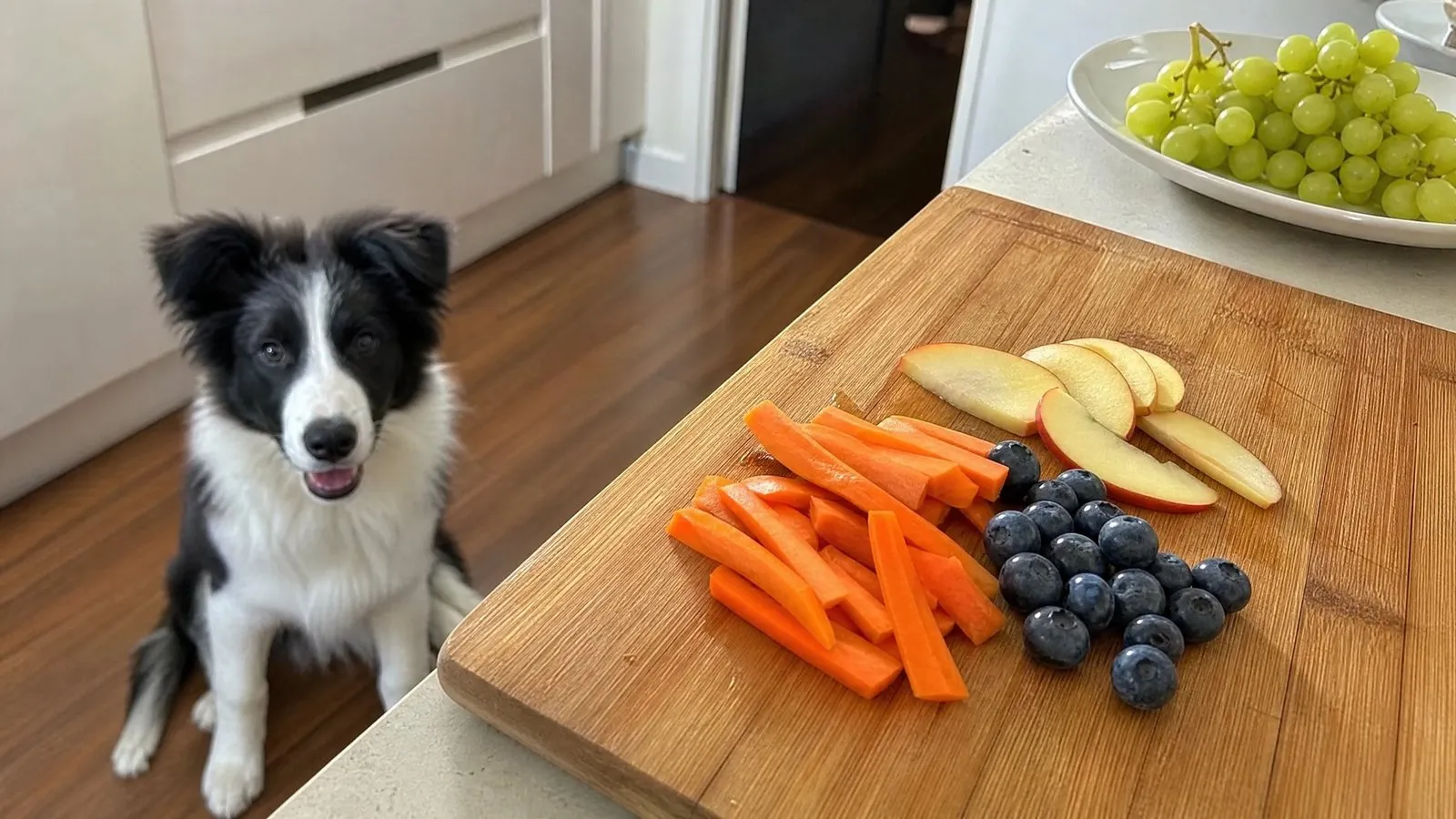
A large, whole raw carrot can work as a cheap, cold chew for many puppies, and it’s low in calories. Give it under supervision, size it so it can’t be swallowed whole, and take it away once it’s gnawed down to a small piece. Introduce it gradually, since too much can cause loose stools, and skip it if your puppy tends to bite off and gulp big chunks.
Can I give my puppy ice cubes to chew?
Ice cubes soothe gums and cost nothing, and small cubes are fine for most puppies in moderation. The concern is the same hardness issue: dogs who crunch large cubes aggressively can chip a tooth, so offer small cubes or crushed ice and watch how your puppy handles them.
My puppy destroys every toy in minutes. What now?
Choose “tough” solid rubber toys rather than hard ones, size up, and supervise closely so you can take pieces away. Freezing a stuffed toy slows down power chewers and makes the session last longer. If your puppy is swallowing chunks of toys, remove that type entirely and stick to items you can monitor every second, and mention the habit to your vet.
Is it normal for teething gums to bleed a little?
A small amount of blood on a toy or a tiny spot of blood as a baby tooth falls out is common and usually nothing to worry about. Swollen, actively bleeding gums, a tooth that stays loose without falling out, bad breath, or a puppy who won’t eat are worth a vet check.
A note on health information: Health and nutrition guides are written against published guidance from the AAHA, WSAVA and AVMA. They are general information, not a substitute for advice from your own veterinarian. If your dog seems unwell, call your vet.