How to Puppy-Proof Your Home, Room by Room
Puppy-proof your home room by room with this practical checklist covering cords, toxic plants, meds, xylitol, and a 15-minute eye-level crawl-through.
Start by getting on your hands and knees and looking at each room from your puppy’s height. That single move reveals the dangling cords, dropped pills, gaps behind the couch, and chewable baseboards you walk past every day. Below is a room-by-room plan you can finish in an afternoon, plus a 15-minute crawl-through you can repeat whenever your puppy reaches a new size or stage.
Do the highest-risk rooms first: the kitchen, any bathroom your puppy can reach, and wherever you keep medications or cleaning products. Puppies explore with their mouths, they move fast, and they can swallow something dangerous in seconds.
The 15-Minute Crawl-Through Method
Before you buy a single gadget, see your home the way your puppy does. This quick survey finds most hazards for free.
- Get down to their level. Kneel or crawl through each room. Your eyes should be roughly 8 to 18 inches off the floor, depending on your puppy’s size.
- Scan for anything dangling. Phone chargers, blind cords, tablecloth edges, loose wires, bag straps. If it hangs, a puppy can pull it.
- Reach where they’d reach. Open low cabinets, feel behind furniture, check under the bed and couch. If your hand fits, their head might too.
- Pick up anything smaller than a ping-pong ball. Coins, hair ties, children’s toys, bottle caps, batteries, socks. These are choking and blockage risks.
- Note what you can’t move. Built-in cabinets, radiators, a stone fireplace hearth. These need barriers or latches rather than removal.
Work one room at a time and fix what you find before moving on. Repeat this crawl-through every few weeks in the first months, because a puppy who couldn’t reach the counter in week one may manage it by month three.
If you haven’t set up the basics yet, our New Puppy Checklist covers the gates, crate, and supplies that make puppy-proofing far easier.
Hazards That Appear in Every Room
A few dangers show up all over the house. Handle these as you go, room by room.
- Electrical cords. Puppies chew them, risking burns and electrocution. Run cords through cord covers, tape them along baseboards, or lift them out of reach. Unplug and store chargers when not in use.
- Small objects. Anything that fits in their mouth can be swallowed. Think coins, buttons, earrings, LEGO, rubber bands, and bottle caps.
- Toxic houseplants. Several common plants are poisonous to dogs. Lilies, sago palm, aloe, pothos, philodendron, dieffenbachia, and dracaena are among the most common culprits. Move them up high or out of the house. The ASPCA maintains a searchable list of toxic and non-toxic plants if you’re unsure about a specific one.
- Trash and recycling. Bones, wrappers, moldy food, and sharp cans are all tempting. Use bins with locking or weighted lids, or keep them behind a closed door.
- Strings and cords you forget about. Blind and curtain pulls, drawstrings, and ribbons can cause choking or strangulation. Tie up or cut looped cords.
Kitchen
The kitchen holds food, cleaning products, and trash all in one place, so it’s the highest-priority room.
What to secure:
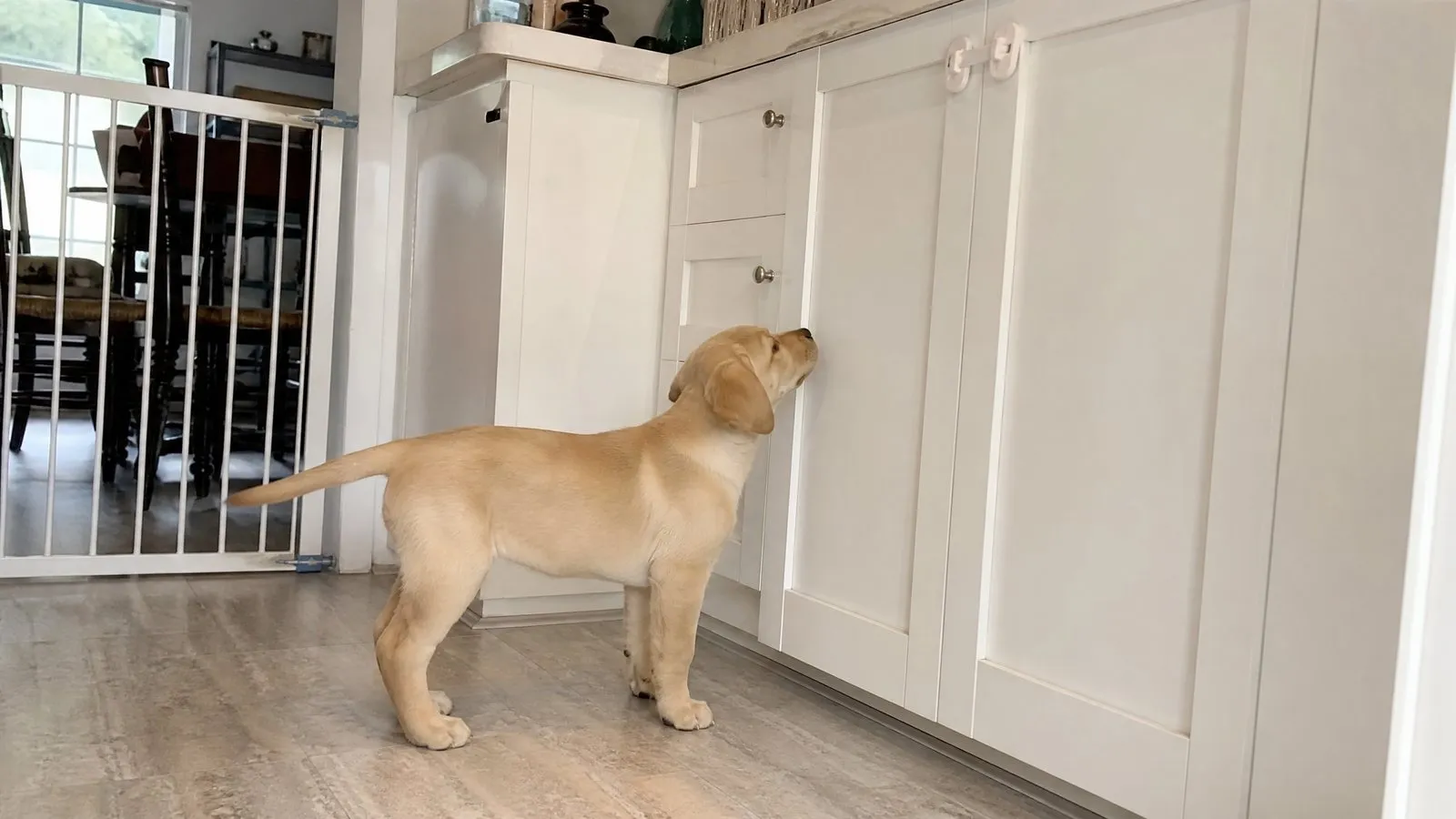
- Cleaning products under the sink. Install child-proof latches on low cabinets, or move products to a high shelf. Dishwasher pods are especially dangerous and look like toys.
- The trash can. Switch to a lidded or inside-a-cabinet bin. Coffee grounds, onion and garlic scraps, cooked bones, fatty trimmings, and corn cobs are all hazards.
- Countertop foods. Keep the counters clear. Grapes, raisins, chocolate, onions, garlic, macadamia nuts, alcohol, and anything containing xylitol (also labeled birch sugar) can be toxic. Xylitol appears in sugar-free gum, some peanut butters, baked goods, and mints, and even small amounts can cause a dangerous drop in blood sugar in dogs.
For a fuller rundown of safe and unsafe foods, see our guide to human foods dogs can and can’t eat.
A baby gate across the kitchen doorway is often the simplest fix while your puppy is small and clumsy.
Living Room
This is where your puppy will spend relaxed time with you, so make it a space you can trust.
What to secure:
- Electronics cords and power strips. TV, lamp, console, and router cables all invite chewing. Bundle and cover them, and tuck power strips behind heavy furniture.
- Remote controls and small items. Remotes, phone chargers, pens, and kids’ toys left on low tables are fair game. Clear the coffee table and lower shelves.
- The gap behind and under furniture. Block access behind the TV stand and under the sofa where cords and lost objects collect.
- Houseplants. Move toxic plants out, and set the rest on high shelves or plant stands your puppy can’t tip over.
- Fireplace and candles. Screen off the hearth and never leave lit candles within reach of a wagging tail.
Give your puppy an appropriate outlet in this room: a bed or mat and a couple of safe chews. If you’re not sure what’s suitable, read our notes on safe chews for teething puppies.
Bathroom
Small and full of swallowable items, the bathroom is best kept off-limits with the door closed. When your puppy is in there with you, watch these:
- Medications. This is the single biggest bathroom hazard. Human pills, including common pain relievers like ibuprofen and acetaminophen, are highly toxic to dogs. Store all medication in a closed cabinet, never on the counter, and pick up any dropped pill immediately.
- The trash can. Dental floss, cotton swabs, razors, and used personal-care items can cause choking or internal blockages. Use a lidded bin.
- Toilet. Keep the lid down, especially if you use in-tank or in-bowl cleaning tablets. The treated water can make a puppy sick.
- Toiletries and cleaners. Soap, shampoo, sunscreen, and cleaning sprays belong in a closed cabinet, not on the tub’s edge.
Bedroom
Bedrooms feel safe but hide plenty of small temptations.
What to secure:
- Nightstand contents. Medications, hair ties, jewelry, earplugs, and charging cables are all within easy reach. Clear the lower surfaces.
- Laundry. Socks and underwear are classic blockage culprits because puppies love to swallow them. Use a lidded or closed hamper.
- Under the bed. Block the gap if you store anything there or if your puppy could get stuck.
- Cords. Phone chargers and lamp cords near the bed should be covered or lifted.
If your puppy sleeps in your room, a crate or pen keeps them safe overnight when you can’t supervise. Our crate training plan walks through how to make the crate a place they like, and our guide on why puppies cry at night helps with the first unsettled evenings.
Garage, Laundry, and Utility Areas
These rooms concentrate some of the most dangerous substances in the house. The safest approach is to keep your puppy out entirely with a closed door or gate. Still, accidents happen, so secure the following:
- Antifreeze. This is a severe hazard. Ethylene glycol tastes sweet and is lethal in small amounts. Clean up spills immediately and store containers sealed and high. If you suspect any ingestion, treat it as an emergency.
- Pesticides, fertilizers, and rodent bait. Rodenticides are designed to be eaten and are extremely toxic. Remove bait stations or relocate them where your puppy can never reach.
- Paint, solvents, and automotive fluids. Keep these on high shelves or in a locked cabinet.
- The washer and dryer. Keep doors closed. Curious puppies and kittens have been known to climb inside. Check before every load.
- Small hardware. Screws, nails, batteries, and bolts on the floor are swallowing hazards. Sweep and store them in sealed containers.
Yard and Garden
Outdoor space is wonderful for a puppy, but it needs the same careful eye.
- Fencing. Walk the perimeter and look for gaps, loose boards, and spots where a small puppy could squeeze under or through. Puppies can fit through surprisingly narrow gaps.
- Toxic plants. Many garden plants are poisonous, including azalea, rhododendron, oleander, foxglove, tulip and daffodil bulbs, and sago palm. Fence these off or remove them.
- Lawn and garden chemicals. Keep puppies off treated grass until it’s dry and safe per the product label. Store slug pellets, weed killers, and fertilizers out of reach, as several are highly toxic.
- Cocoa mulch and compost. Cocoa mulch contains the same compounds as chocolate, and compost can grow molds that are toxic to dogs. Fence off both.
- Water features and pools. Supervise around any open water. A pool needs a barrier or a clear, safe exit a puppy can find.
- Tools and sharp objects. Store shears, trowels, and anything with a blade off the ground.
A Quick Room-by-Room Hazard Table
| Room | Top hazards | Quick fix |
|---|---|---|
| Kitchen | Cleaning products, trash, xylitol and toxic foods | Cabinet latches, lidded bin, clear counters |
| Living room | Cords, small items, toxic plants | Cord covers, clear low surfaces, plants up high |
| Bathroom | Medications, floss, toilet water | Closed cabinet, lidded bin, lid down, door shut |
| Bedroom | Pills, socks, nightstand items, cords | Closed hamper, clear nightstand, cover cords |
| Garage/laundry | Antifreeze, pesticides, appliances | Keep door closed, store chemicals high, check machines |
| Yard | Fence gaps, toxic plants, chemicals, water | Walk the fence, remove plants, store products, supervise water |
Set Up a Safe Zone
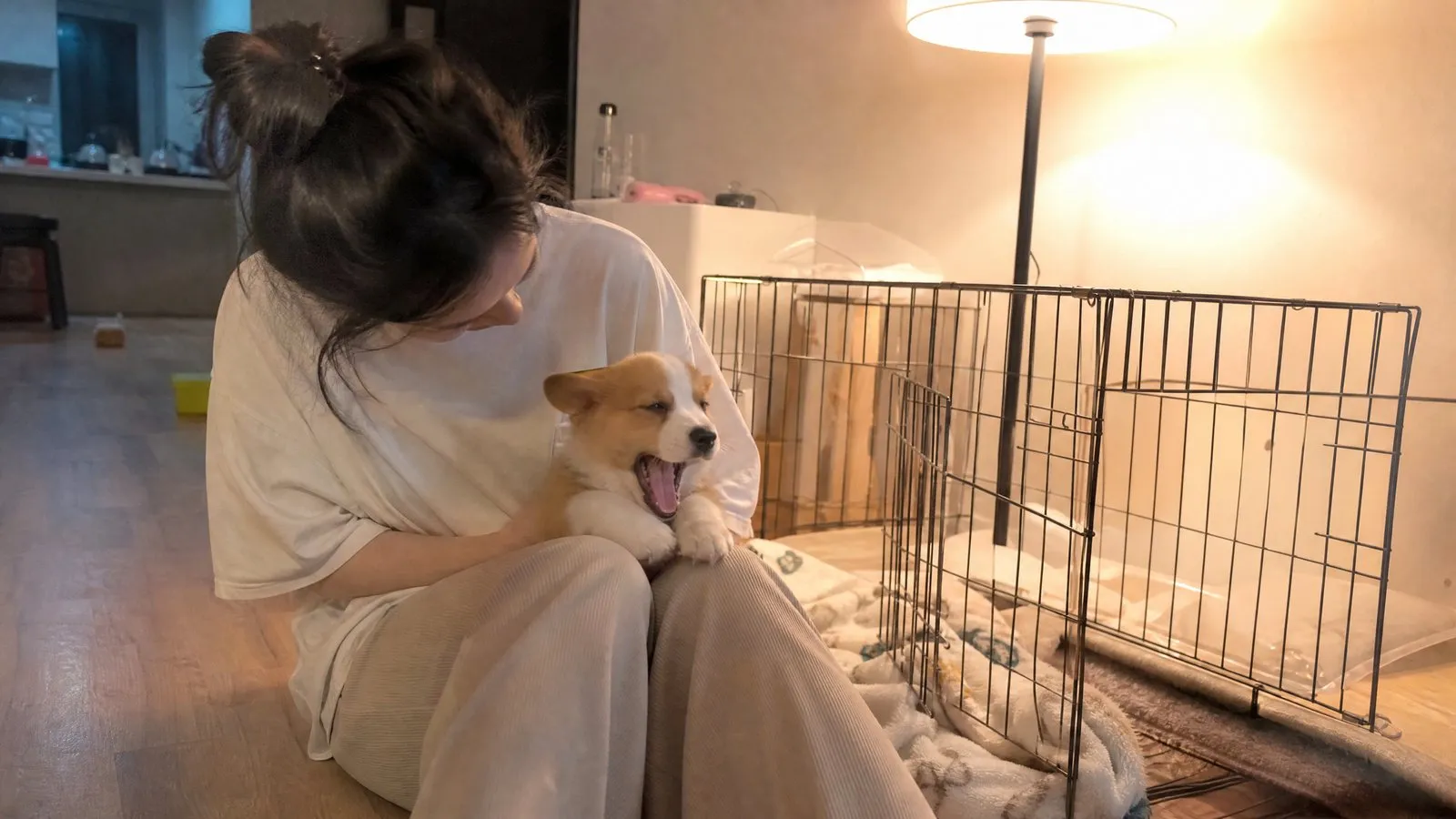
No home is ever 100% puppy-proof, and you can’t supervise every second. The most reliable strategy is to pair puppy-proofing with a confined safe zone: a crate, a pen, or a single gated room where everything has been checked. Use it whenever you can’t actively watch your puppy, such as when you’re cooking, showering, or sleeping.
This protects your puppy and your belongings while they learn the rules, and it supports house training too. Our guides on potty training and how much a puppy should sleep explain how a safe zone fits into a daily routine.
When to Call the Vet
If you think your puppy has swallowed something dangerous, don’t wait to see what happens. Contact your veterinarian or an emergency clinic right away, and have the packaging handy so you can describe the ingredient and amount.
Treat these as emergencies:
- Any amount of antifreeze, rodenticide, or human medication.
- Xylitol, chocolate, grapes, raisins, onions, or garlic.
- Signs like vomiting, diarrhea, drooling, tremors, weakness, collapse, difficulty breathing, or a swollen, painful belly.
In the US, the ASPCA Animal Poison Control Center and the Pet Poison Helpline both offer 24-hour advice (a consultation fee usually applies). In the UK, Animal PoisonLine serves the same purpose. Save your vet’s number and the nearest emergency clinic in your phone before you need them. For a broader list of red flags, see our guide on warning signs your puppy needs a vet today.
FAQ
How long does puppy-proofing take?
The initial pass takes most people two to four hours for a typical home, plus a trip to the store for gates, cord covers, and cabinet latches. The 15-minute crawl-through is worth repeating every few weeks, since a growing puppy reaches new places and develops new interests.
Do I need to puppy-proof the whole house at once?
No. Start with the rooms your puppy will actually use in the first weeks and keep other rooms closed off. Many owners gate the puppy into one or two safe rooms at first, then expand access as the puppy earns trust and the rest of the home gets checked.
What’s the most dangerous thing most owners overlook?
Medications and xylitol. Dropped pills and sugar-free gum or peanut butter are easy to miss and can be life-threatening in small amounts. Antifreeze in the garage is another commonly underestimated hazard.
Are chew deterrent sprays enough to stop chewing?
They can help on cords and furniture legs, but don’t rely on them alone. Some puppies ignore them entirely. Combine physical barriers and removal with supervision and plenty of appropriate chew toys so your puppy has a legal outlet.
At what age can I stop puppy-proofing?
It varies. Many dogs can handle more freedom around 12 to 18 months once chewing settles and training is solid, but some need safeguards longer. Remove barriers gradually, one room and one object at a time, and watch how your dog does before trusting them unsupervised.