How Much Should a Puppy Sleep? Sleep Needs and Schedules by Age
Puppies need 18-20 hours of sleep a day. See typical sleep by age, a sample nap schedule, why overtired puppies bite, and when to worry.
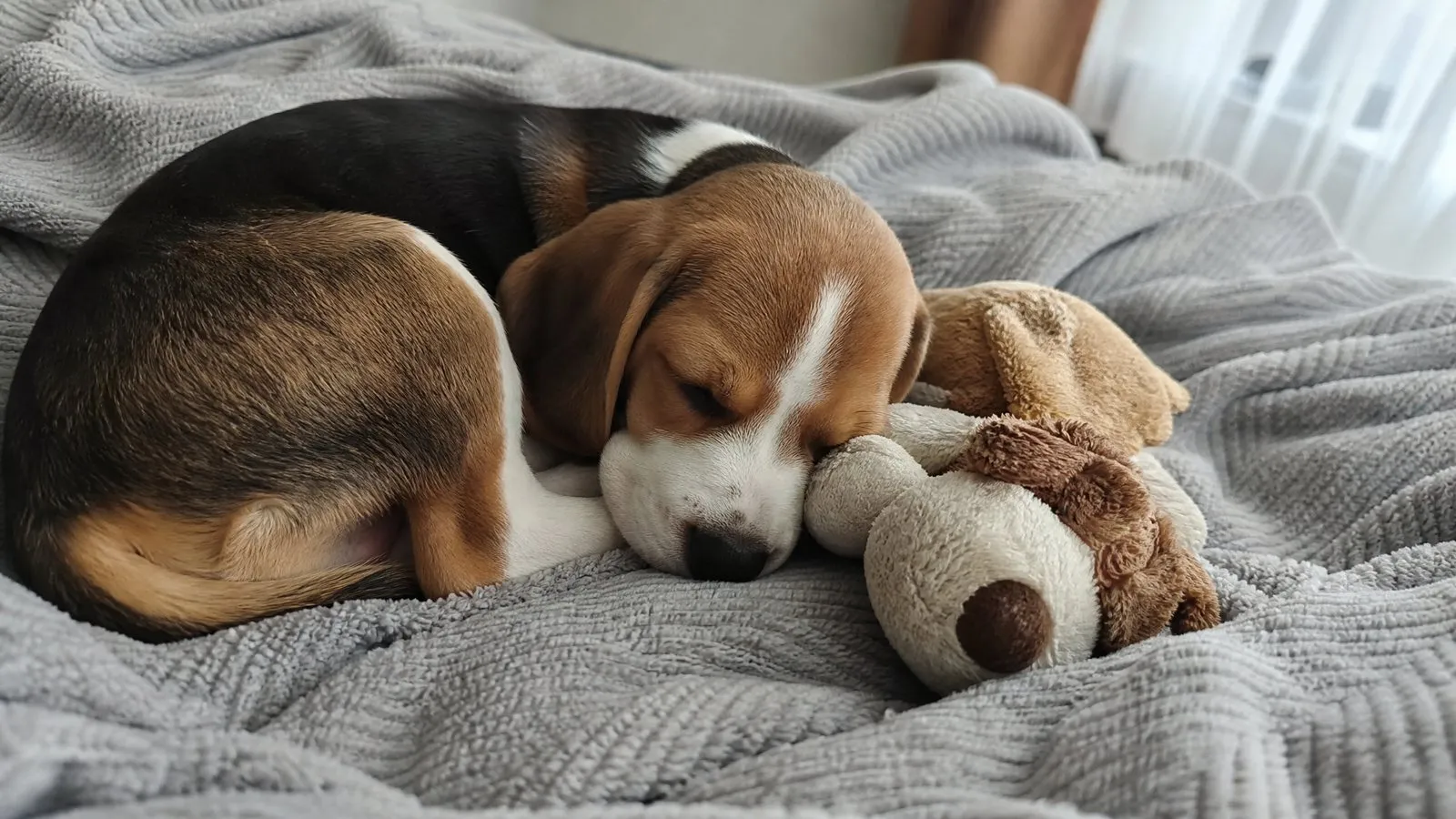
Most puppies need 18 to 20 hours of sleep in every 24-hour day, and the youngest ones need even more. If that sounds like a lot, it is. A puppy who is awake and busy for only four to six hours a day is completely normal. The hard part for new owners isn’t the sleeping; it’s realizing that a cranky, bitey, “hyper” puppy is usually an overtired one who needs help settling, not more activity.
Here’s how much sleep to expect at each age, a sample daily schedule you can copy, and the signs that a sleep problem is actually a health problem.
How much sleep puppies need by age
Sleep needs drop gradually as your puppy matures. These are typical ranges from mainstream veterinary guidance. Individual dogs, and especially larger breeds, often sit at the higher end.
| Age | Sleep per 24 hours | What’s normal |
|---|---|---|
| 8–10 weeks | 18–20 hours | Short bursts of play, then hard crashes. Can’t self-regulate yet. |
| 10–16 weeks | 17–19 hours | Slightly longer awake windows, still needs enforced naps. |
| 4–6 months | 16–18 hours | More stamina, but still tires fast during teething. |
| 6–12 months | 14–16 hours | Settling toward adult patterns; naps shorten. |
| Adult (12+ months) | 12–14 hours | Mostly nighttime sleep plus a nap or two. |
A few things that shift these numbers:
- Size and breed. Large and giant breeds grow for longer and tend to sleep more, often into their second year. Many working-line dogs are busier when awake but still need full rest.
- A big day. A vet visit, a new person, a car trip, or a training class is mentally tiring. Expect more sleep afterward.
- Growth spurts and teething. Puppies often sleep more while their bodies and mouths are doing hard work.
Why overtired puppies get bitey
This is the single most useful thing to understand in your first month. When puppies get too tired, they don’t slow down and yawn their way to bed like a toddler might. They wind up.
An overtired puppy typically:
- Bites harder and more often, including at hands, ankles, and clothing
- Grabs and tugs at everything, sometimes with a frantic edge
- Zooms around the room in wild circles (the classic “zoomies”)
- Ignores cues they knew perfectly an hour ago
- Gets vocal, whiny, or snappy
It looks like your puppy needs to burn off energy. In reality, the tank is empty and they can’t find the brakes. Adding more play makes it worse. The fix is to help them settle for a nap, not to exercise them into exhaustion.
If biting is a daily battle at your house, the timing of naps matters as much as any training technique. Our guide on how to stop puppy biting and nipping pairs well with a solid nap routine.
Awake windows: the simple rule
Think in terms of awake windows: the length of time your puppy can comfortably be up before they need to rest.
- 8–12 weeks: about 45–90 minutes awake before a nap
- 3–5 months: about 1–2 hours awake
- 5–8 months: about 2–3 hours awake
When the window closes and you see the signs above, it’s nap time, even if your puppy is protesting that they are absolutely not tired.
A sample daily nap schedule
Here’s a realistic weekday for a roughly 10-week-old puppy. Adjust the clock to your own life. The pattern matters more than the exact times.
| Time | Activity |
|---|---|
| 6:30 am | Wake, carry straight outside to potty |
| 6:45 am | Breakfast, then short calm play |
| 7:30 am | Nap (1–2 hours) |
| 9:30 am | Potty, short training (5 min), gentle play |
| 10:15 am | Nap (1–1.5 hours) |
| 11:45 am | Potty, lunch, sniffy exploration |
| 12:30 pm | Nap (2 hours) |
| 2:30 pm | Potty, new experience or socialization |
| 3:15 pm | Nap (1–1.5 hours) |
| 4:45 pm | Potty, play, training |
| 5:30 pm | Dinner, calm chew time |
| 6:15 pm | Nap (1 hour) |
| 7:15 pm | Potty, family wind-down, gentle handling |
| 8:30 pm | Last potty, settle for the night |
| 9:00 pm | Bedtime (with one or two potty breaks overnight) |
Notice how much of the day is sleep and how short the awake blocks are. That’s by design. A puppy on a schedule like this is calmer, learns faster, and has fewer accidents, because rest, potty breaks, and meals are predictable.
This schedule overlaps naturally with feeding and toileting. If you want those dialed in too, see our puppy feeding schedule and our potty training schedule that works.
Overnight sleep
Most 8-week-old puppies can’t last the full night without a potty break. Expect one or two overnight trips outside for the first few weeks, dropping away as bladder control improves, usually by around 12 to 16 weeks for many puppies.
A rough guide for overnight bladder capacity is one hour per month of age, plus one, up to a point. So a 2-month-old puppy may manage around three hours between breaks. Keep night potty trips boring: no play, no chatter, straight back to bed. For the crying that often comes with those early nights, our guide on why your puppy cries at night walks through what actually helps.
Crate naps: your best tool for enforced rest
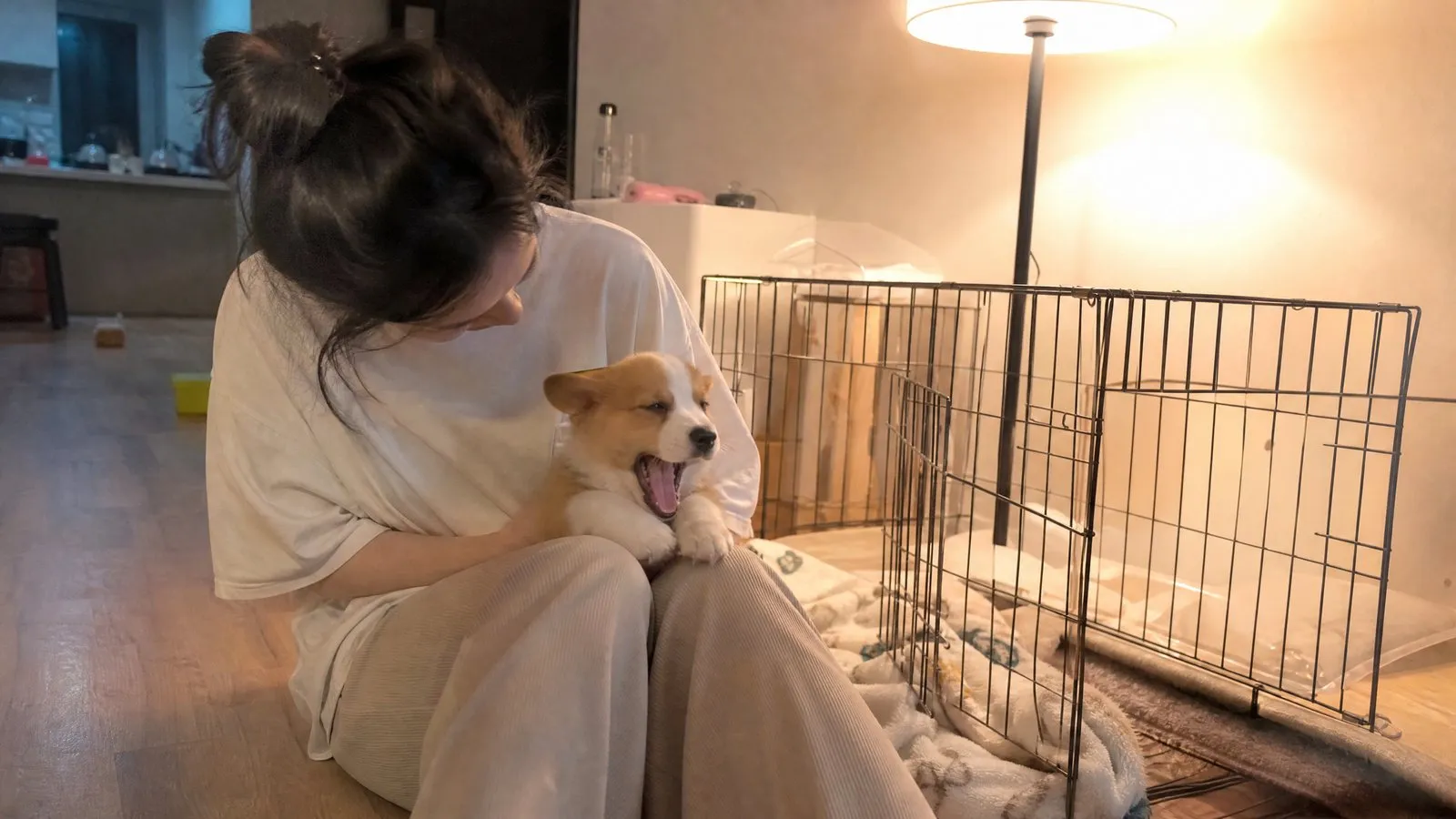
Left to their own devices, many puppies will fight sleep the way an overtired child does. A crate or a quiet pen gives them a boundary-free way to switch off. This is the heart of what trainers call the enforced nap: when the awake window closes, you guide your puppy to a calm, confined space so sleep can happen.
How to make crate naps work:
- Time it to the window. Put your puppy down before they hit the frantic, bitey stage, not after.
- Settle, don’t excite. A quiet potty trip, then into the crate with a safe chew. Keep your energy low.
- Cover and dim. A light blanket over part of the crate and a darker room help cue sleep. Many puppies settle faster with less to look at.
- Expect some protest. A few minutes of fussing before sleep is common. Escalating, panicked crying is different and worth addressing (more below).
- Keep the crate positive. It’s a bedroom, never a punishment. Feed meals near or in it and toss treats in during the day.
If the crate itself is still a work in progress, follow our 7-day crate training plan, and if you’re still choosing one, how to choose the right dog crate covers sizing and dividers.
A quick caution: avoid leaving chews or toys with your puppy unsupervised in a crate if there’s any risk of a piece breaking off. For nap-safe options, see our guide to safe chews for teething puppies.
What about puppies who won’t nap?
If your puppy resists settling:
- Shorten the awake window. Try putting them down 15 minutes earlier. Most “won’t nap” puppies are already overtired.
- Drain the brain, gently. Five minutes of sniffing, a lick mat, or a simple training game tires a puppy more than a wild play session and leaves them ready to rest.
- Lower the stimulation. Turn off the TV, dim the lights, and go quiet yourself. Puppies take cues from the room.
- Hold the line. If you’ve ruled out potty, hunger, and pain, a little protest before sleep is okay. Rushing in every time can teach fussing as a way to get out.
When to worry about your puppy’s sleep
Sleeping a lot is normal and healthy. But some changes are worth attention.
Call your vet promptly if you notice:
- Lethargy that’s different from normal sleepiness — a puppy who is hard to rouse, floppy, or uninterested in food, play, or people when awake
- Sleeping much more than usual alongside other signs such as vomiting, diarrhea, not eating, a swollen belly, or pale gums
- Trouble breathing during sleep, gasping, or gums that look blue or very pale
- Collapse, seizures, or twitching that isn’t the normal paddling of puppy dreams (dreaming looks like gentle leg twitches and soft noises and stops on its own)
- A puppy who suddenly can’t settle at all, cries persistently, or seems to be in pain when lying down
Young puppies can go downhill quickly, so when in doubt, it’s safer to call. Our guide on warning signs your puppy needs a vet today lists the red flags in more detail.
It’s also worth separating sleep problems from settling problems. A puppy who sleeps soundly in your lap but panics the moment they’re alone may be showing early separation-related distress rather than a sleep issue. If that sounds familiar, read our guide on separation anxiety in dogs.
Helping your puppy sleep well
A few habits make good sleep much easier for everyone:
- Build a predictable rhythm. Wake, potty, eat, play, nap, repeat. Puppies relax when the day is predictable.
- Keep a consistent bedtime and wake time. Even on weekends, at least for the first few months.
- Wind down before bed. Swap rowdy play for a chew or quiet cuddle in the last 30–60 minutes.
- Give a calm daytime spot. A crate or bed in a low-traffic corner, away from the front door and busy kitchen.
- Don’t over-schedule. One big outing or new experience per day is plenty for a young puppy. Rest is when learning and growth actually happen.
If you’re still setting up the house, placing the crate and a quiet nap zone thoughtfully from day one pays off. Our new puppy checklist and room-by-room puppy-proofing guide can help you get it right before problems start.
FAQ
Is it normal for my 8-week-old puppy to sleep almost all day?
Yes. Puppies this age typically sleep 18 to 20 hours out of every 24, in lots of short stretches. As long as your puppy is alert, playful, eating well, and normal on potty breaks when awake, heavy sleeping is exactly what you want to see.
Should I wake my puppy up during the day?
Usually no — let sleeping puppies sleep, since that’s when they grow and consolidate learning. The main exceptions are keeping their day on track: a very long midday nap can sometimes disrupt nighttime sleep, and you may need to gently wake a young puppy for a scheduled potty break.
My puppy gets wild and bites every evening. Is something wrong?
Almost always this is the “witching hour,” a classic sign of an overtired puppy rather than a behavior problem. Try an enforced nap in the late afternoon and keep the hour before bed calm. If biting is still intense, pair better nap timing with the techniques in our guide on stopping puppy biting.
How long can my puppy sleep through the night without a potty break?
As a rough guide, about one hour per month of age plus one, so a two-month-old may manage around three hours. Most puppies need one or two overnight trips outside until roughly 12 to 16 weeks, then gradually sleep through.
When does a puppy stop needing so many naps?
Nap needs ease gradually. By 6 to 12 months most dogs sleep 14 to 16 hours a day and settle into an adult pattern of mostly nighttime sleep plus a nap or two. Large and giant breeds often take longer to get there.