Puppy Vaccination Schedule: Which Shots and When
A clear puppy vaccination schedule from 6-8 weeks to 16+ weeks, covering core vs non-core shots, rabies, boosters, side effects, and safe outings.
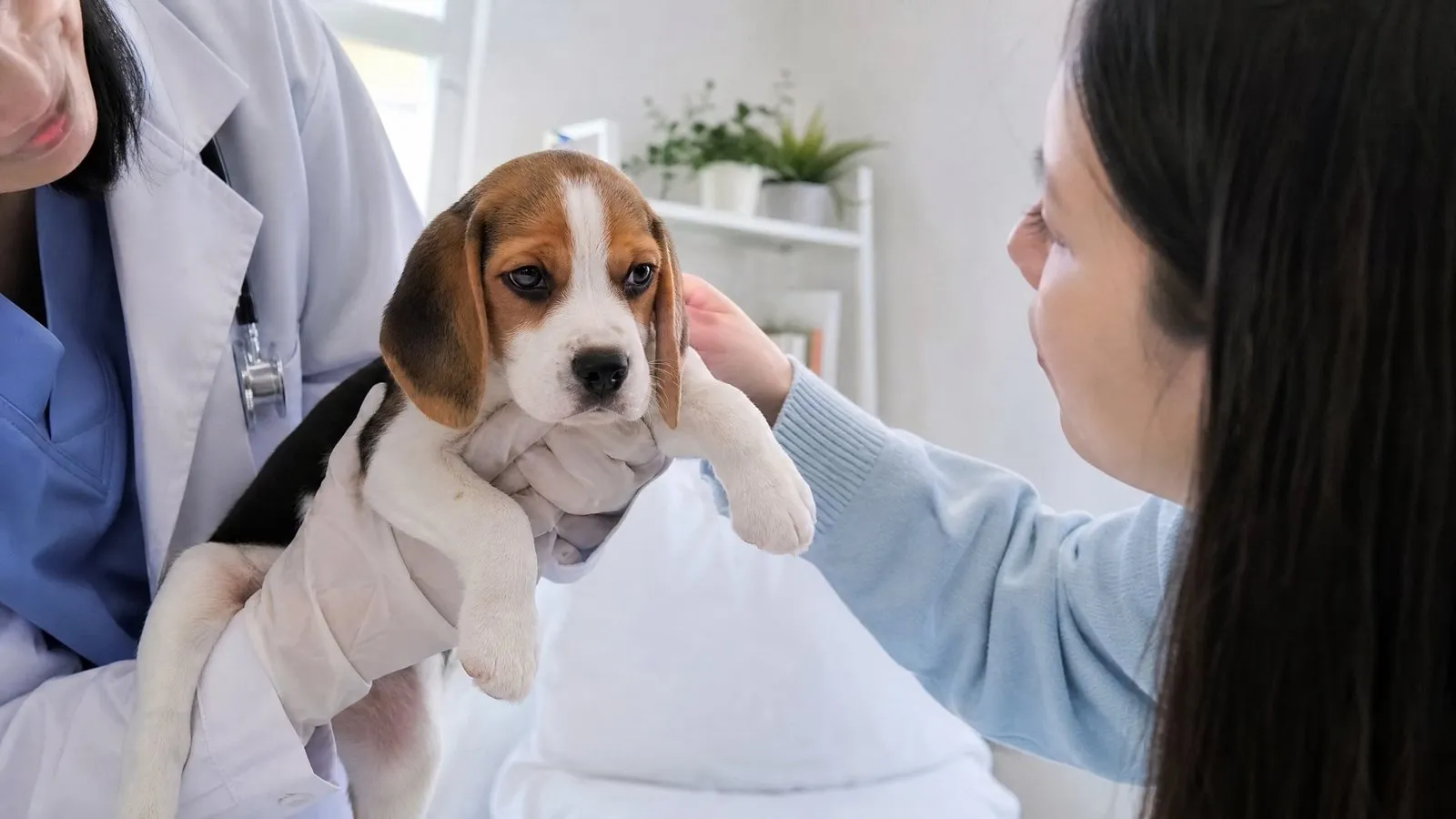
Your puppy needs a series of core vaccines starting at 6 to 8 weeks of age, with boosters every 2 to 4 weeks until they are at least 16 weeks old. The core vaccines protect against distemper, adenovirus (hepatitis), parvovirus, and parainfluenza (usually combined in one “DHPP” shot), plus rabies where required by law. Your vet will tailor the exact timing and add any non-core vaccines based on where you live and how your puppy lives.
That series is the single most important thing you can do to keep a young dog alive in their first months. Parvovirus in particular kills unvaccinated puppies, and it is common. Here is exactly what to expect.
Core vs non-core vaccines
The American Animal Hospital Association (AAHA) and the World Small Animal Veterinary Association (WSAVA) group vaccines into two buckets.
Core vaccines are recommended for essentially every puppy, regardless of lifestyle, because the diseases are severe, widespread, or dangerous to people:
- Distemper
- Adenovirus (canine hepatitis)
- Parvovirus
- Rabies (legally required in most of the US, Canada, and Australia; in the UK rabies is only needed for travel)
The first three, often with parainfluenza added, come in a single combination shot usually labeled DHPP, DAPP, or DA2PP. Rabies is given separately.
Non-core vaccines are given based on your puppy’s risk. Your vet decides these with you, factoring in your region, whether you’ll use boarding or daycare, and local disease patterns:
- Leptospirosis (bacterial; spread through wildlife and standing water — increasingly recommended as close to core in many areas)
- Bordetella and canine parainfluenza (kennel cough; required by many daycares, boarding, and grooming facilities)
- Canine influenza (dog flu)
- Lyme disease (in tick-heavy regions)
In the UK, leptospirosis is typically part of the standard puppy course rather than treated as optional. This is a good example of why you follow your own vet’s plan rather than a generic internet schedule.
The typical puppy vaccination schedule
Puppies get a series of shots, not a single one. The reason: antibodies from their mother’s milk protect them early but also block vaccines from working. Nobody knows the exact day that maternal protection fades, so vets give repeated doses a few weeks apart until the puppy is old enough that the vaccine is reliably effective — at 16 weeks or later.
Here is a typical schedule. Yours will vary by country, vet, and your puppy’s health.
| Age | Core (DHPP/DAPP) | Rabies | Common non-core |
|---|---|---|---|
| 6–8 weeks | First dose | — | Bordetella if boarding/class; lepto may start |
| 10–12 weeks | Second dose | — | Lepto (1st), Lyme (1st), influenza (1st) as advised |
| 14–16 weeks | Third dose | Often given here (varies by law) | Lepto (2nd), Lyme (2nd), influenza (2nd) |
| 16–18 weeks | Final dose (must be at 16 weeks or older) | If not given earlier | — |
| 12 months (roughly 1 year after the series) | Booster | Booster (1- or 3-year by law) | Boosters as needed |
A few key points:
- The last DHPP dose must land at 16 weeks of age or older. A puppy who finishes the core series at 12 weeks is not considered fully protected, even if they got three shots.
- Rabies timing is set by local law, not by one universal rule. Many jurisdictions require it between 12 and 16 weeks. Your vet knows your area’s rule.
- Non-core vaccines that need two doses (lepto, Lyme, influenza) require both doses, 2 to 4 weeks apart, to work the first time around.
Adopting an older puppy or unknown history
If you adopted a puppy with no paperwork, your vet will usually start the core series as if from scratch and ensure the final dose is given at 16 weeks or later. A dog older than about 16 weeks with no records typically needs two DHPP doses 2 to 4 weeks apart, plus rabies. It’s safer to revaccinate than to assume protection. See our guide on adopting vs. buying a puppy for what records to ask for.
After the puppy series: boosters
Your puppy isn’t done at 16 weeks. They need a booster about one year later (often at the 12-month or 15-month visit), which locks in longer-lasting protection.
After that, mainstream guidance has moved toward less frequent core boosters — typically every 3 years for distemper, adenovirus, and parvovirus, rather than annually. Rabies boosters follow a 1-year or 3-year cycle depending on the vaccine used and your local law. Non-core vaccines like Bordetella, lepto, Lyme, and influenza generally need annual boosters to stay effective.
Your vet may also use antibody titer testing in some cases to check whether a booster is needed, though this doesn’t replace legally required rabies vaccination.
What the vet visit involves
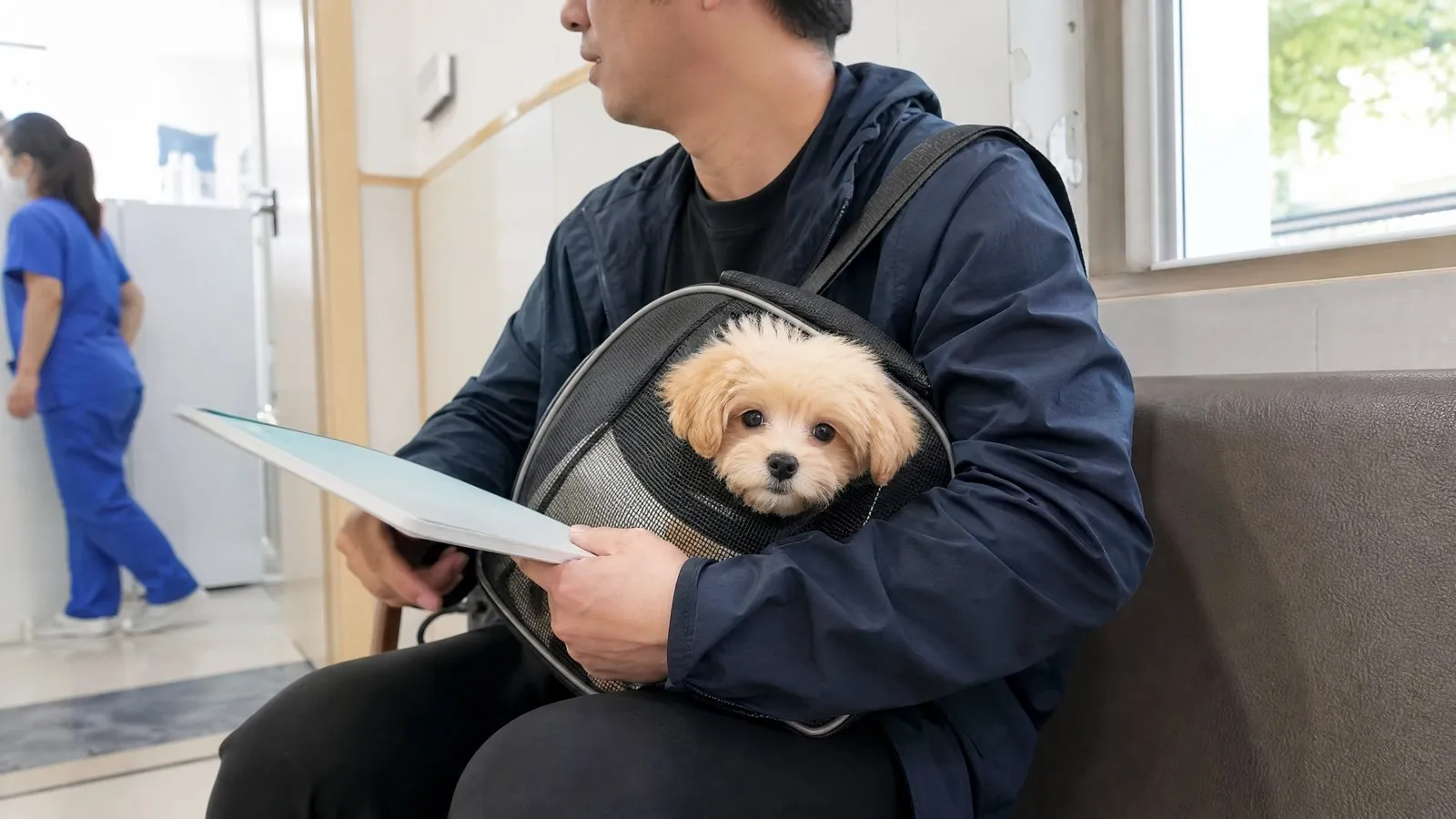
A puppy vaccine appointment is quick and routine. Here’s the typical flow:
- Weight and temperature check. Doses and some products are weight-dependent, and a fever may mean postponing.
- A nose-to-tail physical exam. The vet listens to the heart and lungs, checks eyes, ears, teeth, belly, and joints, and looks for signs of illness. A sick puppy usually shouldn’t be vaccinated that day.
- A conversation about lifestyle. Where you walk, whether you’ll use daycare, travel plans, and local risks determine which non-core vaccines you add.
- The injections themselves. Each shot takes a second or two, usually in the scruff or a back leg. Many puppies barely notice; a treat or a lick mat helps.
- Deworming and parasite talk. Most puppies are dewormed on a schedule and started on flea, tick, and often heartworm prevention. See flea and tick prevention options compared.
Bring any records you have, a list of questions, and a hungry puppy so treats work as a distraction. Our full walkthrough of your puppy’s first vet visit covers what to ask.
Side effects: what’s normal and what’s not
Most puppies feel completely fine. Mild reactions are common in the first 24 to 48 hours and don’t need treatment:
- Slight tiredness or being a bit “off”
- Mild soreness or a small firm lump at the injection site
- Reduced appetite for a meal
- A low-grade fever
These are normal. Let your puppy rest and offer water and food as usual. For sleep expectations after a draining day, see how much a puppy should sleep.
Call your vet promptly, or go to an emergency clinic, if you see signs of a more serious reaction:
- Swelling of the face, muzzle, or eyes
- Hives or widespread itching
- Repeated vomiting or diarrhea
- Difficulty breathing
- Collapse, weakness, or pale gums
Severe allergic reactions (anaphylaxis) are rare but usually show up within minutes to a few hours of the shot, which is one reason some vets suggest sticking around the clinic or neighborhood briefly after a vaccine. If anything looks like the serious list above, treat it as an emergency — don’t wait. Our guide to warning signs your puppy needs a vet today covers red flags more broadly.
Safe outings before the series is complete
This is the hard part, and the advice feels contradictory. Your puppy isn’t fully protected until about a week after the final dose at 16+ weeks — but the prime window for socialization closes around 12 to 14 weeks. Hiding your puppy away until they’re fully vaccinated creates a different, lifelong problem: fear and reactivity.
The current consensus from veterinary behavior experts is to socialize carefully rather than not at all. The goal is positive exposure to the world while avoiding places where unvaccinated or sick dogs leave the virus behind.
Lower-risk activities you can usually do before the series is finished:
- Carry your puppy in your arms or a sling through a busy street, store, or café (where allowed)
- Invite healthy, fully vaccinated adult dogs to meet your puppy in your home or yard
- Host calm visitors of different ages, appearances, and voices
- Let your puppy explore your own clean backyard
- Attend a well-run puppy class that requires proof of age-appropriate vaccination and uses a clean, disinfected floor
- Sit in the car and watch the world, or do short trips to get used to car travel
Higher-risk places to avoid until about a week after the final shot:
- Dog parks
- Public pavements and grass heavily used by unknown dogs
- Pet store floors, rest stops, and other high-traffic dog areas
- Any contact with dogs whose vaccination status you don’t know
Parvovirus is tough and survives a long time in the environment, which is why ground used by many dogs is the real concern — not fresh air itself. Use the puppy socialization checklist to get lots of safe exposure during this window while you wait out the schedule.
A quick note on cost and planning
The full puppy series typically means three to four visits over about two months, plus the one-year booster. Bundling vaccines with the exams, deworming, and parasite prevention keeps trips efficient. For budgeting the first year, including shots, see what a dog really costs in the first year. If you’re still setting up, our new puppy checklist covers what to have ready before day one.
FAQ
Can my puppy go outside at all before they’re fully vaccinated?
Yes — carefully. Your own clean yard, your arms on a walk, and meeting known healthy vaccinated dogs are low-risk and important for development. Avoid dog parks, public grass, and other high-traffic dog areas until about a week after the final dose at 16 weeks or older.
What happens if I miss a booster in the series?
Don’t panic, but don’t ignore it. Call your vet. If the gap is short, they’ll usually just continue the series. A long gap may mean restarting a two-dose portion. The critical rule is that the final core dose still needs to be given at 16 weeks of age or later.
Why does my puppy need so many shots instead of just one?
Antibodies from the mother protect young puppies but also block vaccines from working, and the day that protection fades differs for each puppy. Repeating the dose every 2 to 4 weeks until 16 weeks ensures at least one dose “takes” once maternal interference is gone.
Is the rabies vaccine really required?
In most of the US, Canada, and Australia, yes — it’s set by local law, with timing and booster intervals that vary by jurisdiction. In the UK, rabies is only needed for international travel. Your vet will tell you the rule where you live.
Are vaccine side effects something to worry about?
Rarely. Most puppies are mildly tired or sore for a day. Watch for facial swelling, hives, repeated vomiting, breathing trouble, or collapse — these are signs of a serious allergic reaction and need a vet right away, usually within minutes to hours of the shot.
A note on health information: Health and nutrition guides are written against published guidance from the AAHA, WSAVA and AVMA. They are general information, not a substitute for advice from your own veterinarian. If your dog seems unwell, call your vet.