Potty Training a Puppy: A Schedule That Works and How to Fix Accidents
A clear puppy potty training schedule by age, plus signals to watch, reward timing, enzyme cleaning tips, and how to fix accidents and regression fast.
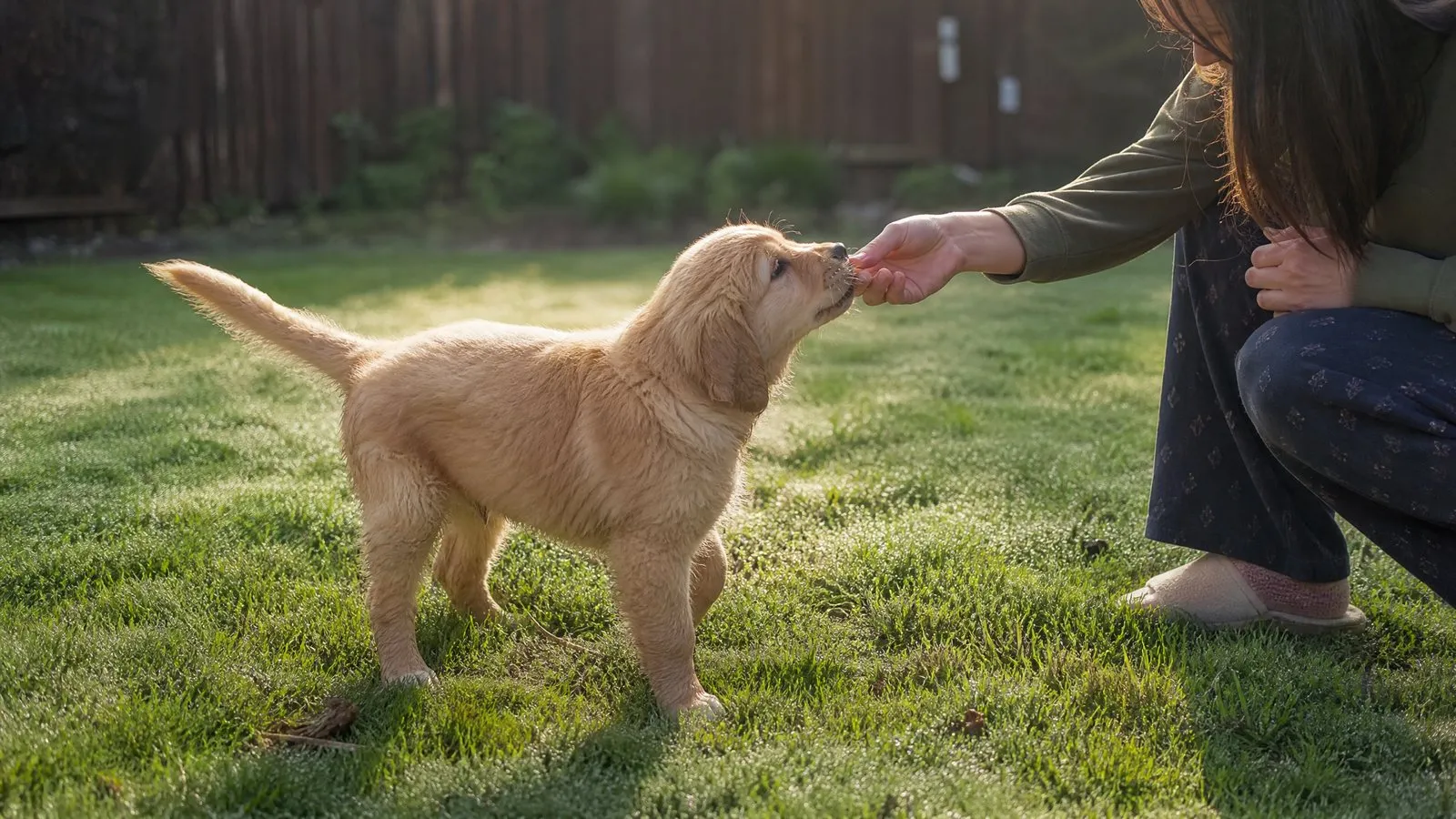
Take your puppy to the same outdoor spot first thing in the morning, after every meal, after every nap, after play, and before bed. Reward within two seconds of the last squat with a small treat and calm praise. Most puppies need a potty break every one to two hours while awake, and accidents on the floor are a normal part of the process, not a failure.
Here’s the full plan, including a schedule you can copy today and exactly how to handle the accidents that will happen.
How long can a puppy “hold it”?
A common rule of thumb is that a puppy can hold their bladder for roughly their age in months plus one, measured in hours. A 2-month-old puppy can manage about 2 to 3 hours between breaks during the day; a 4-month-old, about 4 to 5 hours.
Treat this as a ceiling, not a target. When your puppy is awake, playing, eating, or drinking, they will need to go far more often than that formula suggests. Overnight is different: puppies often sleep longer than their daytime limit because their system slows down.
A few honest caveats:
- Small breeds have smaller bladders and often need more frequent breaks.
- Excitement, cold weather, and new environments all shorten the window.
- The age-plus-one rule is a guideline for planning, not a reason to make a young puppy wait.
Most dogs are reliably house-trained between 4 and 6 months, but some take until 8 months or beyond. That range is normal.
A sample potty schedule by age
Build your day around predictable triggers: waking, eating, drinking, playing, and sleeping. Puppies almost always need to go after each of these.
| Age | Daytime break (awake) | Typical breaks per day | Longest overnight stretch |
|---|---|---|---|
| 8–10 weeks | Every 1–2 hours | 10–14 | 3–4 hours (expect 1–2 night trips) |
| 10–12 weeks | Every 2 hours | 8–10 | 4–5 hours |
| 3–4 months | Every 2–3 hours | 6–8 | 5–6 hours |
| 4–6 months | Every 3–4 hours | 5–6 | 6–7 hours |
| 6+ months | Every 4–6 hours | 4–5 | 7–8 hours |
A realistic day for an 8-to-10-week-old puppy
- First thing on waking: carry or walk straight outside, no detours.
- After breakfast: back out within 5 to 15 minutes.
- Mid-morning: after any play or chewing session.
- Before and after each nap. Puppies this age sleep a lot; see how much a puppy should sleep.
- After lunch and after drinking a lot of water.
- Every 1 to 2 hours in between, even if nothing obvious prompts it.
- Right before bed, after picking up the water bowl about an hour earlier.
- Once or twice overnight for the youngest puppies.
Lining up potty breaks with a consistent feeding routine makes output predictable. If your meal times are still in flux, see our puppy feeding schedule.
The step-by-step method that works
Consistency matters more than any clever trick. Do the same five steps every time.
- Go to one spot. Pick a single patch of grass or ground outside and always start there. The lingering scent prompts your puppy to go.
- Keep it boring. Walk out on a leash, stand still, and let them sniff. Don’t play or talk much yet; you want them to focus.
- Use a cue word. Say something simple like “go potty” calmly as they start to squat. Over a few weeks this becomes a prompt.
- Reward within two seconds. The instant they finish, give a small treat and gentle praise. Timing is everything (more on this below).
- Then play. A short game or walk after they go teaches that toileting unlocks the fun, rather than ending the trip outside.
Keep a small pouch of pea-sized treats by the door so you’re never fumbling.
Signals to watch for
Catching the “I need to go” signs lets you get outside before the accident. Watch for:
- Sudden sniffing of the floor in a circle
- Pacing, restlessness, or whining
- Circling or squatting
- Heading toward a previous accident spot
- Breaking off abruptly from play
- Going to the door, or to you, and looking unsettled
When you see any of these, move fast and calmly: scoop up a young puppy or clip the leash on and head to the spot. A puppy’s “warning” can be just a few seconds.
Some owners teach a doorbell or hanging bell the puppy nudges before going out. It can work well, but it’s optional. Watching your individual dog is more reliable in the early weeks.
Why reward timing makes or breaks it
Dogs connect a reward to whatever they were doing in the previous second or two. If you wait until your puppy is back inside to give the treat, you’re rewarding “coming through the door,” not “peeing outside.”
So:
- Reward outside, at the spot, the moment they finish. Not on the way in, not in the kitchen.
- Use high-value treats for potty training specifically. Something they rarely get otherwise raises the stakes.
- Keep praise calm until they’re done. Excited cheering mid-squat can interrupt a nervous puppy.
If treats seem to distract more than motivate, try quiet praise and a favorite game instead. You know your dog.
Cleaning accidents: use an enzyme cleaner
How you clean matters as much as how you train. Puppies return to spots that smell like urine, and regular household cleaners don’t fully remove the odor your puppy can detect, even when the floor looks and smells clean to you.
- Use an enzymatic cleaner made for pet messes. The enzymes break down the odor compounds rather than masking them.
- Avoid ammonia-based cleaners. Urine contains ammonia, so these can actually attract your puppy back.
- Blot, don’t rub. Soak up as much as you can first, then saturate the area with enzyme cleaner and let it sit as long as the label says, often 10 minutes or more.
- Allow it to air dry rather than wiping immediately; the enzymes need contact time.
- For carpet, treat the padding underneath too if the accident soaked through.
What not to do
Never scold, rub your puppy’s nose in a mess, or punish after the fact. Your puppy won’t link the telling-off to an accident from minutes ago; they’ll just learn to hide or become nervous around you. If you catch them mid-accident, interrupt gently with a cheerful “let’s go outside” and get them to the spot. If you find it later, clean it up and quietly resolve to supervise more closely.
Close supervision and management prevent most accidents. When you can’t watch your puppy directly, use a crate, a playpen, or a tether so they can’t slip off and go unnoticed. A properly sized crate also works with a dog’s instinct to keep their sleeping area clean; see our crate training plan. Puppy-proofing helps too, so there are fewer tempting corners and rugs; our room-by-room guide covers it.
Handling regression
Your puppy was doing well, and suddenly there are accidents again. This is common and usually has a cause. Work through these:
- A new routine or environment. Moving house, new work hours, or a change in who’s home can disrupt training. Tighten the schedule for a week.
- Too much freedom too soon. Many “regressions” happen because the puppy got run of the house before they were ready. Shrink their space again.
- Growth and excitement. Adolescent dogs (roughly 5 to 10 months) sometimes backslide. Go back to basics without frustration.
- Incomplete cleaning. A spot that still smells of urine invites repeat offenses. Re-treat with enzyme cleaner.
When regression might be medical
If house-training suddenly falls apart in a previously reliable puppy, or you notice any of the following, contact your vet:
- Straining, frequent tiny pees, or signs of pain when urinating
- Blood in the urine
- Drinking much more than usual
- Diarrhea or very loose stools
- Sudden leaking or dribbling, including in their sleep
Urinary tract infections and other issues are common and treatable, but they need a professional. For a broader list of red flags, see warning signs your puppy needs a vet today.
Apartment living and pee pads
If you live several floors up or can’t get outside quickly, you have two broad choices. Be honest with yourself about which you’re committing to, because mixing them confuses the puppy.
Option 1: Go straight to outdoor training
Best if you can realistically get your puppy outside fast. Carry a young puppy to and from the elevator or stairs so they don’t go in the hallway. Keep treats and a leash by the door, ready to move the moment you see a signal.
Option 2: Use pee pads or an indoor potty, then transition
Useful for high floors, bad weather, or owners with mobility limits. A few notes:
- Pick one pad location and keep it consistent, ideally away from food and bed.
- Expect a longer overall timeline. You’re teaching two surfaces: the pad now, outdoors later.
- To transition outside, gradually move the pad closer to the door, then just outside, then to your chosen outdoor spot over a couple of weeks.
- Real grass patch trays can make the eventual switch to grass easier than plastic-backed pads.
One honest trade-off: pads teach your puppy that going indoors is acceptable, which can slow full outdoor training. Many apartment owners still find them worth it. Just decide deliberately rather than drifting into using them.
Overnight potty training
Expect a couple of night trips for the youngest puppies, dropping off as their bladder grows.
- Pick up the water bowl about an hour before bed, but never restrict water in hot weather or if your vet advises otherwise.
- Take a final potty break right before lights out.
- Keep night trips boring: minimal talking, minimal light, straight out and straight back to bed, no play. You want to signal that nighttime is for sleeping.
- If your puppy cries but has already gone recently, it may be loneliness rather than a full bladder; our guide on why puppies cry at night can help you tell the difference.
By around 4 months, many puppies sleep through without a break. Some get there sooner, some later.
Setting yourself up before day one
If you’re still preparing, a little setup makes potty training far smoother: have treats, an enzyme cleaner, a correctly sized crate, and a planned potty spot ready before your puppy arrives. Our new puppy checklist and first 24 hours plan walk through both.
Be patient with the timeline. Accidents in the first weeks are expected, progress isn’t a straight line, and the dogs who get there fastest are usually the ones whose owners stayed calm and consistent rather than fast and frustrated.
FAQ
How long does it take to fully potty train a puppy?
Most puppies are reliably house-trained between 4 and 6 months with consistent effort, though some take until 8 months or later. Small breeds and dogs started on pee pads often take longer. Occasional accidents up to around a year are normal.
Should I wake my puppy up at night to pee?
For very young puppies (8 to 12 weeks), a single scheduled night trip usually prevents accidents and a soiled crate. Set an alarm based on their age rather than waiting for crying. As they grow and sleep through dry, you can phase it out.
Why does my puppy pee right after coming inside?
Usually they didn’t fully empty outside, often because the trip was too short or too distracting. Give them more time at the spot, reward only after they actually go, and keep outdoor potty breaks calm until the job is done. Also rule out a UTI if it’s sudden.
Are pee pads a good idea or do they slow training?
They’re genuinely useful for apartments, high floors, and bad weather, but they do teach that indoor toileting is acceptable, which can lengthen the path to full outdoor training. If you can get outside quickly, training straight to the yard is usually faster.
My house-trained puppy suddenly started having accidents. What’s wrong?
Common causes are a change in routine, too much unsupervised freedom, adolescence, or a spot that wasn’t fully cleaned. If it’s sudden and paired with straining, frequent tiny pees, blood, or increased drinking, contact your vet to rule out a urinary tract infection or other medical issue.