Why Your Puppy Cries at Night, and What Actually Helps
Learn why your puppy cries at night, the common causes, and exactly what helps, from crate placement to quiet potty trips and how long it lasts.
Your puppy cries at night mostly because they’re alone for the first time in their life, and often because they also need to pee. In their first days home, the fix is simple: put the crate right next to your bed so they can hear and smell you, take them out for one or two calm potty breaks, and keep the setup warm and cozy. Most puppies settle within 1 to 3 weeks, and many improve after just a few nights.
Here’s what’s going on, and what actually helps tonight.
Why puppies cry at night
A new puppy has just left their mother and littermates. Until now they slept in a warm pile of bodies. Suddenly they’re alone in the dark in an unfamiliar place. Crying is how a young animal calls for the group. It’s normal, and it doesn’t mean you’ve done anything wrong.
On top of that loneliness, a few practical needs often trigger the crying. Work through this list and you’ll usually find the cause.
They need to potty
Young puppies have small bladders. A rough guide used by many trainers: a puppy can hold their bladder for about one hour per month of age, plus one. So an 8-week-old (2-month) puppy may manage around 3 hours overnight, a 3-month-old around 4 hours. Overnight they often stretch a little longer, but most puppies under 12 weeks genuinely need at least one toilet trip in the night.
If the crying starts after a few hours of quiet sleep, a potty need is the most likely reason.
They’re lonely
This is the big one in the first week. A puppy who has been fed, emptied, and tired out will still cry if they’re isolated in another room. Proximity to you fixes this faster than almost anything else.
They’re cold
Puppies lose heat quickly, especially small breeds and those with thin coats. A crate on a cold floor, or a drafty room, can leave them unable to settle. They want somewhere warm and enclosed, like the den they’re wired to seek.
They’re hungry
Very young puppies eat 3 to 4 meals a day. If dinner is too early, an 8-week-old may wake genuinely hungry in the small hours. You usually don’t need a night feed, but the timing of the last meal matters (more below). If you’re unsure how much or how often to feed, see our puppy feeding schedule.
They’re overtired
This surprises many first-time owners. Puppies need a lot of sleep, around 18 to 20 hours a day, and an overtired puppy gets wired and cranky rather than sleepy, much like a toddler. A puppy who hasn’t had enough downtime during the day can struggle to switch off at night. Our guide on how much a puppy should sleep breaks down the numbers by age.
What actually helps
1. Put the crate right next to your bed
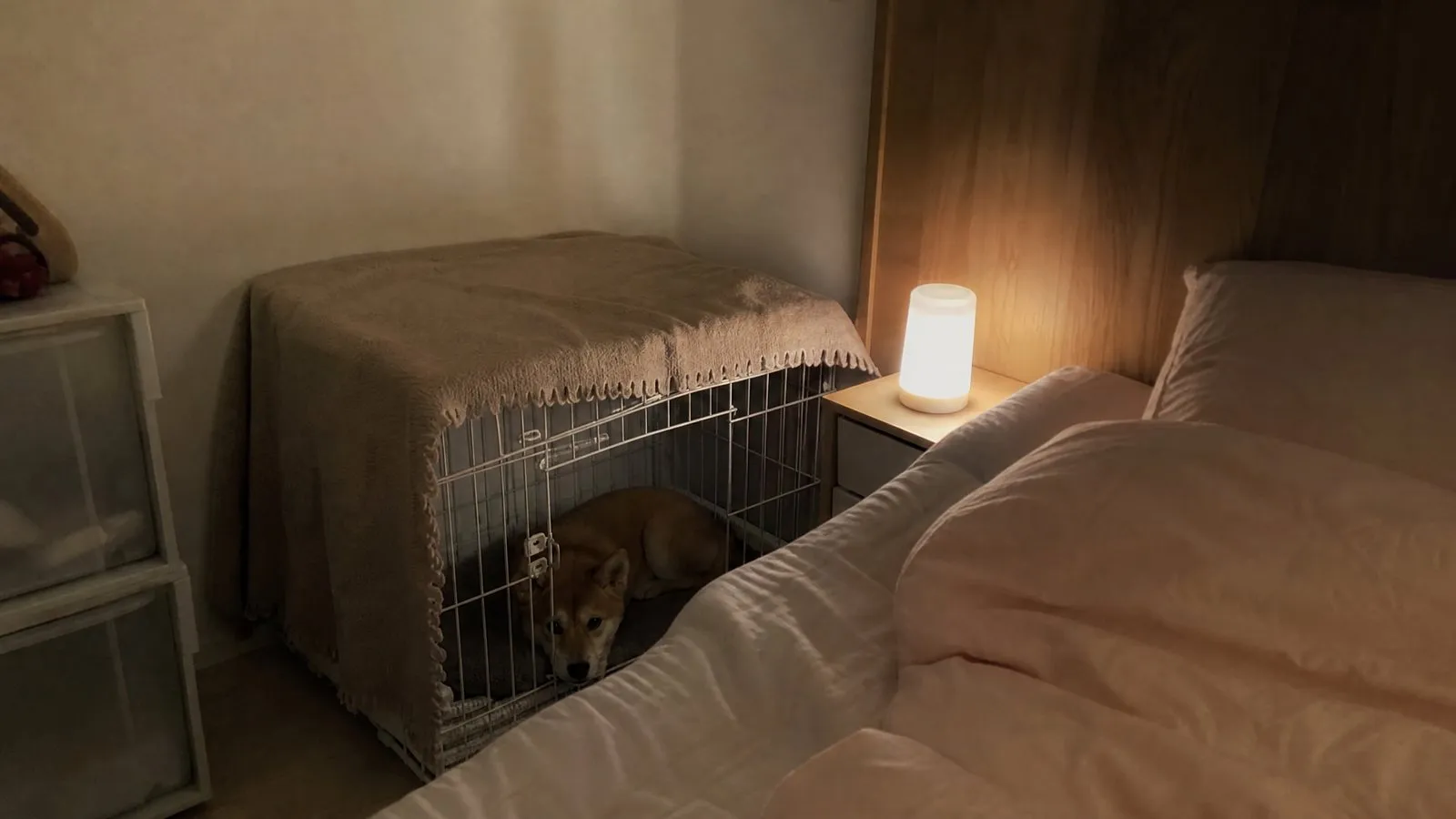
This is the single most effective change you can make. For the first week or two, place the crate within arm’s reach of your bed, at the same height if you can manage it, or on the floor beside you. When your puppy wakes and whimpers, you can drop a hand down, murmur a few quiet words, and they often settle because they know you’re there.
You can gradually move the crate farther from the bed, and eventually to its permanent spot, over the following weeks once nights are calm. If you haven’t chosen a crate yet, our guide to choosing the right dog crate covers size and divider tips, and our full 7-day crate training plan walks through building positive associations day by day.
2. Make it warm and den-like
A covered, cozy crate feels safer than an open wire box in a big room.
- Drape a blanket over the top and sides, leaving the front and one side open for airflow.
- Add soft, washable bedding. Avoid anything a determined chewer could swallow in chunks.
- Many puppies settle better with a safe warmth source. A microwavable heat pad wrapped in a towel, or a well-sealed warm (not hot) water bottle placed under the bedding, can help. Never use an electric heating pad a puppy can chew.
- An item that smells of their littermates or the breeder, if you have one, can be comforting.
Make sure the room isn’t too hot either. You want cozy, not stifling.
3. Wear them out before bed, then wind down
Aim for a little gentle play and a final potty trip about 30 to 60 minutes before lights out, then a calm wind-down. A chew to settle with can help a teething puppy relax; see safe chews for teething puppies for what’s appropriate. Avoid wild, exciting games right before the crate, which leaves them too amped to sleep.
4. Time the last meal and water
Feed the final meal a couple of hours before bed so there’s time to digest and poop before the crate. Let them drink normally through the evening, but you can lift the water bowl about an hour before bedtime so the bladder isn’t full overnight. Always offer water again first thing in the morning and if the night is warm.
5. Do one or two quiet, boring potty trips
If your puppy wakes and the crying sounds like a potty signal (restless, won’t settle, started after a few hours of sleep), take them out, but keep it deliberately dull:
- Pick them up or lead them out calmly. No bright lights, no chatter, no play.
- Go straight to the potty spot and wait.
- Give one quiet word of praise when they go.
- Bring them straight back to the crate and settle again.
The goal is to teach them that nighttime wake-ups are for emptying out, not for attention or fun. If you turn it into a party, you’ll get more wake-ups. For daytime structure that makes nights easier, use our potty training schedule.
What not to do
A few common reactions make things worse:
- Don’t bring them into your bed in a panic on night one if that’s not where you want them long term. You can always choose to co-sleep later, but switching back is hard.
- Don’t shout, bang the crate, or punish crying. Fear makes a puppy cry more and damages trust, and it undermines crate training.
- Don’t rush in and make a fuss at every squeak. A short grumble as they resettle is normal. Reacting instantly to tiny noises can accidentally train your puppy that any sound brings you running.
- Don’t let them “cry it out” alone in a distant room. For a young puppy this is genuinely distressing and can set back crate and potty training. Proximity and calm reassurance work better than tough love.
- Don’t flip the lights on or start the day early when you get up for a potty trip. Keep the whole house in “still asleep” mode.
The balance to aim for: respond to real needs (potty, distress), ignore minor fussing, and keep every interaction quiet and boring.
How long it usually lasts
Most puppies improve a lot within the first week and sleep through most nights by 12 to 16 weeks of age, as their bladder capacity grows and they feel secure in their new home. A rough timeline:
| Stage | What to expect | Typical night potty trips |
|---|---|---|
| Nights 1–3 | Most crying; puppy is adjusting | 1–2, plus some settling help |
| Week 1–2 | Crying drops noticeably | 1, fairly predictable |
| Week 3–4 | Many puppies settle quickly | 0–1 |
| 12–16 weeks | Most sleep through the night | Often 0 |
Every puppy is different. Small breeds have smaller bladders and may need night trips a little longer. A puppy from a stressful background, or one adopted a bit older, may take more time to trust the setup. That’s normal.
When crying is something more
Occasional night crying is normal. Contact your vet if you notice any of these, which point to a physical problem rather than loneliness:
- Crying paired with vomiting, diarrhea, or a swollen, hard belly.
- Signs of pain: yelping when touched, reluctance to move, or a hunched posture.
- Straining to pee or poop, or frequent tiny accidents, which can signal a urinary infection.
- Not eating, lethargy, or any sudden change in behavior.
When in doubt, call. Our guide to warning signs your puppy needs a vet today covers the red flags in more detail.
There’s also a difference between normal settling-in crying and the beginnings of true separation distress, which is more extreme and tied specifically to being apart from you. If your puppy panics, drools heavily, or hurts themselves trying to escape whenever left alone, read our guide on separation anxiety in dogs and consider talking to your vet or a qualified trainer.
A simple first-night plan
Putting it together for tonight:
- Last meal about 2–3 hours before bed; lift water around an hour before.
- Gentle play, then a calm wind-down.
- Final potty trip right before the crate.
- Crate beside your bed, covered, warm, with soft bedding.
- Lights out. Reassure quietly if needed, but keep it low-key.
- One or two boring potty trips if your puppy wakes and needs to go.
- In the morning, start the day on your schedule, not at the first whimper.
If you’re still getting set up, our new puppy checklist and first 24 hours plan will help the rest of the transition go smoothly.
FAQ
Should I ignore my puppy crying at night?
Not entirely. Ignore minor fussing as they resettle, but respond calmly to genuine needs like a full bladder or real distress. For a young puppy, leaving them to cry alone for long stretches tends to make things worse, not better.
How many times will my puppy wake to pee at night?
Expect one or two trips for a puppy under about 12 weeks, often dropping to zero by 12 to 16 weeks as their bladder matures. A rough rule is one hour of holding per month of age, so an 8-week-old usually needs at least one overnight trip.
Where should the crate go at night?
Right next to your bed for the first week or two. Proximity is the fastest way to reduce crying. Once nights are calm, you can gradually move the crate to its permanent location over several days.
Is it bad to let my puppy sleep in my bed?
It’s a personal choice, not a health rule, but decide before night one. A young puppy can fall off the bed or have accidents, and moving them to a crate later is harder once they’re used to your bed. Many owners start with the crate beside the bed and reassess when the puppy is older.
My puppy sleeps all day but cries all night. Why?
Often it’s day-night confusion plus too much daytime napping with too little structure. Keep days gently active with regular wake windows, make evenings calm, and reserve night for sleep and quiet potty trips. See our guide on how much a puppy should sleep to balance their day.