The First 24 Hours With Your New Puppy: An Hour-by-Hour Plan
An hour-by-hour plan for your puppy's first 24 hours, from the car ride home to the first night, plus what to skip on day one.
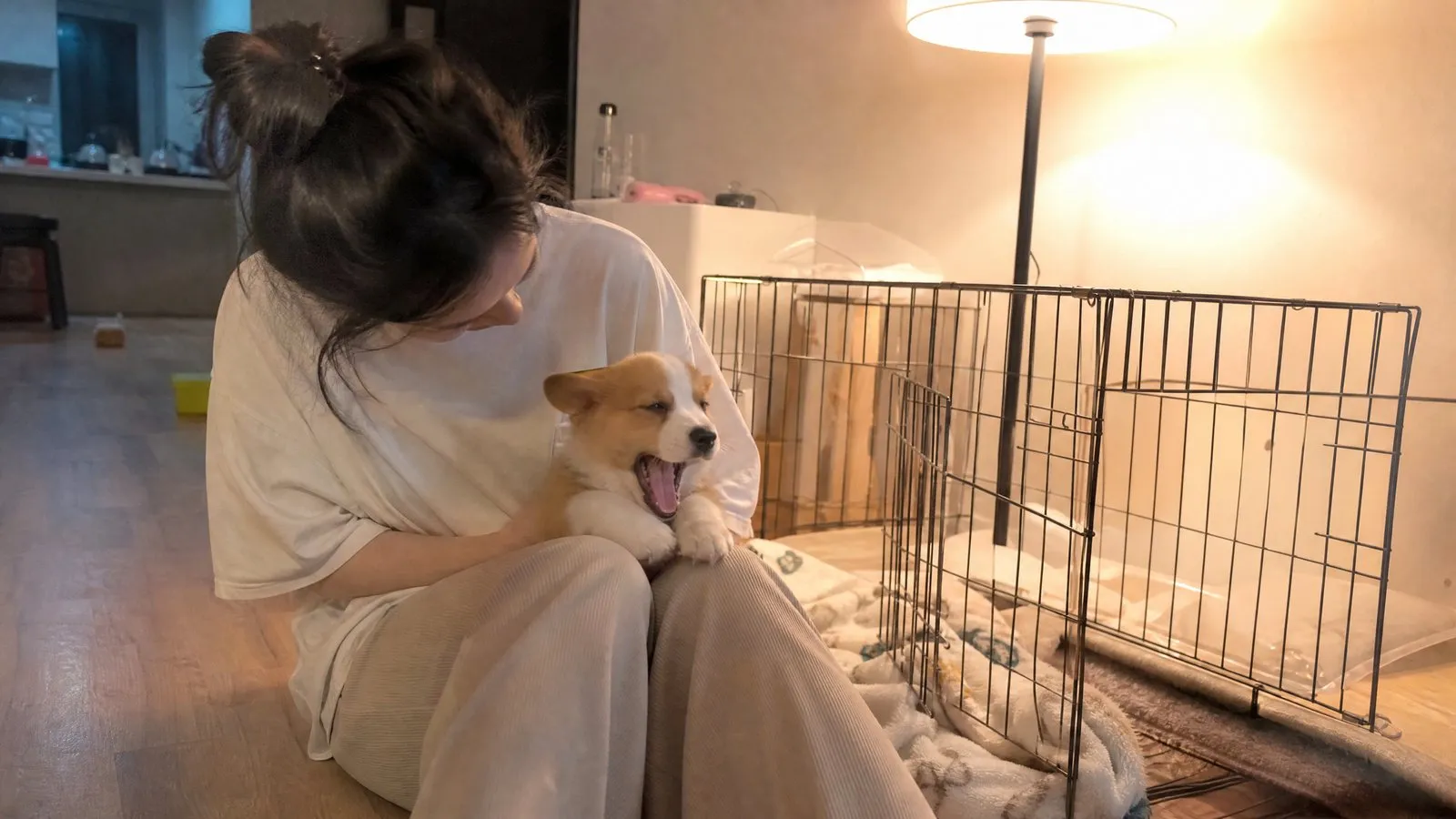
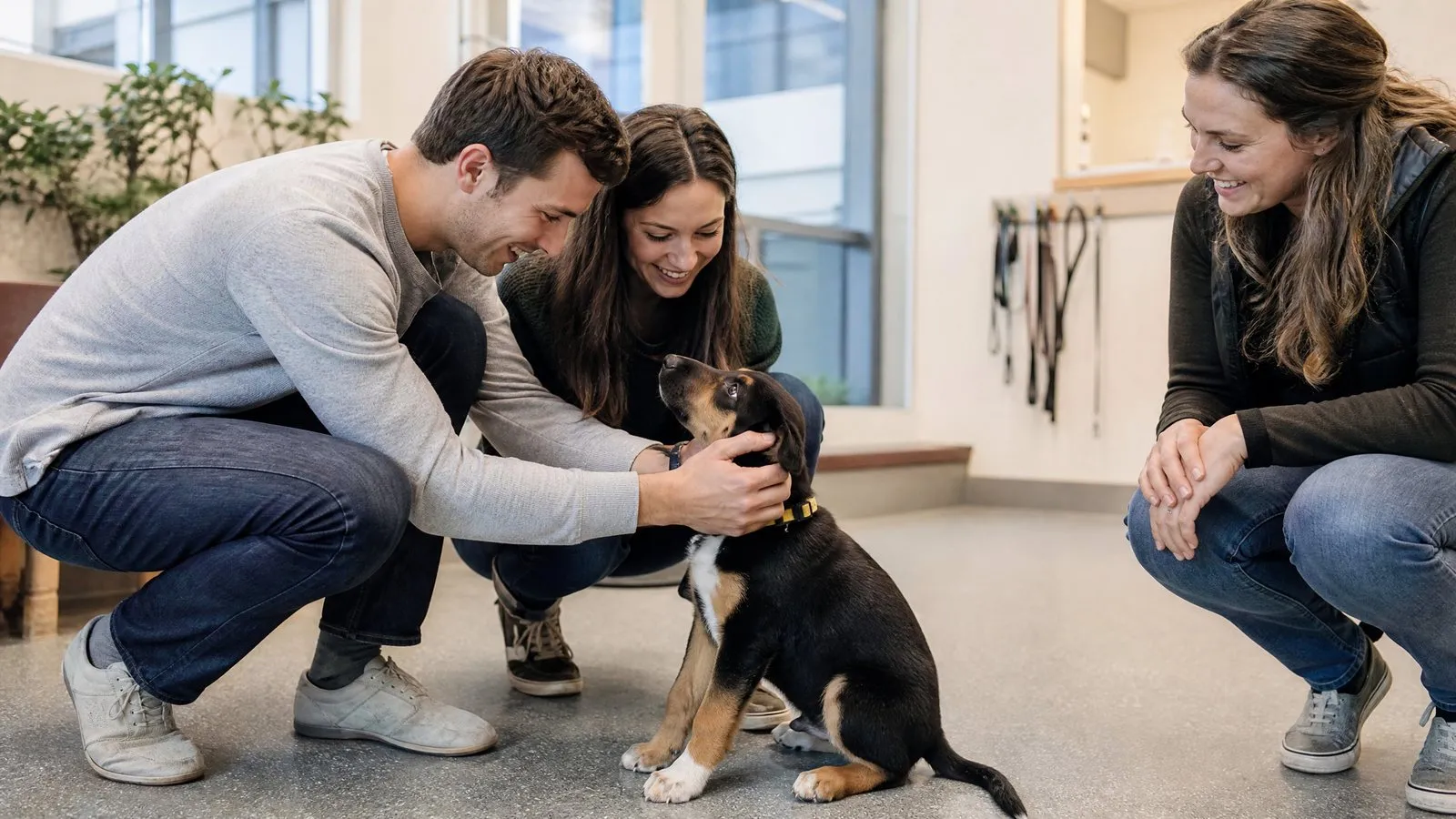
Keep the first day small, calm, and predictable. Your puppy has just left everything it knows, so your only real jobs today are to help it feel safe, show it where to potty, offer food and water, and protect its sleep. Skip the visitors, the bath, and the long walk. That’s it.
Here’s exactly how to run the first 24 hours, hour by hour.
Before you leave to collect your puppy
Set up the house before pickup so you’re not scrambling with a puppy in your arms. If you haven’t yet, run through our New Puppy Checklist and puppy-proof the main rooms.
Have these ready at home:
- A crate or pen in a quiet corner of a room you use often
- A water bowl and a small amount of the food your puppy has been eating
- A clear potty spot chosen outside (one specific patch of grass)
- Old towels, paper towels, and an enzyme cleaner for accidents
- A couple of safe chews and one or two soft toys
Bring to the pickup: a towel or blanket, poop bags, paper towels, a carrier or a crate secured with a seatbelt, and a helper if you can. Ask the breeder or shelter to let the puppy potty right before you leave.
One small but useful trick: ask for a blanket or cloth that smells like the littermates or the previous environment. That familiar scent helps settle a puppy on the first night.
The car ride home
A secured crate or carrier is the safest way to travel. A loose puppy on a lap can be hurt in a sudden stop and can distract the driver. If your drive is long, read our notes on car travel and motion sickness first.
- Keep it calm. Low voices, no loud music.
- For trips over 30–45 minutes, stop for a potty break on a towel you bring, not on the ground at a busy rest stop where unvaccinated puppies are at higher risk.
- Expect some whining, drooling, or car sickness. It’s normal and usually passes.
- Don’t feed a big meal right before driving. A small, mostly empty stomach travels better.
Hour-by-hour: your first day at home
Times are a guide. Shift them to match when you actually arrive. Young puppies (8–12 weeks) need to pee very often, roughly every 1 to 2 hours while awake and right after sleeping, eating, or playing.
| Time | What’s happening | Your job |
|---|---|---|
| Arrival | Potty first, then a slow look around | Go straight to the potty spot before going inside |
| First 30 min | Explore one room | Let the puppy come to you; stay low-key |
| +1 hr | First small meal and water | Feed the familiar food, small portion |
| +1.5 hr | Potty, then first nap | Settle in the crate or pen |
| Afternoon | Short play, potty, nap cycles | Repeat: potty, play, potty, sleep |
| Evening | Calm meal, quiet time | Dim lights, lower energy |
| Bedtime | Final potty, settle for night | Crate near you, lights out |
| Overnight | 1–2 potty breaks | Quiet trips outside, back to bed |
Arrival: potty spot first, house second
Before you even open the front door, carry your puppy to the exact spot you’ve chosen outside and set it down. If it goes, praise gently and give a tiny treat. This is the first lesson in potty training, and starting at minute one saves you days of confusion.
Then bring the puppy inside to one room only. A whole house is overwhelming. Let it sniff and wander while you sit on the floor and let it approach you.
First 30 minutes: let the puppy set the pace
Resist the urge to pick it up constantly or crowd it. Some puppies bounce around; others freeze or hide. Both are normal. Keep your voice soft and let it explore the safe room. This is not the time for games of chase or lots of handling.
About an hour in: first meal and water
Offer the same food the puppy has been eating, in a small portion. A new home is stressful, and a sudden food change on top of that often causes an upset stomach. If you plan to switch brands later, do it gradually over a week or so once the puppy is settled. Our guides on how many meals a day and how much to feed cover the details.
Keep water available, but don’t be surprised if your puppy eats or drinks little on day one. Stress suppresses appetite. If it refuses all food for more than a day, call your vet.
After the meal: potty, then the first nap
Take the puppy out within 5 to 15 minutes of eating. Puppies often need to go very soon after a meal.
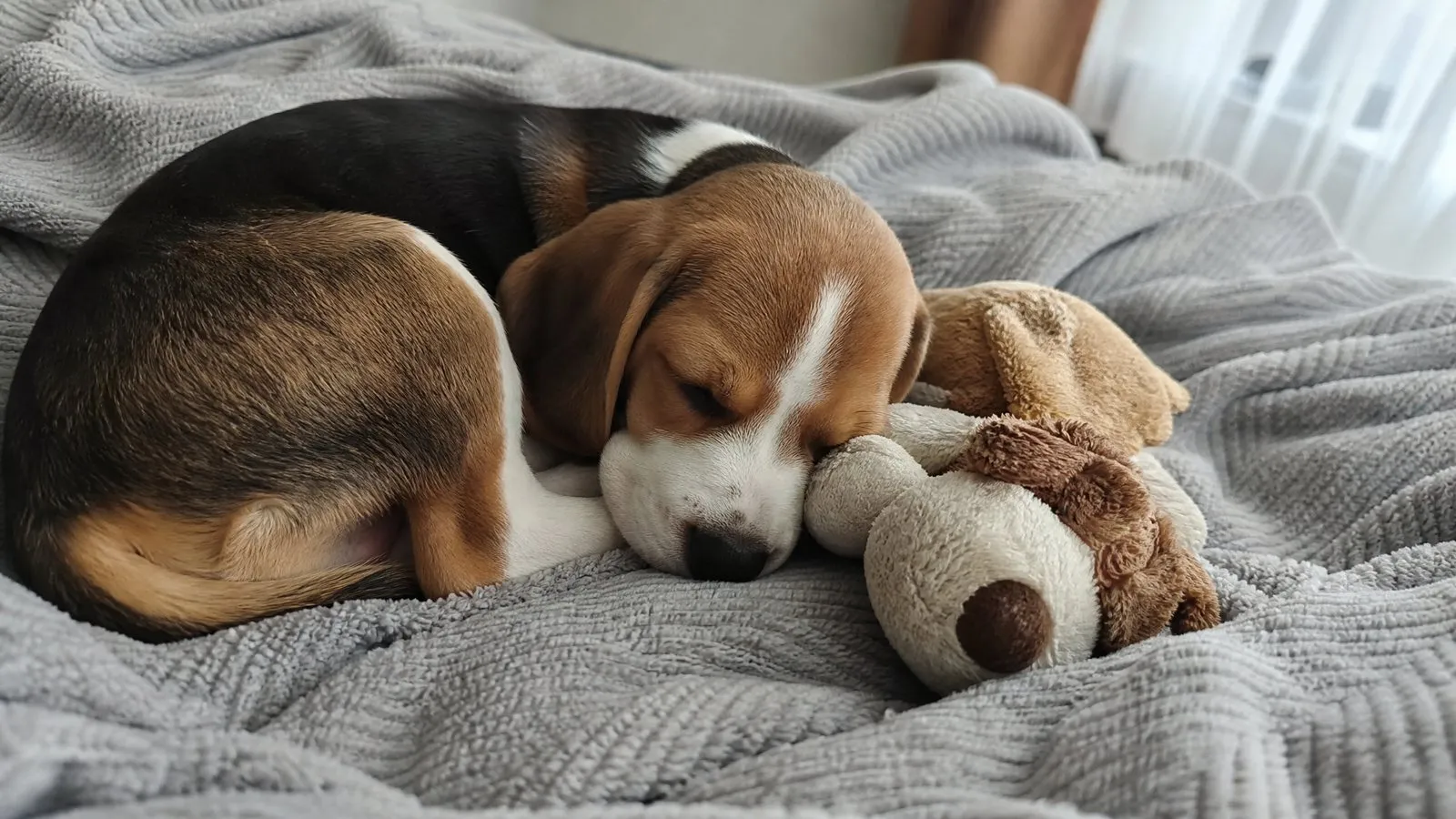
Then let it sleep. This is the part most new owners get wrong: young puppies need a lot of sleep, often 18 to 20 hours a day, and they get cranky and nippy when overtired, much like a toddler. Put the puppy in its crate or pen for the nap rather than letting it crash in the middle of the action. See how much a puppy should sleep for age-by-age numbers.
Afternoon: repeat the simple loop
For the rest of the day, run a quiet cycle:
- Potty (outside, same spot)
- Short play or gentle exploring (10–15 minutes)
- Potty again
- Nap in the crate (1–2 hours)
Offer water regularly. Take the puppy out every time it wakes, and watch for pre-potty signs: sudden sniffing, circling, or wandering off. Scoop it up and head outside before it squats.
Start making the crate a good place now. Toss treats inside, feed a meal in there with the door open, and let the puppy go in and out freely. A gentle first day sets up the full 7-day crate training plan.
Evening: wind everything down
As bedtime approaches, lower the energy. Dim the lights, stop rowdy play, and give the puppy a calm meal if it’s a mealtime. A tired, slightly bored puppy settles far better than an overstimulated one.
If your puppy gets mouthy in the evening, that’s normal overtiredness, not bad behavior. Redirect to a chew and help it get to sleep. For more, see how to stop puppy biting.
Bedtime and the first night
The first night is often the hardest, for you and the puppy. It has just lost its mother and littermates, so some crying is expected. Here’s what actually helps.
- Put the crate in your bedroom, or sleep near the puppy for the first few nights. Being able to see and hear you reduces panic far more than leaving it alone. You can gradually move the crate later.
- Final potty right before lights out, and no water in the crate overnight.
- Expect to get up. An 8-week-old puppy usually can’t hold it all night and will need one or two potty breaks. By around 12–16 weeks many can go longer, but every puppy is different.
- Keep night breaks boring. Lift the puppy out, carry it to the potty spot, wait, praise quietly if it goes, then straight back to the crate. No play, no treats-party, no lights blazing. You want it to learn that nighttime is for sleeping.
- A warm, familiar-smelling item helps. The blanket from the breeder or shelter, plus a safe soft toy, can comfort a lonely puppy.
If the crying is constant and frantic rather than the occasional grumble, don’t assume you must “let it cry it out.” Check whether the puppy needs to potty, then offer calm reassurance. Our guide on why puppies cry at night walks through the difference between settling fuss and genuine distress.
What not to do on day one
A few well-meant moves backfire. Save these for later in week one or beyond.
- No big welcome party. A crowd of excited visitors, especially kids passing the puppy around, is overwhelming. Keep introductions to the people who live there.
- No bath. Unless your puppy is covered in something harmful, skip it. It’s one stress too many, and a very young puppy can get cold easily. When you do need to, see how to bathe a puppy without the drama.
- No long walks or busy parks. Beyond potty trips in your own yard, your puppy likely hasn’t finished its vaccinations and shouldn’t be on ground where unknown dogs go. Check the vaccination schedule and plan safe socialization for the weeks ahead.
- No diet overhaul. Keep the current food today.
- Don’t skip naps. Letting an overtired puppy stay up “to tire it out” usually produces biting and meltdowns, not sleep.
- Don’t leave the puppy fully alone for hours. Day one is about building trust, not testing independence.
When to call a vet on day one
Most first-day wobbles, light appetite, a soft stool, some whining, are normal. Contact a vet promptly if you see any of these:
- Repeated vomiting or diarrhea, especially with blood
- Refusing all food and water for more than about 12–24 hours
- Extreme lethargy, collapse, or trouble breathing
- A distended, painful belly
- Pale gums, or shaking and weakness that could signal low blood sugar in a very small or toy-breed puppy
Toy and small-breed puppies are more prone to low blood sugar (hypoglycemia), so keep meals regular and watch for weakness. When in doubt, it’s always reasonable to phone your vet or an emergency line. See warning signs your puppy needs a vet today for a fuller list.
Book your first vet visit within the first few days, too. It’s a chance to confirm the puppy is healthy, set up vaccines and parasite prevention, and ask your questions.
FAQ
Should I let my puppy sleep in my bed on the first night?
It’s better to start with a crate next to your bed. A loose puppy can fall, wander off to potty, or chew hazards while you sleep, and it’s much harder to build crate habits later. You get the comfort of being close without the risks.
My puppy won’t eat on the first day. Is that a problem?
A reduced appetite from stress is common for the first day or two. Keep offering the familiar food at normal mealtimes and make sure water is available. If your puppy eats nothing for more than 12–24 hours, or seems weak or unwell, call your vet, especially with a small-breed puppy.
How often will I need to get up overnight?
Plan for one or two potty breaks a night with an 8- to 12-week-old puppy. A rough guide is that puppies can hold their bladder for about their age in months plus one, in hours, though this varies. Keep night trips quiet and quick so they learn to settle again.
Can I take my puppy for a walk on day one?
Stick to potty trips in your own yard. Most puppies aren’t fully vaccinated yet and shouldn’t walk where unknown dogs have been. You can still socialize safely by carrying your puppy to see new sights and by inviting calm, vaccinated adult dogs you trust once your vet gives the go-ahead.
How do I introduce my new puppy to my other pets?
Not on day one if you can help it. Let the puppy settle first, then do short, supervised, neutral-ground introductions with your existing pet on a leash or behind a barrier. Keep sessions brief and positive, and never force contact.