Separation Anxiety in Dogs: Signs, Prevention, and a Gradual Training Plan
Learn how to tell true separation anxiety from boredom, spot the signs, prevent it early, and follow a gradual departure plan that actually works.
If your dog panics every time you leave, start here: most dogs who bark, pace, or chew at the door are bored or under-exercised, not clinically anxious. True separation anxiety is a genuine panic response that starts the moment you prepare to leave, and it needs a slower, more structured approach. The fix for both is the same first step: teach your dog that being alone is safe and ordinary, in small doses you build up over weeks.
Below is how to tell the difference, how to prevent it in a new puppy, and a graduated plan you can start today.
Separation anxiety vs. boredom: how to tell them apart
Both can look like barking, chewing, or accidents. The clues are in the timing and the intensity.
Boredom and under-stimulation tend to build slowly. A bored dog may settle for a while, then get restless and find something to do, often something destructive. Give that dog more exercise, mental work, and a good chew, and the behavior usually improves fast.
True separation anxiety is panic. It often starts before you even leave, as the dog reads your cues (shoes, keys, coat), and it peaks within the first 15 to 30 minutes after you go. The behavior is frantic rather than casual.
| Sign | More like boredom | More like separation anxiety |
|---|---|---|
| When it starts | A while after you leave | As you prepare to leave, or within minutes of leaving |
| Intensity | Mild to moderate, comes and goes | Frantic, sustained, hard to interrupt |
| Chewing target | Random items, toys, furniture | Exit points: doors, window frames, crate bars |
| Vocalizing | Intermittent barking | Prolonged howling or distressed crying |
| Toileting | Occasional, often if not walked | Soiling even in a house-trained dog |
| Physical signs | Rare | Drooling, panting, trembling, injured paws or mouth |
| Response to enrichment | Improves noticeably | Won’t touch food or toys when alone |
A simple test: leave a stuffed food toy and a camera (your phone propped up works). A bored dog usually eats first, then gets into trouble. An anxious dog ignores the food entirely and fixates on your exit.
Common signs of separation anxiety
Watch for these, especially in the first 30 minutes alone:
- Howling, whining, or barking that doesn’t settle
- Scratching or chewing at doors, windows, and the crate
- Pacing, often in a fixed pattern or path
- Drooling or heavy panting with no heat or exercise reason
- House soiling in an otherwise trained dog
- Refusing food and treats while alone
- Over-the-top greetings when you return, taking several minutes to calm
- Self-injury, such as broken nails or sore gums from trying to escape
One or two mild signs don’t confirm anxiety. A cluster of them, with panic timing, points to the real thing.
Prevention: build alone-time skills early
The easiest separation anxiety to handle is the one you prevent. If you have a new puppy, start now, before any problem appears.
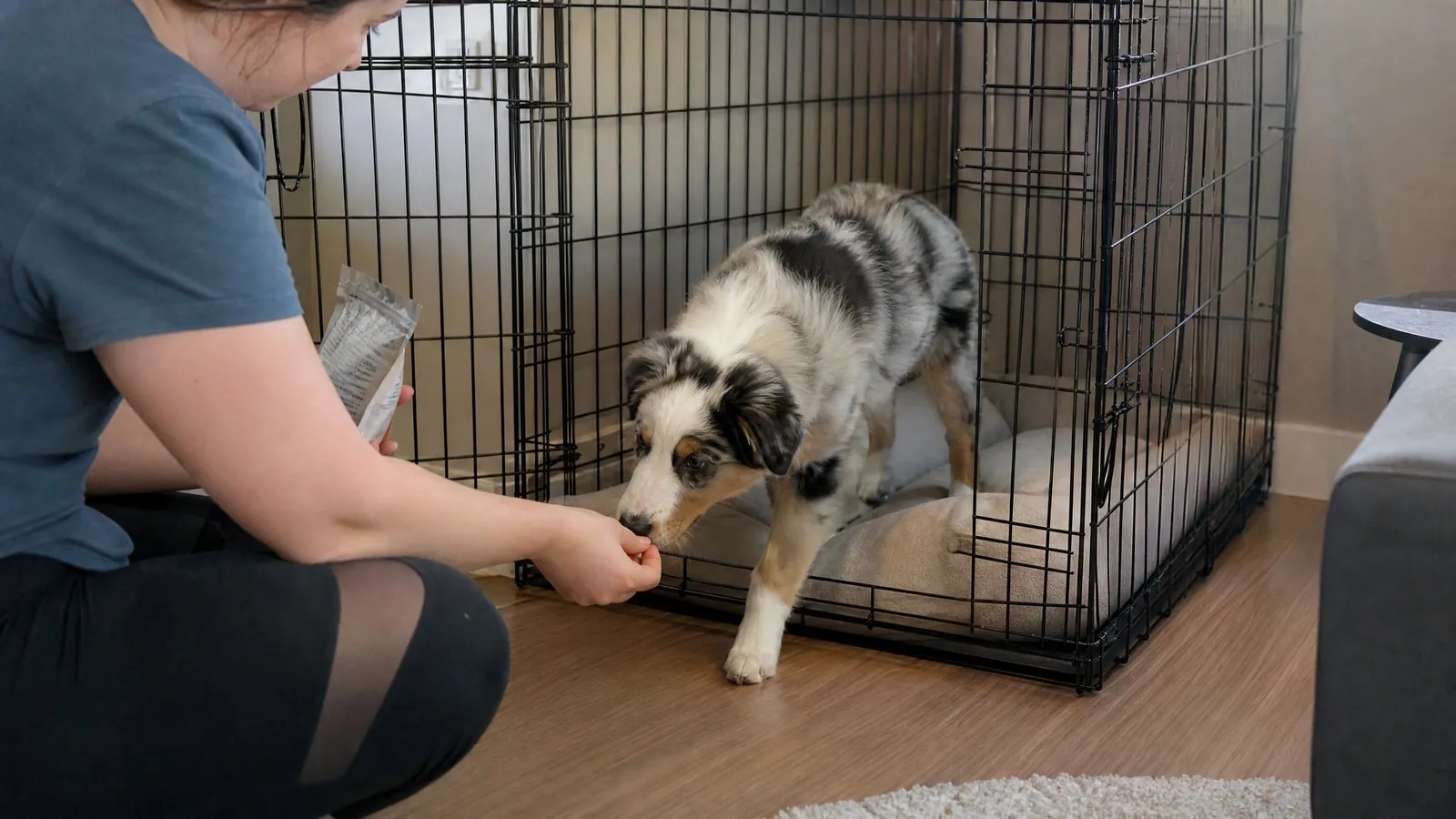
Teach independence inside the home. Your puppy doesn’t need to be touching you all day. Set up a safe spot, a pen or crate with a comfy bed, and let your puppy rest there while you’re in the same room or just out of sight. Our crate training plan walks through this step by step.
Normalize short absences from day one. Leave the room for 30 seconds, come back calmly. Do this many times a day so your puppy learns that you always return and it’s no big deal. Keep departures and arrivals low-key, no emotional goodbyes or frantic hellos.
Meet real needs first. A puppy who is well-exercised, well-fed, recently toileted, and genuinely tired settles far more easily. Match rest to age, most puppies need a lot of sleep, as covered in how much a puppy should sleep.
Avoid shadowing. It’s tempting to let a new puppy follow you everywhere, but constant contact makes alone time feel abnormal. Baby gates let your puppy see you without velcro-ing to your feet.
Build good crate and nighttime associations. Night crying and daytime distress often share roots. If nights are rough, see why your puppy cries at night.
If you’re still setting up, the new puppy checklist and the first 24 hours plan will help you start on the right foot.
The graduated departure plan
This is the core treatment, and it works for prevention and for mild-to-moderate anxiety. The principle is simple: you expose your dog to absences so short they never trigger panic, then extend them gradually. Going too fast is the most common reason it fails.
Set aside 10 to 15 minutes, once or twice a day. Keep every session calm and under threshold, meaning your dog stays relaxed the whole time.
Step 1: Defuse your departure cues (2 to 4 days)
Dogs learn that keys, shoes, and coats predict being left. Break that link:
- Pick up your keys, then sit down and watch TV.
- Put on your shoes, then make a snack.
- Grab your coat, then take it off again.
Repeat these throughout the day until your dog stops reacting to them. You’re teaching that cues don’t always mean you leave.
Step 2: Micro-absences (start at seconds)
Now add the door, but stay brief:
- Give a calm cue you’ll always use, such as “back soon.”
- Step outside and close the door.
- Return before your dog gets anxious, even after 5 seconds.
- Come back in quietly. No fuss.
Vary the times so the pattern is unpredictable: 5 seconds, then 20, then 10, then 30. Watch your dog (a camera helps). If you see pacing or whining, you’ve gone too long; shorten the next rep.
Step 3: Build duration in small jumps
Over days and weeks, extend absences in uneven steps. A rough progression once your dog is relaxed at each stage:
| Stage | Typical absence | Move on when |
|---|---|---|
| 1 | 5 to 30 seconds | Dog ignores your exit |
| 2 | 1 to 3 minutes | Dog settles immediately |
| 3 | 5 to 10 minutes | No distress on camera |
| 4 | 15 to 30 minutes | Dog rests or sleeps |
| 5 | 30 to 60 minutes | Calm throughout |
| 6 | 1 to 2 hours, then longer | Consistently relaxed |
The 30-minute mark is a real hurdle, because most anxiety peaks in that first half hour. Expect to spend extra sessions there. Progress is rarely a straight line, and a bad day means you drop back a level, not start over.
Step 4: Protect your training with “no accidental long absences”
While you’re building up, try not to leave your dog longer than they can currently handle. Every panic episode sets you back. During the training period that may mean:
- Staggering schedules with family or housemates
- A trusted neighbor, friend, or sitter
- A quality dog daycare for full workdays
This is the hardest part logistically, but it’s what makes the plan work.
Enrichment and daily routine
Enrichment won’t cure true separation anxiety on its own, but it lowers the overall stress load and genuinely solves most boredom-driven behavior.
Physical exercise before departures. A walk or play session before you leave means your dog is more likely to rest. Match intensity to age and breed, and avoid forced hard exercise in very young puppies.
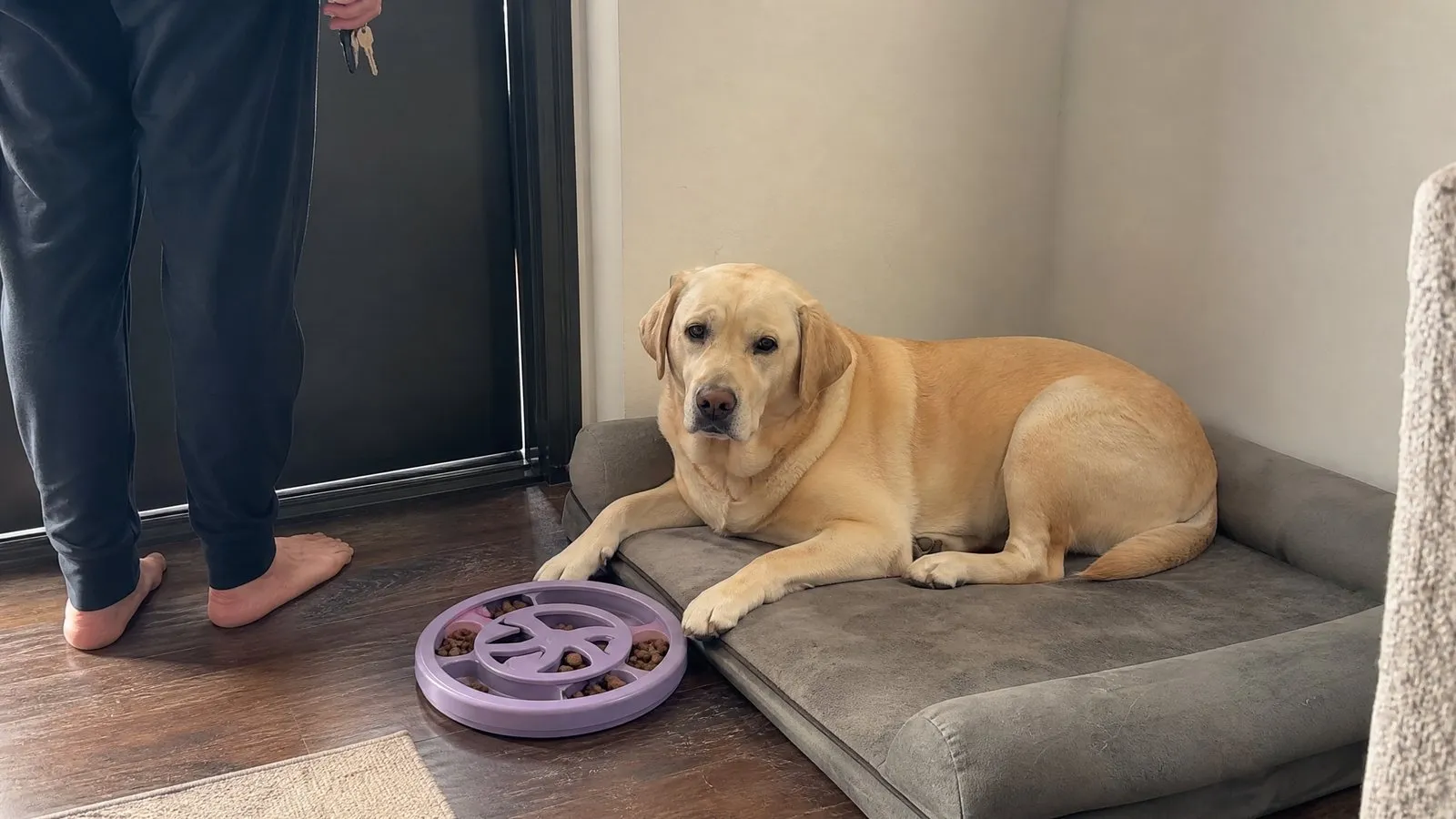
Food puzzles and lick mats. Feeding part of a meal from a puzzle toy or frozen lick mat gives your dog a calm, absorbing task right as you leave. For anxious dogs, only use these once absences are short enough that they’ll actually eat.
Chews. A safe, long-lasting chew helps dogs decompress. See safe chews for teething puppies for what to give and what to avoid.
Daily mental work. Five to ten minutes of training, scatter-feeding in the grass, or sniffing on walks tires a dog out more than you’d expect.
A predictable rhythm. Dogs cope better when meals, walks, and rest land at roughly the same times each day. A loose schedule beats a chaotic one.
Background normality. Soft background noise, like a radio or TV at low volume, can make an empty home feel less stark for some dogs.
When to see a vet or a certified behaviorist
Get professional help if any of the following apply:
- Your dog is injuring themselves trying to escape, or damaging teeth, nails, or paws.
- There’s drooling, nonstop howling, or soiling every time you leave.
- Your dog won’t eat at all when alone, even high-value food.
- You’ve worked the graduated plan carefully for several weeks with no progress, or things are getting worse.
- The behavior appeared suddenly in an adult dog, which can signal pain, illness, or cognitive change.
Start with your veterinarian. They can rule out medical causes and, in moderate to severe cases, discuss medication. Organizations such as the American Veterinary Medical Association and the American Animal Hospital Association recognize that anti-anxiety medication, paired with behavior training, can be appropriate and effective for true separation anxiety. Medication isn’t a shortcut or a failure; for a panicking dog it can lower stress enough that the training can finally work.
For the behavior side, ask for a referral to a credentialed professional: a veterinary behaviorist (a vet with specialist behavior qualifications), a certified applied animal behaviorist, or a qualified, reward-based trainer experienced with separation anxiety. Avoid anyone who relies on punishment, shock, or “flooding” (leaving the dog alone for long periods to “get over it”), which typically makes anxiety worse.
If you ever see signs of illness alongside the behavior change, our guide to warning signs your puppy needs a vet today can help you decide how urgently to act.
A realistic timeline
Mild cases and prevention in puppies can come together in a couple of weeks of consistent short sessions. Moderate-to-severe separation anxiety often takes two to three months, sometimes longer, and usually involves a vet and a behavior professional. Patience and consistency matter far more than intensity. Short, calm, successful reps every day will outperform occasional long training marathons every time.
FAQ
Can I leave my puppy alone while I train this?
As little as possible during the training window, because each panic episode undoes progress. Arrange staggered schedules, a sitter, or daycare for the times your puppy can’t yet handle. As a general rule, young puppies shouldn’t be left alone for long stretches anyway, since they need frequent toilet breaks and lots of sleep.
Will getting a second dog fix separation anxiety?
Usually no. Most dogs with true separation anxiety are bonded to their person, not just to company, so another dog rarely solves it, and you may end up with two dogs who struggle. Fix the anxiety first, then decide about a second dog for its own sake.
Does crate training help or make it worse?
It depends on the dog. A dog with positive crate associations may feel safer in one. A dog who panics will often hurt themselves on the bars, so never force a distressed dog into a crate. If the crate raises stress, use a dog-proofed room or pen instead and build positive associations separately.
Is it separation anxiety if my dog only barks for a few minutes then settles?
That’s usually not clinical anxiety. A short grumble that resolves into calm resting is normal adjustment, not panic. Film a few departures: if your dog settles within 10 to 15 minutes and rests, you’re in good shape and can keep extending absences gradually.
Can older adopted dogs learn to be alone?
Yes. Adult and senior dogs can absolutely learn alone-time skills with the same graduated plan, though a dog with an unknown history may need extra patience. If the anxiety is severe, loop in your vet early, and don’t assume an older dog is “too set in their ways.”